


 Italiano
 Français
 Deutsch
 Español
 Português
 Svenska
 Suomi
Suomi
Meditation
Scientifically Proven Benefits
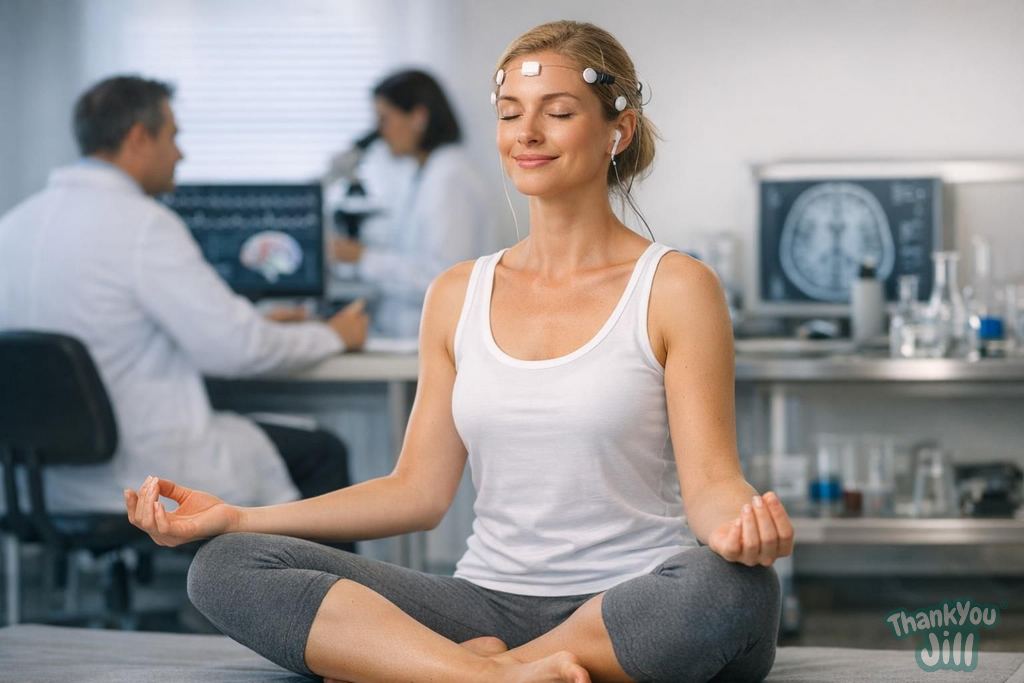
Meditation has a 2,500-year history in Eastern traditions, but entered Western medicine in the 1970s through the pioneering work of Jon Kabat-Zinn (Mindfulness-Based Stress Reduction, MBSR) at the University of Massachusetts. Today, with over 6,000 studies published on the MBSR program alone in the last 40 years, meditation is one of the most extensively studied non-pharmacological practices in medicine. The results are robust for some applications and still preliminary for others.
Benefits with the Strongest Scientific Evidence
Anxiety and stress reduction: Goyal et al.'s meta-analysis (2014, JAMA Internal Medicine) of 47 randomized controlled trials and 3,515 participants found "moderate evidence" for anxiety, depression, and pain reduction with mindfulness meditation. The effect on anxiety is comparable to antidepressants for moderate generalized anxiety, with a superior safety profile. Blood pressure reduction: A 2017 meta-analysis (Shi et al.) of 17 studies shows an average reduction of 4.26 mmHg systolic with Transcendental Meditation—modest but clinically significant for long-term cardiovascular prevention. Sleep improvement: MBSR significantly reduces insomnia symptoms (Black et al., 2015). Immune effects: Davidson et al. (2003) showed that participants in 8 weeks of MBSR had higher antibody response to the flu vaccine compared to controls—the first direct evidence of an immunological effect.
Different Types of Meditation: Which for Which Goal
Mindfulness (conscious attention): the most studied form in the West. Bringing attention to the present moment without judgment. Useful for stress reduction, anxiety, chronic pain, and improved attention. The MBSR protocol (8 weeks, 45 minutes daily) is the clinical reference standard. Transcendental Meditation (TM): silent repetition of a mantra. Solid evidence for blood pressure reduction. Requires instruction from certified teachers. Metta (compassion or loving-kindness meditation): developing feelings of benevolence toward yourself and others. Evidence of increased positive emotions and reduced self-criticism. Yoga Nidra: deep meditation in a supine position. Particularly effective for sleep and physical recovery.
How to Start: The Minimum Effective Protocol
The main barrier is perfectionism: "I can't do it," "my mind always wanders," "I don't have time." A wandering mind isn't failure—it's meditation itself. The moment you notice your mind has wandered and bring it back to your breath IS the practice: it's the mental "curl" that builds the attention muscle. Minimum protocol to start: 5–10 minutes daily for 2 weeks. Choose a fixed time (morning before coffee or evening before bed), sit comfortably (a chair works fine), bring your attention to the physical sensation of breath at your nostrils, and when your mind wanders, notice it without judgment and gently return your attention. After 2 weeks, evaluate: if you perceive benefit, extend to 15–20 minutes.
Meditation and Neuroplasticity: The Brain That Changes
Hölzel et al.'s study (2011, Psychiatry Research Neuroimaging): after 8 weeks of MBSR with 27 minutes of daily practice, increased gray matter density is observed in the hippocampus (memory) and temporo-parietal junction (awareness), and decreased activity in the amygdala (correlated with reduced perceived stress). Lazar et al.'s study (2005, NeuroReport): meditators with 40+ minutes of daily practice for 9 years show thicker insular and prefrontal cortex compared to controls. These structural changes are consistent with reported functional benefits: better emotional regulation, improved attention, greater interoceptive awareness.

A wandering mind during meditation isn't failure—it's the exercise. Bringing your attention back each time you notice it has wandered is exactly the gesture that builds the concentration muscle. Five minutes in the morning, for two weeks. Then you decide if it's worth continuing.
Meditation Apps: Which to Choose
Headspace: the most internationally recognized. Excellent beginner courses (10 minutes daily for 10 days). In English. Waking Up by Sam Harris: philosophically deeper, excellent for those who want to understand the mechanisms beyond the technique. In English. Insight Timer: the world's largest library of guided meditations, with thousands of free sessions including Italian options. Plum Village App by monk Thich Nhat Hanh: free, offering high-quality mindfulness practices in Italian. YouTube: dozens of Italian channels with free guided meditations—search "meditazione guidata italiano."
Meditation and Chronic Pain: The Evidence
One of the most robust clinical applications is chronic pain. The fundamental distinction: pain has two components. Primary pain (the physical sensation) and secondary suffering (the emotional and cognitive response: fear, catastrophizing, resistance). Mindfulness doesn't eliminate primary pain but significantly reduces secondary suffering, with 30–40% reduction in perceived intensity in patients with chronic low back pain and fibromyalgia. The MBSR program was compared with cognitive-behavioral therapy for chronic back pain (Cherkin et al., JAMA 2016) with comparable results.
Meditation for Children: The MindUP Program
The MindUP program (Goldie Hawn Foundation) teaches mindfulness to school-age children with 3 sessions of 3–5 minutes daily in class. Results from 246 fourth and fifth graders (Schonert-Reichl et al., 2015) show significant improvement in psychological well-being, emotional regulation, prosocial behavior, and math performance, with reduced perceived stress. In Italy, similar programs are being introduced in some primary schools—they're among the mental health investments with the best cost-benefit ratio for children.
Frequently Asked Questions
What are the scientifically proven benefits of mindfulness meditation on mental health?
Mindfulness meditation reduces anxiety, stress, and depression with evidence comparable to antidepressants for moderate anxiety, while also improving chronic pain management and increasing attention and awareness.
How do you choose the type of meditation best suited to your goals?
For stress and anxiety reduction, mindfulness (MBSR) is recommended; for lowering blood pressure, Transcendental Meditation; for improving sleep, Yoga Nidra; while Metta meditation promotes positive emotions and compassion.
How long does it take to start experiencing the benefits of meditation?
Just 5–10 minutes daily for at least 2 weeks, focusing on your breath without judgment about your wandering mind. If you perceive benefits, you can extend your practice to 15–20 minutes daily.
How does meditation help manage chronic pain?
Meditation doesn't eliminate primary physical pain, but reduces the emotional and cognitive suffering associated with it, decreasing perceived pain intensity by up to 30–40%, with results comparable to cognitive-behavioral therapy.


Latest News




Comments
No comments yet. Be the first!
Leave a comment