


 Italiano
 Français
 Deutsch
 Español
 Português
 Svenska
 Suomi
Suomi
Stress Management
Evidence-based techniques
Stress is not the same for everyone, and it's not the same at every dose. Acute stress (response to a specific, temporary threat) is an essential adaptive response: it enhances short-term cognitive performance, mobilizes energy, and sharpens focus. Chronic stress (prolonged activation of the sympathetic nervous system and HPA axis without adequate recovery) is pathological: it suppresses the immune system, causes chronic inflammation, accelerates cellular aging (telomere shortening), damages the hippocampus, and increases the risk of virtually every chronic disease. Stress management doesn't mean eliminating stress—it means managing the balance between acute stress (useful) and recovery (necessary).
Benson's Relaxation Response: The Opposite of Fight-or-Flight
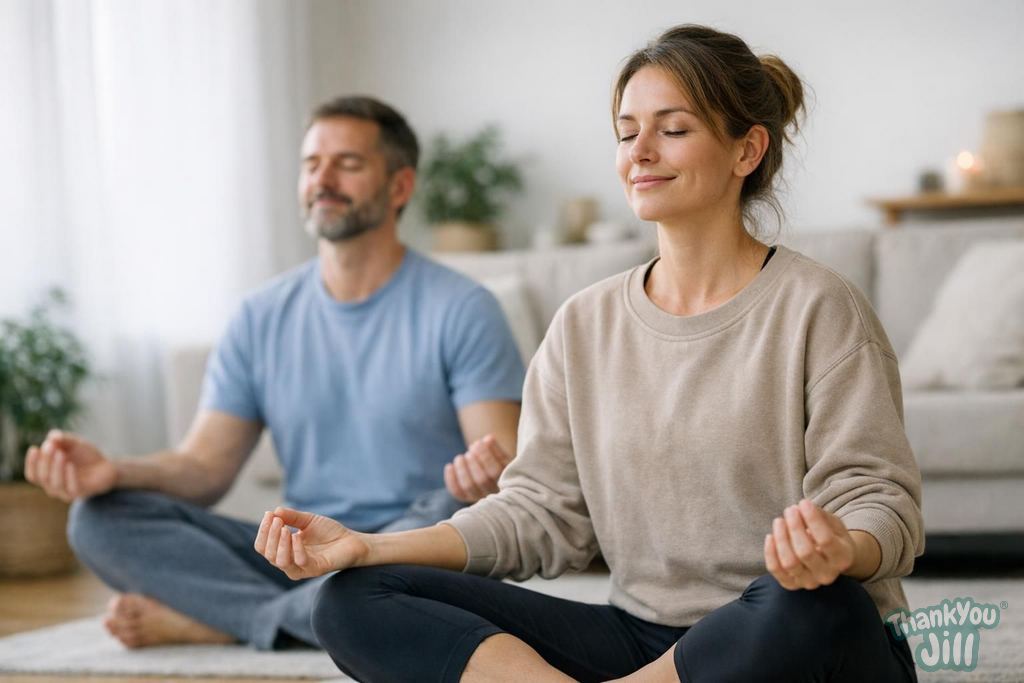
Harvard's Herbert Benson identified the "relaxation response" in the 1970s: the physiological opposite of the stress response. It's characterized by reduced metabolism, lowered blood pressure, slowed heart rate and breathing, and reduced cortisol. It can be induced through: meditation, slow deep breathing, yoga, tai chi, repeated prayer, or repetition of a calming word or phrase (a mantra). The relaxation response is "practiced"—the more regularly you induce it, the more quickly it becomes accessible even in acute stress situations. 10-20 minutes daily of any technique that activates it produces measurable benefits for cardiovascular health, immunity, and psychological well-being.
Cognitive Behavioral Therapy (CBT) for Stress: Key Techniques
CBT (Cognitive Behavioral Therapy) is the psychological treatment with the strongest evidence for stress disorders, anxiety, and depression. CBT techniques applicable for self-help (with limitations—clinically significant conditions require a professional): cognitive restructuring (identifying "automatic negative thoughts" and replacing them with more balanced, realistic thoughts—stress is often not caused by events but by our interpretation of them), cognitive defusion (from Hayes' ACT protocol: observing your thoughts as "just thoughts," not facts: "I'm having the thought that I won't manage" instead of "I won't manage"), problem planning versus worry: worry is repetitive thinking about a problem without solving it. Planning is dedicating a fixed time (30 minutes) to analyze the problem and identify concrete actions, then close the "file." Worry doesn't solve problems—it keeps them cognitively open, consuming resources.
Physical Exercise as Stress Management: The Neurological Mechanism
Physical exercise is one of the stress management techniques with the most robust evidence. The mechanism: exercise activates the same stress response (sympathetic, cortisol, adrenaline) but in a context where stress is "completed" biologically (the body moves, fights, flees). This "completion" of the biological stress cycle is what's missing in desk stress: the body activates but doesn't act. Physical exercise also produces: BDNF release (nerve growth factor: neuroplasticity), serotonin and dopamine synthesis (mood stabilization), reduced baseline cortisol levels over time, improved sleep quality (reduced evening cortisol levels). Even 30 minutes of brisk walking produces measurable anxiety and cortisol reduction in the hours that follow.
Time in Nature as Stress Reduction: Physiological Evidence
Nature exposure reduces stress through multiple mechanisms: reduced activity in the medial prefrontal cortex (rumination), reduced salivary cortisol levels, lowered blood pressure and heart rate, reduced amygdala activity (fear center). A Stanford University study (Bratman et al., 2015) showed that 90 minutes in a natural environment significantly reduced ruminative thinking compared to 90 minutes in an urban environment. You don't need a forest—even an urban park with mature trees produces measurable effects. The WHO recommends that every urban resident have access to green spaces within 300 meters of home. "Nature as medicine" is a rapidly growing research field with implications for urban design and health policy.

Chronic stress is not a matter of willpower—it's physiology. And like any physiological phenomenon, it has physiological countermeasures: slow breathing, physical exercise, nature, social connection, sleep. These aren't things that are nice to do when you have time—they're the maintenance system for your brain and body. Without maintenance, the system deteriorates.
The 20-Minute Daily Anti-Stress Protocol
Based on research, the minimum effective protocol for chronic stress management: 10 minutes of intense physical activity or 20 minutes of brisk walking (daily or nearly daily), 5 minutes of slow deep breathing (box breathing or 5.5 breathing), 5 minutes of expressive writing or gratitude. Total: 20-35 minutes daily. This is not the complete protocol—it's the minimum that produces measurable effects. Add: 30 minutes weekly in a park or green space, regular socialization (dinner with friends, phone calls, group activities), quality sleep (7-9 hours, consistent schedule).
Allostatic Load: The Cumulative Cost of Chronic Stress
The concept of allostatic load, developed by Bruce McEwen, measures the cumulative biological wear of chronic stress on the body. It's measured through a battery of biomarkers: cortisol, adrenaline, blood pressure, BMI, cholesterol, glucose, CRP (inflammation). High allostatic load predicts mortality, cardiovascular morbidity, cognitive decline, and immunosuppression in the following 10-20 years. Reducing allostatic load through stress management, adequate sleep, physical exercise, and social relationships is one of the most concrete goals of preventive medicine. Every stress management technique described in this article contributes to reducing allostatic load.
When Stress Requires Professional Support
Self-management techniques work for moderate and situational stress. Signs that require professional evaluation: stress that persists for more than 3-6 months despite management techniques, stress that significantly impairs work, relationship, or self-care functioning, persistent physical symptoms (chronic insomnia, somatic pain, gastrointestinal disturbances) that your doctor rules out as having organic causes, thoughts of self-harm. Psychotherapy (CBT, ACT, MBCT) is effective for chronic stress and anxiety disorders. Relevant professionals in Italy: clinical psychologists and psychotherapists registered with the Order of Psychologists. Your primary care physician can advise on how to access mental health services through the national health system.
Frequently Asked Questions
What are the most effective evidence-based techniques for managing chronic stress?
The most effective techniques include Benson's relaxation response (meditation, deep breathing), cognitive behavioral therapy (CBT), regular physical exercise, and nature exposure—all supported by strong scientific evidence for reducing stress and improving health.
How does Benson's relaxation response work and how can you practice it?
The relaxation response is the physiological opposite of stress, characterized by reduced metabolism, blood pressure, and cortisol. It's practiced through meditation, slow breathing, yoga, or mantra repetition, and becomes more accessible with daily practice of 10-20 minutes.
Why does physical exercise help manage stress and how long does it take to see benefits?
Exercise completes the biological stress cycle by activating the sympathetic system in a controlled way, promoting neuroplasticity and mood stabilization. Even 30 minutes of brisk walking reduces anxiety and cortisol in the hours that follow, with measurable benefits.
When is it necessary to see a professional for stress and what signs indicate this need?
Professional support is recommended if stress persists beyond 3-6 months, impairs work or relationships, causes persistent physical symptoms without organic causes, or includes self-harm thoughts. Psychotherapy such as CBT, ACT, or MBCT is effective in these cases.

Latest News




Comments
No comments yet. Be the first!
Leave a comment