


 Italiano
 Français
 Deutsch
 Español
 Português
 Svenska
 Suomi
Suomi
Natural Home
DIY Eco-Friendly Cleaning
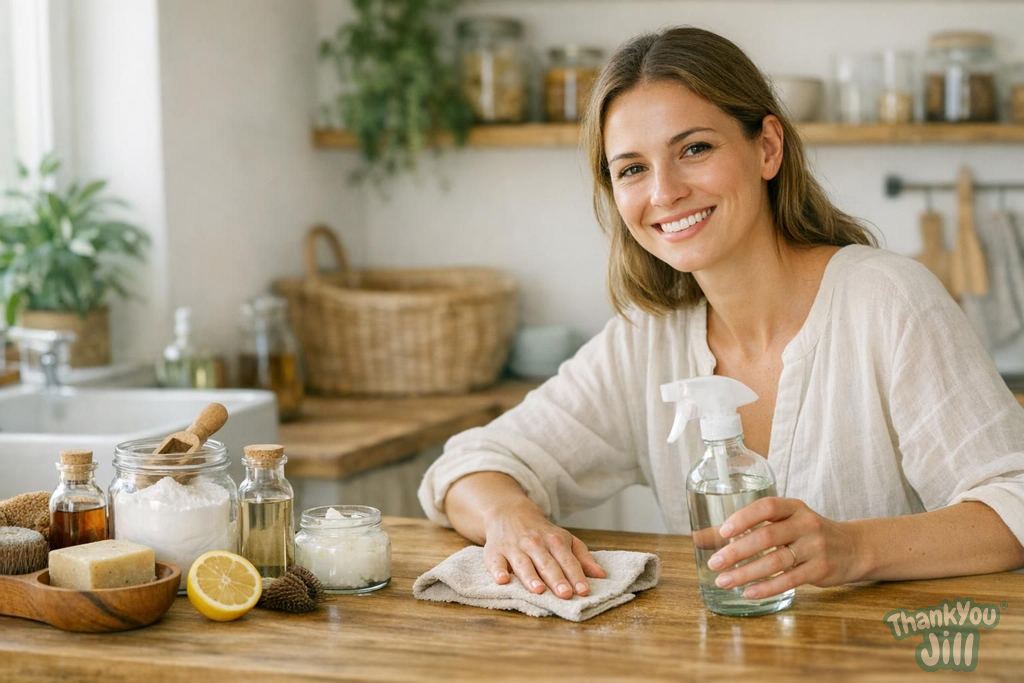
The modern home is filled with chemical products: detergents, degreasers, limescale removers, fabric softeners, air fresheners, disinfectants, mothballs, polishes. Many contain substances classified as irritants, allergens, or potentially toxic to health and the environment. The European Chemicals Agency (ECHA) has identified hundreds of common household chemicals with concerning properties: non-biodegradable surfactants, allergenic synthetic fragrances, biocidal preservatives, artificial dyes. Yet functional household chemistry boils down to a few natural active principles that humanity has used for centuries: acidity (vinegar, citric acid), alkalinity (sodium bicarbonate, soda), the cleaning power of soaps, and mechanical abrasiveness.
The three basic ingredients: everything you really need
White vinegar (or citric acid powder): the main natural limescale remover. Vinegar (5% acetic acid) dissolves limescale (calcium carbonate) that builds up on taps, showers, dishwashers, and irons. Citric acid (available at pharmacies or online, very affordable) is more concentrated and more effective than vinegar, without the strong smell. Both are excellent disinfectants against most bacteria thanks to their acidity. Don't use on marble or travertine (acid corrodes them). Sodium bicarbonate (NaHCO3): slightly alkaline and slightly abrasive. An excellent natural deodorizer (neutralizes the acids that cause bad odors), can be used as a gentle abrasive for tough cleaning (paste with water), absorbs odors in the fridge and freezer, can soften laundry water. Marseille soap (or castile soap): the universal natural-based detergent. Made from saponification of vegetable fats (traditionally olive, coconut in modern versions) with caustic soda, it contains biodegradable natural surfactants. Available as a solid bar (more concentrated and less packaging) or in liquid form. Dissolves grease, removes dirt, is gentle on skin. The combination of these three ingredients, to which you can add water, essential oils for fragrance, and sodium percarbonate for bleaching, covers 90% of household cleaning needs.
Practical recipes for household cleaning
All-purpose surface cleaner: 500 ml water + 50 ml white vinegar + 1 teaspoon liquid Marseille soap + 10 drops lemon or tea tree essential oil (for fragrance and antibacterial effect). In a spray bottle. Suitable for kitchen, bathroom, washable floors. Don't use on polished stainless steel (vinegar can dull it over time). Limescale remover for taps and showers: pure white vinegar or 10% citric acid solution (10 g in 100 ml water). Spray, let sit 20-30 minutes, scrub with a sponge. For stubborn deposits: soak paper towels in vinegar and apply to the tap for 1-2 hours. Abrasive paste for tough surfaces: bicarbonate + a few drops of liquid Marseille soap mixed until paste forms. Scrub with a soft sponge. Ideal for stains on cooktops, inside ovens, bathroom ceramics. Hand dishwashing liquid: pure liquid Marseille soap or diluted 50%. Add a drop of fresh lemon for better degreasing. DIY fabric softener: 200 ml white vinegar in the softener dispenser of your washing machine. Softens laundry (neutralizes alkaline detergent residues that make clothes stiff), eliminates bad odors, leaves no vinegar smell on dry laundry (evaporates completely).
Eco-friendly laundry: detergents and temperatures
The simplest DIY washing machine detergent: 100 g grated Marseille soap + 100 g bicarbonate + 50 g sodium percarbonate (natural oxygen-based bleach, safe for the environment). Mix and use 2-3 tablespoons per wash. Effective for normal dirt. For stubborn stains: add an extra tablespoon of percarbonate and use a pre-wash cycle. Sodium percarbonate replaces chemical bleach (hypochlorite): it's safe for colors (except black), leaves no chlorine residue in water, decomposes into oxygen and sodium carbonate (soda). Temperature: washing at 30°C instead of 60°C reduces energy consumption by 60% and fabric damage. Modern detergents (even DIY ones with enzymes or percarbonate activated by tetra-acetyl-ethylenediamine TAED) work very well at 30-40°C. Reserve high temperatures (60°C) for children's clothing, bedding of sick people, heavily soiled garments.

Vinegar, baking soda, Marseille soap: three ingredients totaling €10 that replace 15 different products costing €60-80. They require no plastic, don't pollute groundwater, don't irritate hands. Grandmothers knew this. Chemistry forgot them. Now we remember.
Cleaning the bathroom with natural ingredients: complete guide
Toilet: pour half a cup of citric acid powder into the bowl, let sit 30 minutes, scrub with a toilet brush. For limescale stains and yellow rings: paste of citric acid + water applied and left for 1-2 hours. Tub and shower: 50% vinegar spray on surfaces, let sit, scrub with a soft sponge. For sealants: bicarbonate paste with a few drops of tea tree oil applied with an old toothbrush. Mirrors and glass: water + vinegar 1:1 solution in spray. Dry with newspaper (leaves no streaks) or microfiber cloth. Taps and chrome: paper towel soaked in vinegar wrapped around the tap, let sit 1 hour, remove and scrub. Result: shiny taps without limescale. Bathroom floor: 1 liter hot water + 2 tablespoons liquid Marseille soap + half a cup vinegar. Mop and dry. Odors and humidity: an open jar of bicarbonate under the sink absorbs odors. A few drops of eucalyptus or tea tree essential oil on the bicarbonate adds antibacterial effect and pleasant fragrance.
How much you save with natural DIY cleaning
Comparative calculation for an average Italian family: average annual spending on conventional cleaning products: €200-350 (Nielsen Italia 2022 data). Spending on equivalent natural ingredients: white vinegar (5 liters: €2), citric acid (1 kg: €4-5, lasts about a year), bicarbonate (1 kg: €1-2), Marseille soap bar (500 g: €2-3), sodium percarbonate (1 kg: €3-4). Total annual: €15-20. Savings: €180-330 per year. Plastic reduction: 15-25 fewer plastic bottles per year (each bottle takes 20-50 years to degrade in landfill). Reduction in water pollution: surfactants and synthetic fragrances from conventional products are partly adsorbed in treatment sludge and partly pass into surface waters. Marseille soap and vinegar are completely biodegradable.
When natural products aren't enough: specific cases
Natural products cover 90% of household cleaning needs, but there are situations requiring something more specific. Mold and fungi on silicone: tea tree oil (10 drops in 100 ml water) has documented antifungal effect but may be insufficient for established mold. In these cases concentrated sodium percarbonate or (as a last resort) diluted bleach are more effective. Carbonized grease in the oven: bicarbonate paste left to work for hours is effective for normal grease; for heavily burnt, encrusted grease, a commercial oven-specific product may be necessary. Pathogenic bacteria in illness situations: 70% ethyl alcohol disinfectant (available at pharmacies) is the most effective surface disinfectant against most pathogens, including viruses, and doesn't produce bacterial resistance like some commercial biocides can. Soap and hot water remain the most effective method for physically removing pathogens from surfaces.
Frequently Asked Questions
What's the difference between white vinegar and citric acid for eco-friendly cleaning?
White vinegar contains about 5% acetic acid and is an excellent natural limescale remover and disinfectant, but has a strong smell. Citric acid is more concentrated, more effective, and odorless, ideal for stubborn limescale, but shouldn't be used on marble or travertine because it corrodes them.
How do you make an eco-friendly all-purpose cleaner with vinegar, baking soda, and Marseille soap?
Mix 500 ml water, 50 ml white vinegar, 1 teaspoon liquid Marseille soap, and 10 drops essential oil (lemon or tea tree). Use in a spray bottle to clean kitchen, bathroom, and washable floors, avoiding polished stainless steel due to the vinegar.
How much can you save using natural cleaning products instead of conventional ones?
With vinegar, baking soda, Marseille soap, and percarbonate you spend about €15-20 per year, versus €200-350 for conventional products, saving up to €330 annually while significantly reducing plastic and pollution.
When is it necessary to use specific products beyond natural ingredients for cleaning?
For established mold, carbonized grease, or disinfection during illness, natural products may not be enough. In these cases concentrated percarbonate, diluted bleach, or alcohol disinfectants are more effective against fungi, stubborn dirt, and pathogens.

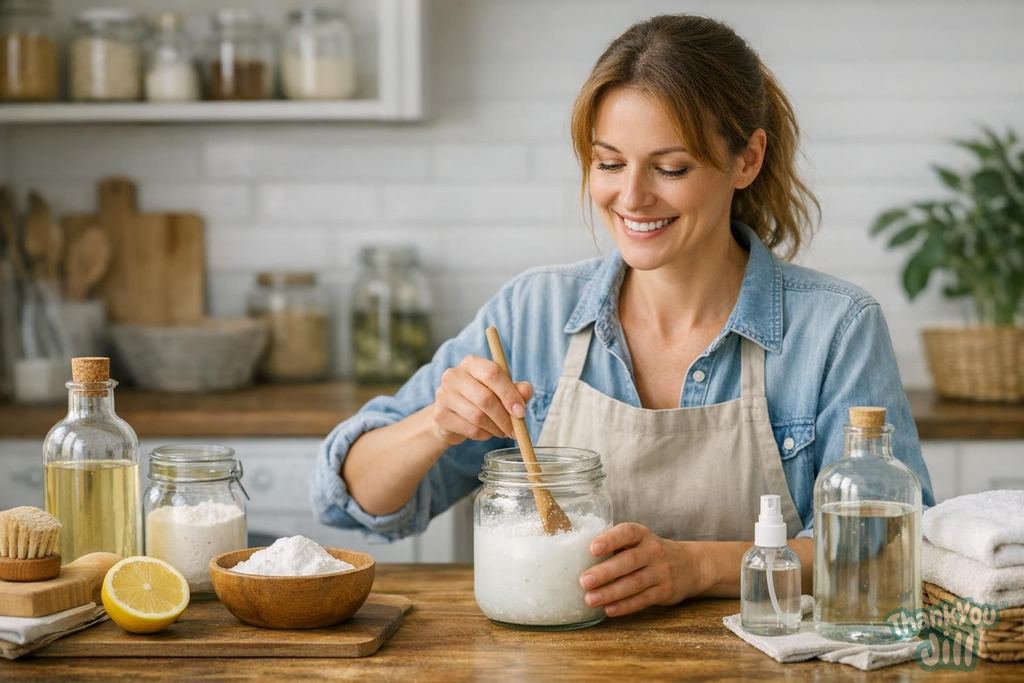
Latest News




Comments
No comments yet. Be the first!
Leave a comment