


 Italiano
 Français
 Deutsch
 Español
 Português
 Svenska
 Suomi
Suomi
Reducing Electromagnetic Fields at Home
Practical precautions without the paranoia
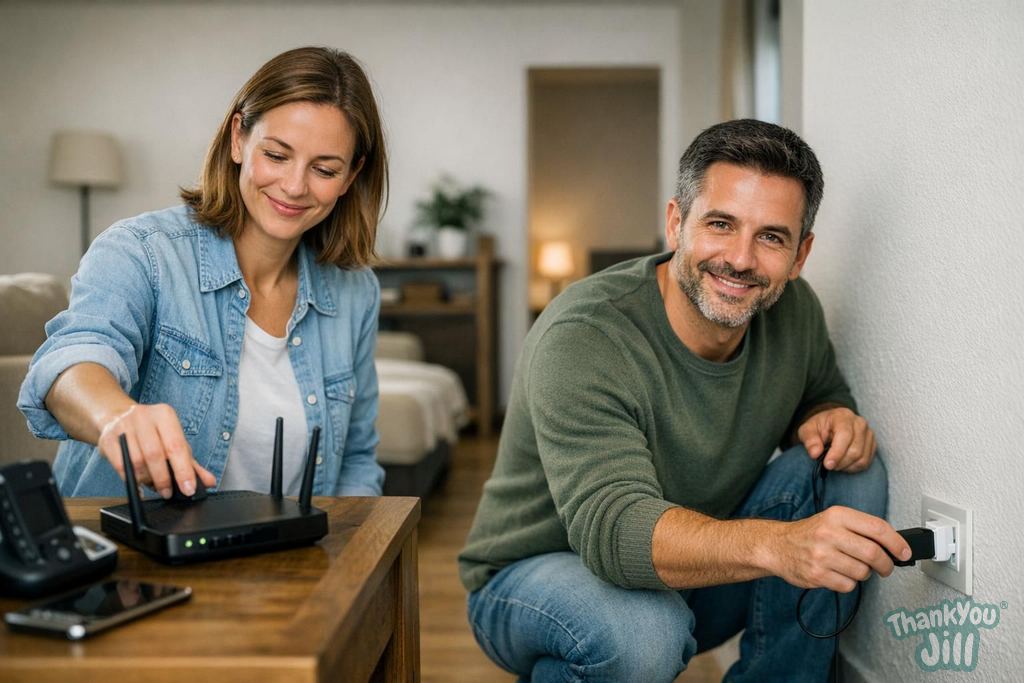
Electromagnetic fields (EMF) are produced by any device that generates or transmits electrical signals: high-voltage power lines, household appliances, WiFi routers, cell phones, smart meters. The debate about their safety is intense but often confused by a failure to distinguish between different types of EMF: extremely low-frequency fields (ELF-EMF: 50 Hz from the electrical grid) have completely different physical characteristics from radiofrequency fields (RF-EMF: WiFi, cell phones, Bluetooth). This distinction is crucial for assessing real risks.
What the science says: current evidence
Extremely low-frequency fields (ELF-EMF, 50 Hz): the IARC (International Agency for Research on Cancer) classified ELF magnetic fields as "possibly carcinogenic to humans" (Group 2B) in 2002, primarily based on epidemiological studies showing a slight increase in childhood leukemia risk in children exposed to fields above 0.3–0.4 μT. The observed risk is modest (a 100% increase doubles the risk from 1 in 20,000 to 2 in 20,000) and has not been confirmed by plausible biological mechanisms. Radiofrequency fields (RF-EMF, WiFi and phones): the IARC also classified these as "possibly carcinogenic" (Group 2B) in 2011, mainly for glioma in heavy phone users. Three large prospective cohort studies (COSMOS, Interphone, Danish Cohort) found no convincing evidence of increased brain tumor risk with cell phone use at current exposure levels. The consensus of major health agencies (WHO, EFSA, ICNIRP) is that EMF exposures within established limits do not constitute a demonstrated health risk.
Common-sense precautions: reducing exposure without paranoia
For cell phones (RF-EMF): distance is the most important factor—field intensity decreases with the square of the distance. At 5 cm from the head, exposure is 4 times that at 10 cm. Practical steps: use speakerphone or headsets for long calls (reduces head exposure by 90–99%), don't keep your phone in your pants pocket near your genitals for many hours a day (some meta-analyses show an association between intense exposure and reduced sperm quality: preliminary, inconclusive evidence), don't sleep with your phone under your pillow or near your head (charge it in another room, use a traditional alarm clock), during calls, wait for the connection to be established before bringing the phone to your ear (the field is strongest during the connection phase). For WiFi: a WiFi router emits much lower RF fields than a cell phone (it's stationary and often at a distance). If you want to reduce exposure: position the router away from areas where you spend extended time (not near the bed or work desk), turn off WiFi at night (saves energy too), use ethernet cables instead of WiFi for stationary devices (desktop computers, smart TVs, NAS drives).
High-voltage power lines: the real ELF risk
High-voltage power lines (132–380 kV) produce the most intense ELF fields among domestic and urban sources. The World Health Organization recommends caution in homes with magnetic field exposure above 0.3–0.4 μT (microtesla). How to check: distance from high-voltage lines is the main measure. The field drops rapidly with distance: at 100 meters from a 380 kV line, the field is typically below 0.2 μT (within the precautionary limit). Magnetic field meters (gaussmeters) are available for €30–50 to measure the field in your home. If measurements show fields above 0.3–0.4 μT in sleeping areas: the precaution of rearranging the bed or bedroom is reasonable. Electrical transformers (distribution "boxes") produce significant fields only within a few meters' radius.
Smart home devices and 5G: the current picture
5G uses higher frequencies than 4G (1–100 GHz vs. 700 MHz–2.6 GHz for 4G). Higher frequencies have less penetration into biological tissue: energy is absorbed mainly by the skin rather than penetrating toward internal organs. ICNIRP updated its guidelines in 2020, extending recommendations to the higher frequencies of 5G, with conservative exposure limits. Current scientific evidence shows no health risks from 5G at typical urban environmental exposures. Smart home IoT devices (Zigbee, Bluetooth, WiFi): produce much lower fields than cell phones. Since exposure is far lower and devices are at a distance from the person (not held near the head for hours), the additional risk compared to background environmental levels is negligible. Practical conclusion: common-sense precautions for cell phones (distance, headsets, keeping them out of bed) cover most of the hypothetical risk. You don't need shielding, anti-5G films, or other anti-EMF products (none of these have proven effectiveness).

WiFi is not dangerous at normal exposure levels—scientific evidence confirms this. Keeping your phone near your head for hours every day is a reasonable precaution to take, not out of fear but out of common sense: use headsets. Sleeping with your smartphone under your pillow makes no sense from a sleep comfort perspective, let alone from an EMF standpoint. Sensible precautions exist; anti-5G products sold online do not.
How to measure electromagnetic fields in your home
For those who want to measure EMF in their home: ELF magnetic field meters (gaussmeters): Trifield TF2 (the most reliable for home use, around €150), simple gaussmeters on Amazon for €30–50 for indicative measurements. Radiofrequency meters: HFW35C, Cornet ED88T (measures both ELF and RF): €100–200. How to interpret measurements: ELF fields below 0.1 μT: negligible. Between 0.1 and 0.4 μT: precaution recommended for prolonged exposures (sleeping, working). Above 0.4 μT in areas of long-term occupancy: consider reduction measures. RF fields below 0.1 V/m (approximately 0.003 μW/cm²): very low. ICNIRP limits for general population use are 61 V/m (900 MHz) and 41 V/m (1800 MHz): tens of thousands of times higher than typical exposures in residential areas.
Prevention for the bedroom: the most useful measures
Eight hours of sleep are hours of continuous exposure: the bedroom is where precautionary measures make the most sense. Reasonable measures: charge your phone outside the bedroom, use a traditional alarm clock, remove (or turn off) WiFi routers and IoT devices from the bedroom, don't position your bed under or near the main electrical panel of your apartment (it produces high ELF fields within a 0.5–1 meter radius), move your bed away from exterior walls shared with areas containing electrical meters or other transformers. These measures require no special equipment, cost nothing, and produce clear benefits regardless of how you assess EMF risk: less digital distraction, better sleep quality, more orderly and relaxing spaces.
"Anti-EMF" products: what to avoid
The market for "anti-radiation" products is full of items without scientific basis: phone stickers that "block waves," "bioenergetic" necklaces and bracelets that protect from fields, anti-WiFi paints, shielding curtains, "harmonizing chips." None of these products have scientific evidence of effectiveness. The only products that actually reduce RF exposure are physical shielding materials (Faraday cage) that also block useful signals (making the phone unusable). Faraday cages for sleeping (metal mesh around the bed) are sold: they block 5G and WiFi but also emergency calls. The effective and free precaution remains: distance and reduced time of exposure near devices that emit.
Frequently Asked Questions
What are the most effective precautions for reducing cell phone electromagnetic field exposure?
The most effective precautions include using headsets or speakerphone for long calls, not keeping your phone close to your body for many hours, avoiding sleeping with your phone under your pillow, and maintaining at least 10 cm distance from your head during use.
How can I measure and interpret ELF electromagnetic field levels in my home?
You can use domestic gaussmeters costing €30–150 to measure ELF fields. Values below 0.1 μT are negligible, between 0.1 and 0.4 μT require precautions for prolonged exposures, while above 0.4 μT in areas of long-term occupancy it's advisable to adopt reduction measures.
When is it worth turning off the WiFi router to reduce electromagnetic field exposure?
Turning off the WiFi router at night is recommended to reduce RF field exposure, save energy, and improve sleep quality, especially if the router is positioned near areas of prolonged occupancy such as the bedroom.
What is the real risk associated with electromagnetic field exposure from high-voltage power lines near homes?
High-voltage power lines produce intense ELF fields, but the real risk is modest if exposure is below 0.3–0.4 μT. Distance is crucial: at 100 meters from a 380 kV line, the field is generally below 0.2 μT, considered safe according to international recommendations.


Latest News




Comments
No comments yet. Be the first!
Leave a comment