


 Italiano
 Français
 Deutsch
 Español
 Português
 Svenska
 Suomi
Suomi
Sodium in Water
How much is too much and who should avoid it
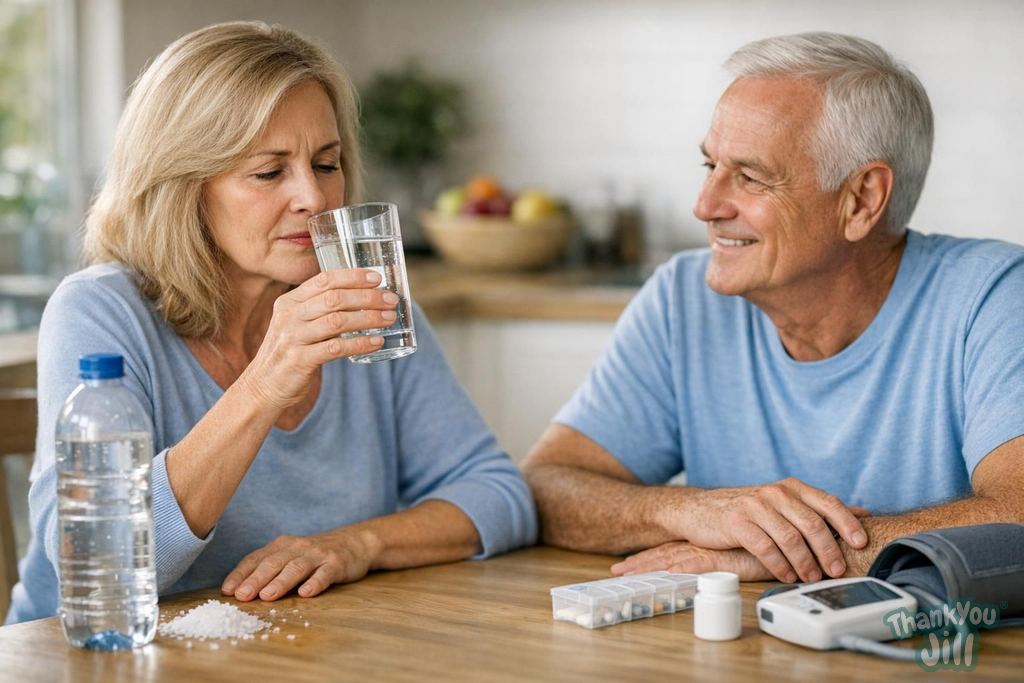
When you think of sodium, you probably think of table salt. But there's sodium in the water you drink too. And for some people, this hidden sodium can be a serious problem that affects blood pressure, heart health, and overall wellness.
The good news? Sodium is always listed on the water label. The bad news? Hardly anyone checks it. Yet for people with high blood pressure or heart problems, this number can make the difference between feeling good and feeling terrible.
How much sodium is actually in water
Mineral waters contain anywhere from less than 2 mg/l to over 200 mg/l of sodium. That's a massive difference. If you drink 2 liters a day of water with 100 mg/l of sodium, you're getting 200 mg of sodium from water alone.
It might sound like a small amount, but add this to the 5-10 grams of salt you eat during the day (often without realizing it), and you'll see that every milligram counts. Especially if you have blood pressure issues.
The law says that water with less than 20 mg/l of sodium can be labeled "suitable for low-sodium diets" or "low sodium content." This is the limit you should look for if you need to cut back on sodium.
Why sodium raises blood pressure
Sodium holds water in your body. When you eat or drink too much sodium, your body retains more fluid to dilute it. More fluid means more blood volume circulating. More volume means more pressure on artery walls.
It's a simple but powerful mechanism. For people who already have high blood pressure, even small amounts of extra sodium can push those numbers up. It's like adding water to a pipe that's already full: the pressure increases.
That's why your doctor always tells you to cut back on salt. But nobody tells you that water can contain too much of it as well. It's invisible sodium that sneaks in without you noticing.
Who absolutely needs to monitor sodium
If you have hypertension (high blood pressure), you need to choose water with less than 20 mg/l of sodium. This isn't just advice—it's a necessity. Your blood pressure can shift just by switching water brands.
If you have heart failure or kidney problems, sodium is even more critical. Your organs struggle to eliminate the excess, so every extra milligram is a burden they can't handle.
If you're pregnant and your blood pressure is rising, low-sodium water is essential. Pregnancy already puts stress on your cardiovascular system. Don't add extra strain.
If you're following a low-sodium diet prescribed by your doctor, water is part of that diet. You can't control salt in your food and then drink sodium-rich water. It doesn't make sense.
Who can handle more sodium
If you're young, healthy, have normal blood pressure, and exercise regularly, sodium in water isn't a problem. In fact, after intense training, water with 50-100 mg/l of sodium can help you recover the salts you lost through sweat.
Athletes lose sodium through perspiration. If you drink only low-sodium water after exercise, you risk diluting your blood too much and getting cramps. Some sodium in post-workout water is actually helpful.
But be careful: this only applies if you're doing genuinely intense exercise, not a 20-minute walk. And it only applies to water consumed after activity, not your daily drinking water.
How to read sodium on the label
On the label you'll find "Sodium" or "Na+" followed by a number in mg/l. This number tells you how many milligrams of sodium are in each liter of that water.
Multiply that number by the liters you drink daily. If the label says 50 mg/l and you drink 2 liters, you're getting 100 mg of sodium from water alone. Add this to the sodium in your food and you'll have your daily total.
The World Health Organization recommends less than 2000 mg (2 grams) of sodium per day. That's equivalent to 5 grams of salt. Most people consume double or triple that. And water contributes to it.
The truth about "mineral-rich" waters
Some medium-mineral waters are high in sodium. It's not a flaw—it's a feature. They can have 100, 150, even 200 mg/l of sodium. They're excellent for athletes or people who sweat a lot, but terrible for people with high blood pressure.
The problem is that many people drink these waters thinking "more minerals = better health." But more sodium isn't always better. It can be dangerous.
If you're unsure, always choose water with less than 20 mg/l. It's the safe choice for everyone. Even if you don't have blood pressure problems, low-sodium water will never hurt you.

For people with high blood pressure, sodium in water isn't a detail—it's a choice that can protect your heart.
Check your current water right now
Grab the water bottle you normally drink. Flip the label and look for "Sodium" or "Na+." Read the number. If it's above 20 mg/l and you have high blood pressure, that's not the right water for you.
Go to the supermarket and compare labels on 5-6 different brands. You'll discover waters with 2 mg/l and others with 150 mg/l. The difference is huge. Choose the lowest one.
Keep a blood pressure diary
If your blood pressure is borderline (130-140 systolic), try this: for two weeks, drink only water with less than 10 mg/l of sodium. Measure your blood pressure every morning at the same time. Write down the readings.
After two weeks, compare with your previous readings. Many people see a drop of 5-10 points just by switching water. It's a small change but a meaningful one.
Watch out for sparkling water
Many sparkling waters have more sodium than still water. The carbonation process can increase sodium content. If you love sparkling water, always check that it's under 20 mg/l.
Low-sodium sparkling water does exist. It costs a bit more, but it's out there. If you don't want to give up the bubbles, look for it.
Involve the whole family
If you need to cut back on sodium, it's probably a good idea for everyone at home. Children don't need extra sodium. Older adults often have high blood pressure without knowing it. Low-sodium water is good for everyone.
Buy one brand for the whole family. It'll be easier to manage and nobody will accidentally drink the wrong water.
Restaurants and travel
When eating out, always ask what brand of water they serve. If it's high in sodium, ask if they have alternatives. Many restaurants have different brands available.
When traveling, always bring a bottle of your regular water with you. At rest stops they usually only sell the most commercial brands, which aren't always low in sodium.
Don't try to compensate by drinking more water
Some people think: "If I drink more water, I'll dilute the sodium." No. If the water contains sodium, the more you drink, the more sodium you consume. The only way to reduce sodium is to choose water that contains less of it.
Drink the right amount of water (1.5-2 liters per day) but make sure it's the right quality for you.
Quick reference guide
Normal blood pressure and good health: sodium in water isn't a problem, choose freely.
High or borderline blood pressure: only water with less than 20 mg/l of sodium.
Intense exercise: after training, water with 50-80 mg/l is fine for salt recovery.
In any case: always read the label. The sodium is right there. Just look.
Frequently asked questions
What's the recommended sodium limit in water for people with high blood pressure?
For people with high blood pressure, it's essential to choose water with less than 20 mg/l of sodium. Exceeding this limit can raise blood pressure and worsen cardiovascular health.
How do you read and calculate sodium in water from the label?
On the label you'll find 'Sodium' or 'Na+' followed by a value in mg/l. Multiply this number by the liters of water you drink daily to find out your total sodium intake from water.
When is it worth choosing water with higher sodium?
After intense physical activity, water with 50-100 mg/l of sodium can help replenish the salts lost through sweat, preventing cramps and electrolyte imbalances. It's not recommended for daily consumption.
What happens if you drink sodium-rich water without health problems?
If you're in good health and have normal blood pressure, drinking water with higher sodium isn't a problem. However, for people with hypertension or heart disease, it can worsen their condition.


Latest News




Comments
No comments yet. Be the first!
Leave a comment