


 Italiano
 Français
 Deutsch
 Español
 Português
 Svenska
 Suomi
Suomi
Water and Metabolism: What's the Real Impact?
The role of hydration in energy expenditure
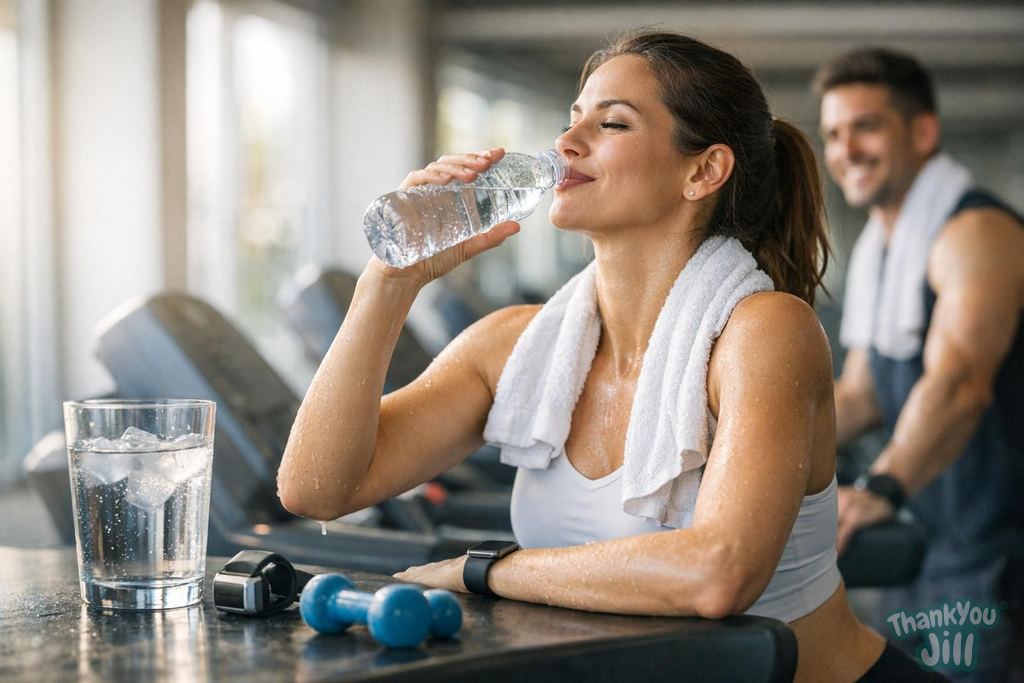
Information without action is useless. You've learned a lot about water: composition, benefits, strategies, myths. Now transform this knowledge into concrete habits. This article is your operational guide: what to do today, tomorrow, and over the coming months to make hydration automatic and optimal.
Week 1: Baseline and awareness
First step: discover how much you're drinking now. For 7 days, without changing your habits, keep track. Use an app or a notebook. Write down every glass, every bottle.
At the end of the week, calculate your daily average. This is your starting point. Many people discover they drink 800 ml a day while thinking they drink 2 liters. Reality is surprising.
Second: check the water you're drinking. Tap or bottled? Read the label (mineral content, sodium, pH). Do you know what you're drinking or are you drinking randomly?
Weeks 2-3: Basic implementation
Goal: reach 2 liters a day (or the right amount for you based on weight/activity). Not from 800 ml to 2 liters in one day: increase gradually.
Week 2: add 300 ml a day. If you were drinking 800 ml, go to 1.1 liters. Week 3: another 300 ml. You reach 1.4 liters. Week 4: another 300 ml. You reach 1.7 liters. Week 5: final 300 ml. You reach 2 liters.
Gradual is sustainable. Drastic fails after 3 days.
Month 2: Timing optimization
Now you're drinking enough. Next level: drink at the right time. Implement the timing plan from article 27.
Upon waking: 2 glasses (500 ml). Before meals: 1 glass 20 minutes before. During the day: 1 glass every 2 hours. Evening: reduced after 8 pm.
Use reminders (app, alarms, sticky notes) for the first 3 weeks. After that it becomes automatic.
Month 3: Quality and personalization
You have quantity and timing. Now refine the quality. If you use tap water: consider whether you need a filter. If you use bottled water: are you sure it's the right choice for your area?
Get your tap water analyzed (€100 well invested). Based on the results, decide: it's fine as is, needs a basic filter, needs reverse osmosis, or bottled water is better.
Invest in 2-3 quality water bottles (stainless steel, glass). One for home, one for work/school, one for sports. Total: €50-100. They'll last you years.
Months 4-6: Consolidation and adjustment
The first 12 weeks are the hardest. After 3 months, the habit is consolidated. Now fine-tune based on your body's feedback.
How do you feel? More energy? Fewer headaches? Better skin? Regular digestion? If yes, continue. If no, adjust: maybe you need more water, or less, or different mineral composition.
Adapt to seasons: increase in summer, maintain in winter. Adapt to activity: weeks of intense exercise increase, sedentary weeks maintain.
Long-term goals (1 year+)
After 6-12 months of proper hydration, the habit is rooted. You drink automatically, without thinking. Like brushing your teeth: you don't decide, you just do it.
Maintenance goals: continue drinking 2 liters/day (or your optimal amount), review water quality annually (analysis, filter changes), update bottles if needed, share the habit with family and friends.
The emergency plan
What happens if you slip up? If for a week you drink less because you were away, sick, or going through a stressful period?
Don't panic. You haven't failed. Pick it back up the next day. No need to start from zero. The habit is there, it just needs reactivating.
How to involve others
If you have family: implement the plan for everyone. Personalized bottles, shared reminders, family challenges ("Who can drink 2 liters for 7 days?").
If you have colleagues: propose a "hydration group." Bottle on your desk, shared reminders at 10, 12, 3, and 5 pm. Positive peer pressure works.
Tracking and motivation
Use an app to track progress. Seeing graphs go up motivates you. Celebrate milestones: 7 consecutive days, 30 days, 100 days. Small wins build big habits.
Share on social media (if you like): "Day 30 of proper hydration!". Not to brag, but to inspire others and get support.
The final cost-benefit
Total investment to optimize hydration: water analysis (€100 one-time), possible filter or reverse osmosis (€200-800 one-time), water bottles (€50-100 every 5-10 years), app (free), time to implement (1-2 hours per week for 3 months).
Maximum total: €1,000 + 20 hours over 3 months. Benefits: better health for the rest of your life, savings on bottled water (if you used it), reduction in headaches and related problems, more daily energy.
ROI (Return On Investment): infinite. Minimal investment, permanent benefit.

Knowledge without action is an illusion. You have the information. Now you have the plan. Start today. The first glass is the most important.
First 30 days checklist
Days 1-7: track how much you're currently drinking. Day 8: buy a 1.5-2 liter graduated water bottle. Day 9: set 6 reminders on your phone (8 am, 10 am, 12 pm, 3 pm, 5 pm, 8 pm). Days 10-14: gradually increase to 1.5 liters. Days 15-21: increase to 1.8 liters. Days 22-30: increase to 2 liters.
End of month: you have the basic habit. Congratulations.
Document your journey
Take a photo on day one. Write down how you feel: energy, skin, digestion, headaches. After 30 days, take another photo and notes. Compare. Changes are evident but gradual. Comparison makes them visible.
Find an accountability partner
A friend, partner, colleague. Someone doing the journey with you or holding you accountable. "Did you drink water today?". External accountability doubles your chances of success.
Celebrate, don't judge
Perfect day? Celebrate (mark on calendar, positive note). Imperfect day? Don't judge. Start again tomorrow. Habits are built with 80% good days, not 100% perfect ones.
Adapt, don't abandon
If the plan isn't working: adapt, don't abandon. Reminders too intrusive? Use fewer but more strategic ones. Bottle too big? Use a smaller one but refill it more often. There's no "only one way." There's "your way."
Teach others
After 90 days, you're an expert. You've transformed knowledge into practice. Now help others. Friends, family, online. Teaching solidifies your habit and helps the world.
The final message
Drinking water is simple. Drinking enough water is hard. Drinking enough water every day for the rest of your life requires a system, not motivation.
You have the system. You have the information. You have the plan. All that's missing is: starting.
Start today. Now. Before you close this article, drink a glass of water. It's the first step of the rest of your life.
Thank you for reading all these articles. Water is life. Treat it with the respect it deserves. Your body will thank you every single day.
Frequently asked questions
How can I gradually increase the amount of water I drink each day without failing?
To increase your water intake sustainably, add about 300 ml each week until you reach 2 liters a day. A gradual increase prevents the failure that often happens with drastic changes and helps consolidate the habit over time.
What's the best time of day to drink water to optimize metabolism?
The ideal timing involves drinking 2 glasses upon waking, one glass 20 minutes before meals, one glass every 2 hours during the day, and reducing intake after 8 pm. This schedule helps maintain consistent hydration and supports your metabolism.
How do I know if the water quality I'm drinking is adequate and whether I need a filter?
It's recommended to have your tap water analyzed to check mineral content, sodium, and pH. Based on the results, you can decide whether the water is already good, if a basic filter is needed, if reverse osmosis is necessary, or if bottled water is the better option.
What happens if I drink less water than necessary for a period and how do I get back on track?
If you drink less water for a few days due to stress or illness, it's not a failure. Simply resume the habit the next day without starting from scratch, since the habit is already established and reactivates easily.

Latest News




Comments
No comments yet. Be the first!
Leave a comment