


 Italiano
 Français
 Deutsch
 Español
 Português
 Svenska
 Suomi
Suomi
Bicycle
Health and Environmental Benefits
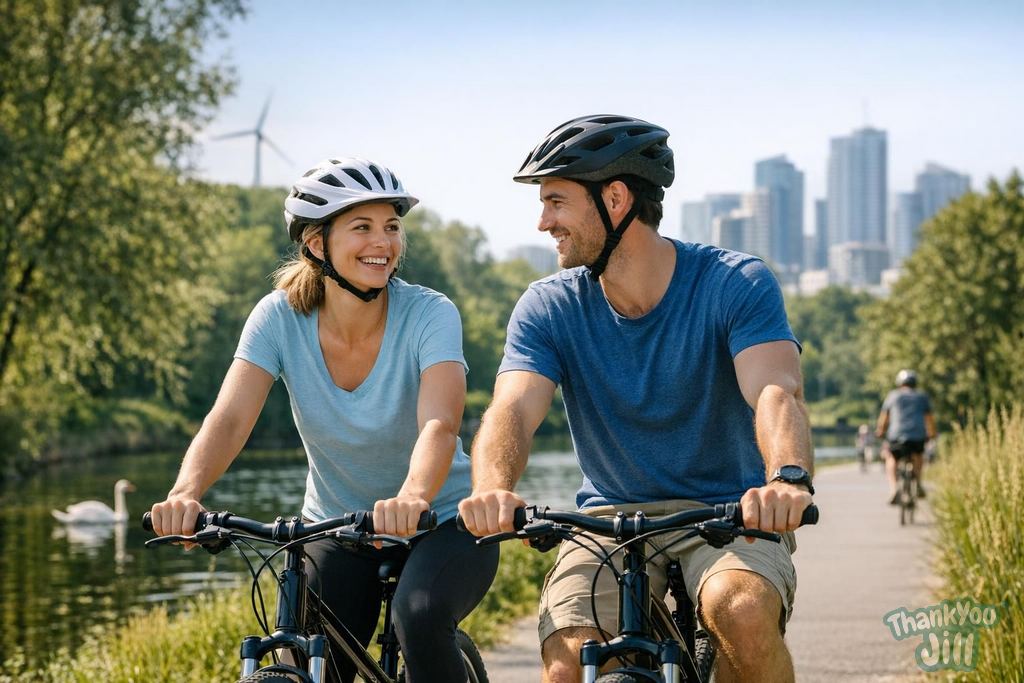
The bicycle is by far the most efficient means of transportation in terms of energy per passenger per kilometer: a cyclist uses about 3.5 times less energy than a pedestrian and 50 times less than a car driver. In terms of emissions, it produces approximately 5-15 g CO2/pkm (attributable to the extra food consumed by the cyclist) compared to 116-171 g/pkm for cars. In Italy, the modal share of bicycles for urban trips is about 5-6% (national average), much lower than the European average (8-10%) and far behind leaders like the Netherlands (28%) and Denmark (18%). The growth potential is enormous: 30-40% of car trips in Italian cities are under 5 km, a perfectly cyclable distance.
The health benefits of daily cycling: the data
Daily cyclists have significantly better health than non-cyclists. Study by Rasmussen et al. (PLOS Medicine, 2022) on 186,000 adults in 5 European countries: cycling to work was associated with a 20% reduction in mortality from all causes. Study by Celis-Morales et al. (British Medical Journal, 2017) on 263,450 British adults: bike commuting was associated with a 41% reduction in mortality risk, 46% reduction in cardiovascular risk, and 45% reduction in cancer risk. University of Glasgow study: cycling to and from work produced 2.5 times more health benefit than the same trip on foot. Daily cycling is moderate aerobic exercise integrated into your routine without any extra time commitment: exceptional efficiency in terms of health for the time invested. It doesn't require a change of clothes for short trips (under 5-7 km on flat terrain) and sweat is manageable at a leisurely pace.
Bicycle safety: real data and how to improve it
Safety is the main concern that deters many potential Italian cyclists. The real data: in terms of deaths per billion kilometers traveled, the bicycle is more dangerous than cars in absolute terms, but is much less dangerous than cars in terms of deaths per hour of exposure (cyclists travel fewer kilometers overall). However, research shows that bicycle safety increases enormously with critical mass: where there are more cyclists, car drivers pay more attention and safety improves for everyone (the "safety in numbers" effect by Jacobsen, 2003). How to increase individual safety: helmet (reduces the risk of head trauma by 60-80%), front and rear lights (mandatory at night, essential in any low-visibility conditions), visible clothing (reflective vest, bright colors), follow traffic rules (stop at red lights, don't ride on sidewalks), use bike lanes where available, position yourself correctly (in the center of the road, not on the edge where you're exposed to opening car doors).
The electric bike (e-bike): the revolution in cycling mobility
The electric bike (e-bike or EPAC, Electric Power-Assisted Cycle) has radically transformed the cycling market: in 2023, more e-bikes were sold in Europe than traditional cars in terms of units (EBicycles.eu). Pedal assistance (up to 25 km/h with motor assistance, the European limit for EPACs that don't require a license) makes any route cyclable for almost anyone: hills, distances up to 25-30 km, heavy loads, people with limited fitness. Data shows that e-bike owners travel an average of 3 times more kilometers by bike than traditional cyclists, with greater substitution of car trips. The e-bike produces approximately 20-35 g CO2/pkm (electrical energy + battery production): much less than even electric cars. In Italy, municipalities and regions are expanding incentives for e-bike purchases (the state "bike bonus" and regional programs): always check availability for your municipality before purchasing.

The bicycle is not a sport: it's a means of transportation that also provides exercise. If you cycle to work, you don't need to find time to go to the gym. The air in the city is cleaner where there are more bikes. The streets are safer. Personal costs are almost zero. It's not nostalgia: it's the most efficient urban mobility solution that exists, and in Italy we use it a tenth of what we could.
How to start using a bike for daily commuting
The main obstacle is not the bike: it's habit. Practical strategies for the transition: start with one day a week (the day with the best weather forecast, the shortest or most scenic route), plan your route in advance using Google Maps in bike mode (it automatically calculates the safest route with bike lanes), solve the sweat problem (change of clothes bag, shower at the office if available, leisurely pace, e-bike as an easy solution), organize bike parking (quality lock: a Kryptonite chain or similar costing 50-80 euros is the minimum for a valuable bike, keep removable components in the office), learn basic maintenance (inflate tires weekly, lubricate the chain monthly: 15 minutes of care prevents 90% of problems).
Which bike to choose for the city: the practical guide
For daily urban mobility, you don't need the most expensive bike. City/Dutch bike: integrated mudguards, cargo rack, covered chain, sturdy tires. Practical and durable for those who don't want frequent maintenance. Cost: 300-600 euros for good quality. Hybrid bike: a middle ground between road bike and mountain bike. Versatile, lightweight, with good grip. Suitable for mixed terrain. Cost: 300-800 euros. E-bike city: like a city bike but with a motor. Ideal for longer trips or hilly terrain. Cost: 800-2,500 euros for good quality. If you're just starting out and unsure about using it: test it with your city's bike-sharing service before buying. If you use bike-sharing 3-4 times a week for a month, you're ready to purchase. Where to buy: specialized local bike shops offer post-sale service and maintenance that big-box stores don't provide. For the city, the quality of post-sale service is more important than the lowest price.
Cycling infrastructure in Italy: current state and how it will change
Italy has approximately 11,000 km of bike lanes, a network much lower than the European average per capita. The National Cycling Mobility Plan by MIMS (Ministry of Infrastructure) plans 6,000 km of National Cycle Routes by 2026 (major national cycle routes like VenTo, the Apulian Aqueduct Cycle Route, the Camino de Santiago by bike). The PUMS (Urban Sustainable Mobility Plan) is mandatory for municipalities with over 100,000 inhabitants and must include specific cycling objectives. How to participate in change: local cycling associations (FIAB, Legambiente cycling) pressure municipalities to improve infrastructure. Participate in public consultations on PUMS, report problems with existing bike lanes, join monthly Critical Mass rides: these are all ways to contribute to making cities more cyclable.
Frequently Asked Questions
What are the main health benefits of daily bicycle use?
Daily bicycle use significantly reduces the risk of mortality, cardiovascular disease, and cancer. It's moderate aerobic exercise integrated into your routine, improving health without requiring extra time or changes of clothes for short trips.
How can you increase safety when cycling in the city?
To increase safety while cycling, it's important to wear a helmet, use front and rear lights, wear visible clothing, follow traffic rules, use bike lanes, and position yourself correctly on the road. Additionally, safety improves with more cyclists on the road.
What advantages does an electric bike offer compared to a traditional bike?
The electric bike allows you to tackle hills, longer distances, and carry heavy loads with less effort. E-bike owners travel an average of three times more kilometers and replace more car trips, while maintaining much lower emissions than cars.
How do you choose the right bicycle for daily urban commuting?
For the city, it's best to choose a city bike with practical accessories like cargo racks and mudguards, a hybrid bike for versatility, or an e-bike for longer or hilly routes. It's recommended to try bike-sharing before purchasing and to prefer specialized shops for post-sale service.
Latest News




Comments
No comments yet. Be the first!
Leave a comment