


 Italiano
 Français
 Deutsch
 Español
 Português
 Svenska
 Suomi
Suomi
Micromobility
E-scooters and alternatives
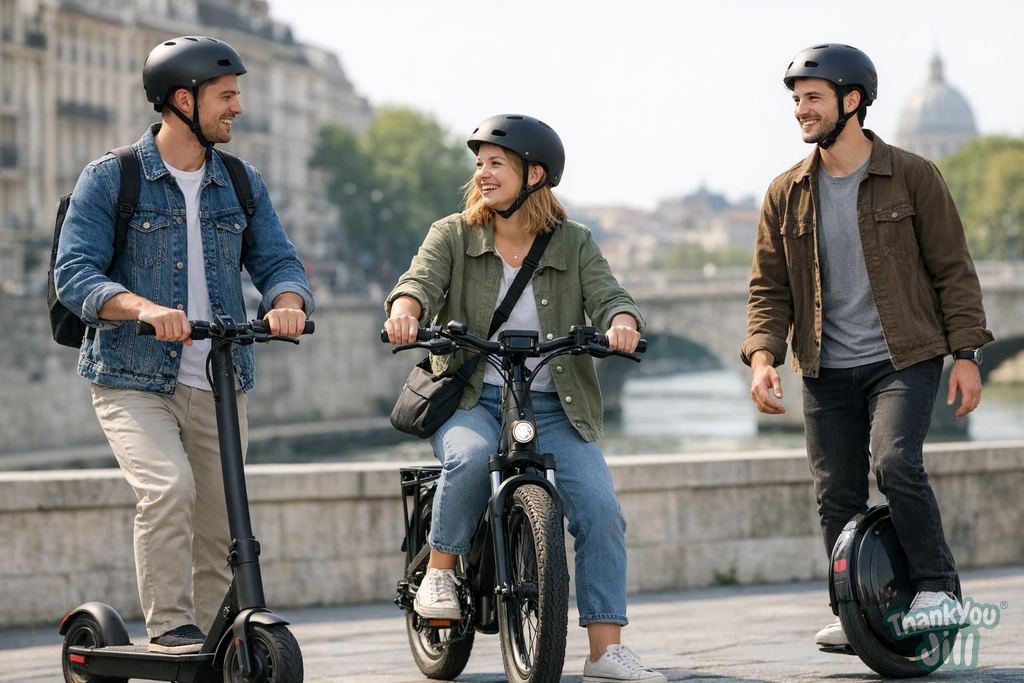
Electric micromobility (e-scooters, lightweight e-bikes, hoverboards, onewheel) experienced explosive growth in European cities between 2018 and 2022, driven by operators like Lime, Bird, Voi, Dott, and Tier. Italy regulated e-scooters through Decree Law 76/2020 (Simplification Decree), which permits them on roads and bike lanes with several restrictions: maximum speed of 25 km/h on roads, 6 km/h on sidewalks (effectively prohibited), helmet requirement for minors, prohibition for users under 14 years old, and mandatory lights and braking systems on both wheels. Since 2023, helmets are mandatory for all minors and strongly recommended for adults.
The environmental impact of shared scooters: the surprise
Contrary to intuition, shared scooters aren't always more sustainable than cars. A landmark study from the University of Lyon (Hollingsworth et al., 2019) calculated the carbon footprint of the entire lifecycle of shared scooters: scooter production, collection and charging operations (using gas vans), the vehicle's average lifespan (often 1-2 years due to vandalism and wear in early generations), and the type of trip replaced. Result: shared scooters produced an average of 125 g CO2/pkm in early generations (more than a car for one person), mainly because collection and charging vans traveled many kilometers and scooters had short lifespans. Subsequent operator generations (Lime Gen 4, Voi, Dott) improved significantly: more durable scooters (3-5 years), charging via swappable batteries instead of vans collecting all vehicles, and in some cities fixed charging points. Latest estimates: 30-90 g CO2/pkm depending on the operator and city. Sustainable compared to cars (116-171 g) but not compared to traditional bikes (5-15 g) or e-bikes (20-35 g). The most important factor: whether the scooter replaces a car trip (good) or a walking or biking trip (not good).
Micromobility safety: the real data
Accident data involving scooters shows a concerning trend. In Italy, ISTAT records an increase in scooter-related accidents from 2020 onwards. The most common accident categories: autonomous falls (often due to potholes, grates, or curbs that stop the small wheel), collisions with cars (often due to scooter rider visibility issues), collisions with pedestrians (when scooters are used on sidewalks). Risk factors: excessive speed, absence of helmets (adults don't have a legal requirement but helmet use reduces the risk of head trauma by 85%), riding under the influence (30-40% of scooter accidents involve alcohol according to some urban statistics), two people on one scooter (prohibited but frequent). How to use it safely: always wear a helmet, respect speed limits, don't use it on sidewalks (use the road or bike lane), don't use it at night without working lights, don't use it after drinking.
Alternatives to scooters: the micromobility ecosystem
Cargo bikes: bicycles with a large loading platform at the front or rear. Ideal for replacing cars for shopping, transporting children, and deliveries. E-cargo bikes make this solution practical even over longer distances and with heavy loads. Growing in European cities as an alternative to vans for last-mile deliveries. Folding bikes: you can take them on the subway or train, park them at the office, and use them for segments not covered by public transport. Brompton (premium British brand) and more affordable options (Xiaomi, Decathlon) serve this growing market. Electric skateboard and onewheel: niche enthusiast market, hasn't reached mass scale. Hoverboard: limited by road use regulations and reduced speed. Electric trike (tricycle): more stable than a scooter, suitable for those who don't ride bikes. Being tested in some cities as a solution for elderly people and those with balance limitations.

Shared scooters aren't automatically green: it depends on how they're used and managed. If they replace a car trip, that's positive. If they replace a walk, that's questionable. If they're abandoned on sidewalks blocking pedestrians, it's a civility issue before it's an environmental one. Micromobility works where there's education, regulation, and adequate cycling infrastructure. Without these, it's chaos.
Road code rules for scooters in Italy
Main regulations updated for 2024: maximum speed of 25 km/h on roads, 6 km/h on pedestrian paths (essentially prohibited on sidewalks). Helmet requirement for minors. Prohibited for users under 14 years old. Mandatory lights (white front and red rear) during night riding or low visibility conditions. Mandatory reflective vest during nighttime hours. Prohibition on carrying passengers. Shared scooters must have geo-fencing systems that automatically lock them outside permitted zones and slow them to 6 km/h in pedestrian areas. Municipalities can further restrict circulation areas and establish mandatory parking zones. Penalties: fines range from €50 to €400 for major violations (excessive speed, riding without a helmet as a minor, reckless parking).
Owned scooter vs. shared: when each makes sense
Shared scooters: convenient for occasional users (1-2 times per week), tourists, and commuters who only use scooters occasionally for the last mile. Typical cost: €0.15-0.30 per minute plus €1 unlock fee. 10 minutes of use: €2.50-4. Owned scooter: convenient for daily users with a fixed route. Cost: €300-700 for a quality model (Xiaomi, Segway, Ninebot). With 5 km daily use, break-even compared to sharing is reached in 3-6 months. How to choose a model: minimum 25 km range (without range anxiety), 250-350W motor power (sufficient for small hills), electric plus mechanical braking (dual braking system: legally required), solid tires or 10-inch inner tubes (more comfortable and safer than 8-inch), weight under 12-14 kg (for carrying on the subway or in elevators).
Micromobility and "last mile": its role in the transport ecosystem
The "last mile problem" (the journey between the public transport station and final destination) is the main obstacle to public transport use for many commuters. If the metro station is 20 minutes' walk from your destination, many people prefer cars. If it's 5 minutes by scooter or bike, public transport becomes attractive. Micromobility is therefore complementary to public transport, not competitive. Cities that best integrate micromobility are those that: place bike-sharing and scooter stations physically close to metro/tram/bus station exits, integrate fares and subscriptions (a public transport pass that includes bike-sharing minutes: the MaaS model), maintain safe infrastructure (bike lanes, well-maintained sidewalks, adequate lighting).
Frequently asked questions
What is the real environmental impact of shared electric scooters compared to cars and bikes?
Shared scooters have a carbon footprint ranging from 30 to 90 g CO2/pkm, more sustainable than cars (116-171 g) but less so than traditional bikes (5-15 g) or e-bikes (20-35 g). The impact depends mainly on the type of trip being replaced.
How can I use an electric scooter safely to reduce accident risk?
For safety, always wear a helmet, respect speed limits (max 25 km/h), avoid using on sidewalks, don't ride under the influence, and use working lights at night. These precautions significantly reduce the risk of trauma and collisions.
When is it worth buying an owned electric scooter versus using shared ones?
It's worth buying a scooter if you use it daily for fixed routes, since break-even compared to sharing is reached in 3-6 months with 5 km daily use. Sharing is better suited for occasional use, such as tourists or last-mile commuters.
What features should an electric scooter have for efficient and safe urban use?
A good urban scooter has a minimum 25 km range, 250-350W motor, dual braking system (electric and mechanical), 10-inch tires with inner tubes or solid, and weight under 12-14 kg for easier transport.


Latest News




Comments
No comments yet. Be the first!
Leave a comment