


 Italiano
 Français
 Deutsch
 Español
 Português
 Svenska
 Suomi
Suomi
Internet of Things for the Sustainable Smart Home
Smart Home for Sustainability
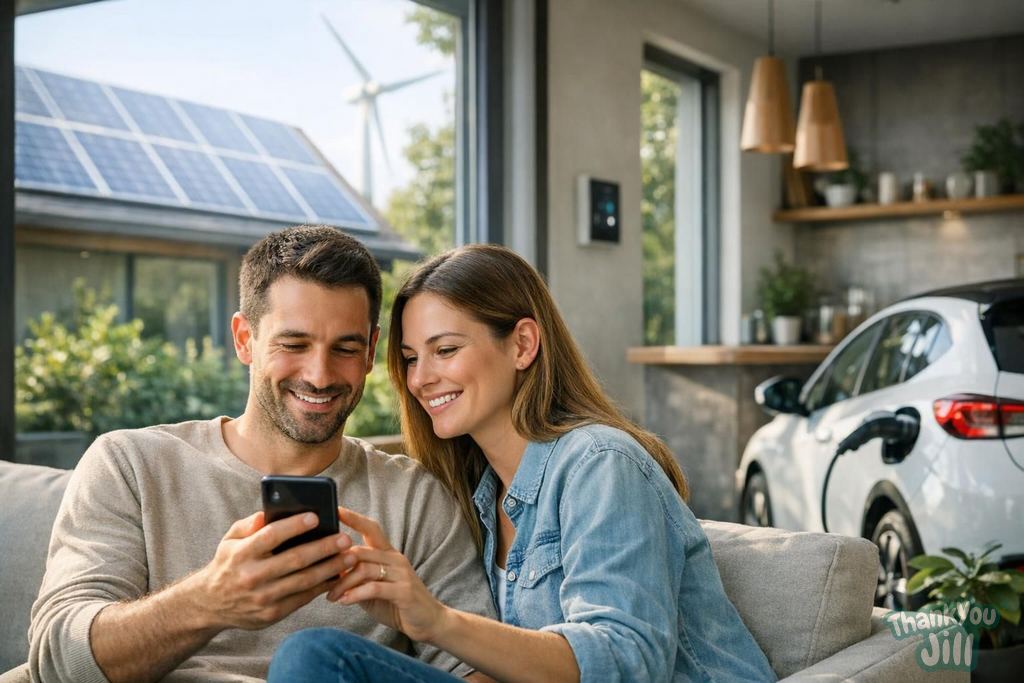
The Internet of Things (IoT) applied to the home (smart home) is a rapidly growing market with enormous promises of reducing energy consumption and improving household sustainability. But not all "smart" devices contribute equally to sustainability: some genuinely improve it, while others simply add technological complexity with marginal benefits. This guide focuses on devices with the best impact-to-investment ratio for household sustainability.
Smart thermostats: the greatest energy impact
The smart thermostat is the smart home device with the most documented impact on energy consumption. Heating and cooling account for 50-60% of household energy consumption. A smart thermostat that learns occupants' habits and automatically optimizes scheduling can reduce this consumption by 10-25%. Nest Learning Thermostat (Google): the most scientifically studied thermostat. An independent Ecofys report (2015) documented an average reduction of 10-12% in heating and 15% in cooling for American users. Ecobee (Canada): similar to Nest, with presence sensors in multiple rooms to avoid heating empty spaces. tado° (German): specifically designed for European systems with radiators, compatible with heat pumps and other systems. Documented 22% reduction in consumption in a German study. How they work: they learn occupants' habits, detect presence through smartphone geolocation (they don't heat when you're away), adapt to weather forecasts, and allow remote management via app. The return on investment (€200-350 cost) is typically 2-4 years for those with significant heating expenses.
Smart meters and consumption monitoring: awareness that reduces
The principle "what gets measured gets improved" applies perfectly to household energy consumption. Real-time energy consumption monitors show the instantaneous and historical consumption of the entire home or individual circuits. Devices like Shelly EM (Italian: Shelly is a company from Trieste), Sense Energy Monitor, or energy distributor systems (Enel's smart meter has monitoring features accessible via app) show: which appliance consumes how much, consumption peaks over 24 hours, differences between days of the week, the impact of every habit change. Simply being aware of real-time consumption reduces consumption by 5-10% (Faruqui et al., 2010 study): the so-called "feedback effect." Combined with dynamic pricing (hourly or seasonal), it can shift loads to times of greater renewable energy availability.
Smart plugs and intelligent switches: eliminating standby
Smart plugs allow you to turn appliances on and off remotely or through automatic programs. Their main sustainable use: eliminating standby ("phantom power") from televisions, stereos, set-top boxes, chargers, and other devices that consume power even when "off." In Italy, standby consumption from household appliances averages 10-15% of the electricity bill (roughly €100-150/year for an average family). A smart plug costing €10-20, programmed to completely shut off the TV and connected devices every night, pays for itself in just a few months. The best models also measure real-time consumption (Shelly Plug S, TP-Link Tapo P110): they let you identify the most energy-hungry appliances.
Integrating photovoltaic systems with smart home: energy optimization
The maximum benefit of smart home for sustainability comes from integrating connected devices with a photovoltaic system. The logic: photovoltaic systems produce energy mainly during midday hours. If flexible household loads (washing machine, dishwasher, car charging, heat pump for hot water) activate automatically when the photovoltaic system is producing, you maximize self-consumption (using produced energy instead of feeding it to the grid), reducing your bill. HEMS systems (Home Energy Management System) from manufacturers like Huawei, SolarEdge, Fronius, SMA: integrate photovoltaic monitoring with control of connected appliances through a single platform. They enable: automatic load shifting during photovoltaic surplus hours, priority battery storage charging, intelligent management of the EV charging station, alerts for when it's worth turning on certain appliances.

A €300 smart thermostat that reduces your heating bill by 20% pays for itself in 2-3 years. Smart plugs that eliminate standby pay for themselves in 6 months. Consumption monitoring that shows you your old washing machine uses twice the power of a new one: priceless. Sustainable smart home isn't the fridge that orders milk for you on its own: it's the home that knows when you're wasting energy and tells you about it.
IoT protocols for smart home: which one to choose
The main problem with smart home is protocol fragmentation: devices from different manufacturers often don't communicate with each other. The main standards: Zigbee: a low-power, low-latency protocol, very common in smart home devices (Philips Hue, Ikea Tradfri, many sensors). Requires a central hub. Z-Wave: similar to Zigbee, less common but very stable. Wi-Fi: the simplest to install (uses your home Wi-Fi network) but the most energy-intensive and prone to latency issues. Matter: the new open standard supported by Apple, Google, Amazon, Samsung (2022). Promises interoperability between all smart home devices from these manufacturers. Still evolving but already supported by many new devices. For beginners: choose devices compatible with Matter or one of the major ecosystems (Apple HomeKit, Google Home, Amazon Alexa) to reduce the risk of future incompatibility.
Privacy and security in smart home: the real risks
IoT devices connected to the internet are potentially vulnerable to cyberattacks. The main risks: unauthorized access to sensor data (microphones, cameras, household habits), use of devices as part of botnets for DDoS attacks, tampering with home security systems (smart locks, alarms). How to reduce risks: regularly update device firmware, use a separate Wi-Fi network for IoT devices (dedicated guest network: many modern routers support this), choose manufacturers with transparent privacy policies and a track record of security updates, avoid cheap unbranded devices without guaranteed security updates, don't use default passwords: always change every device's password during installation.
How much to invest in sustainable smart home: a budget guide
Starter budget (€100-300): an energy consumption monitor (€50-100), 4-6 smart plugs with consumption measurement (€40-80), a basic programmable thermostat (not smart but programmable: €30-60). Expected impact: 5-10% reduction in energy bill. Mid-range budget (€300-700): smart thermostat (€200-350), photovoltaic monitoring system if you already have panels (€100-200), presence sensors to optimize heating by zone (€100-150). Expected impact: 15-25% reduction in heating consumption. Advanced budget (€700+, with photovoltaic): integrated HEMS with photovoltaic and battery, smart wallbox for electric car, complete automation of flexible loads. Expected impact: photovoltaic self-consumption above 70%, minimized grid dependence. Note: investment in building insulation and weatherization almost always has a better return than investment in smart technology for poorly efficient buildings: do the thermal envelope first, then the smart thermostat.
Frequently Asked Questions
What are the main benefits of a smart thermostat for reducing household energy consumption?
A smart thermostat can reduce heating and cooling consumption by 10 to 25% thanks to habit learning, geolocation, and weather forecast adaptation, thus optimizing energy use automatically and in a personalized way.
How can smart plugs help reduce your household electricity bill?
Smart plugs eliminate standby consumption from appliances, which can represent 10-15% of your electricity bill. They allow you to completely shut off devices remotely or with automatic programs, with an economic return in just a few months.
When is it worth integrating a photovoltaic system with smart home systems to optimize consumption?
It's worth integrating photovoltaic with smart systems when you want to maximize self-consumption and reduce your bill, automatically activating flexible loads during solar production, intelligently managing batteries and electric car charging.
What security measures are recommended to protect IoT devices in a smart home?
To protect IoT devices, it's important to regularly update firmware, use separate Wi-Fi networks for IoT, choose reliable manufacturers with transparent privacy policies, avoid devices without updates, and always change default passwords.


Latest News




Comments
No comments yet. Be the first!
Leave a comment