


 Italiano
 Français
 Deutsch
 Español
 Português
 Svenska
 Suomi
Suomi
Water for Older Adults
Preventing Silent Dehydration
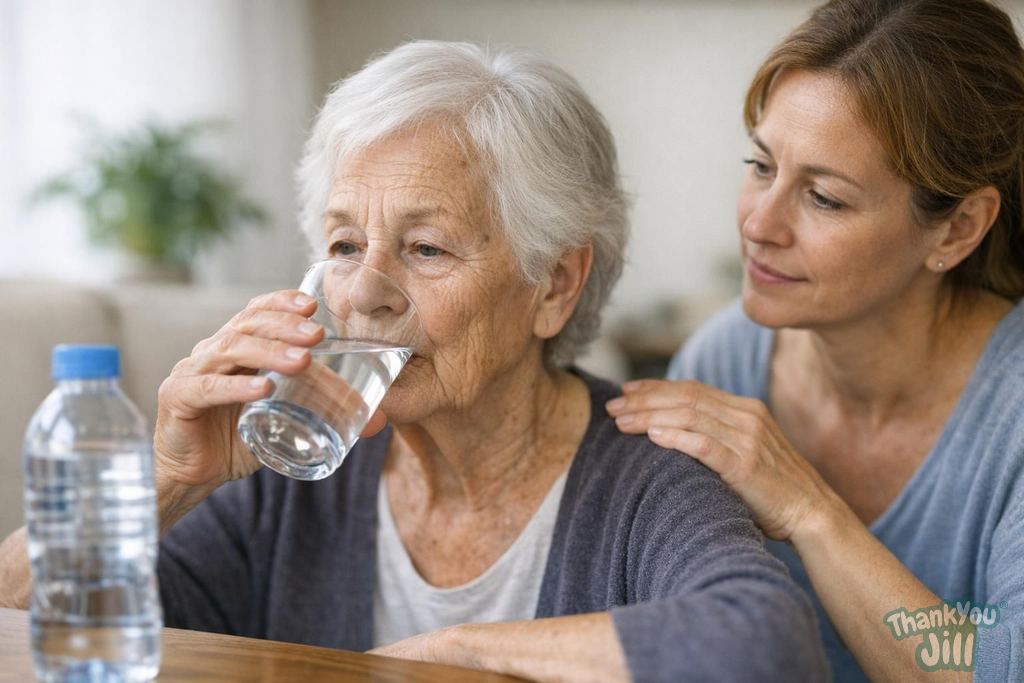
There's a cruel paradox in aging: as the years pass, the body increasingly needs conscious management of hydration, yet at the same time it loses the signals that remind us. Thirst diminishes. The sensation of dry mouth is delayed. The kidneys become less efficient at concentrating urine. The result is that many older adults live in a constant state of mild to moderate dehydration without realizing it.
Why the thirst mechanism weakens with age
The sensation of thirst depends on brain receptors (osmoreceptors) that sense blood concentration. In younger people, these receptors are highly sensitive: even a small increase in concentration triggers thirst. In older adults, these receptors become less responsive. They adapt to higher concentrations without sounding the alarm.
Scientific studies show that older adults, after hours without drinking, feel less thirst than younger adults in the same conditions, and they drink less voluntarily even when offered water. It's not negligence: it's physiology.
How the aging body changes in relation to water
With age, muscle mass decreases and fat increases. Since muscles contain far more water than fat, an older adult's body contains proportionally less total water (about 50-55% compared to 60-65% in younger adults). Fewer water reserves means less safety margin in case of fluid loss.
The aging kidney is less able to concentrate urine to conserve fluids in case of dehydration. It loses water even when it shouldn't. And the kidney's ability to respond to water-regulating hormones (ADH, aldosterone) diminishes.
The consequences of dehydration in older adults
Falls. Dehydration reduces blood pressure, especially when standing up quickly (orthostatic hypotension). The result is dizziness, loss of balance, falls. Falls in older adults are one of the leading causes of hospitalization and loss of independence.
Confusion and cognitive decline. One of the most common signs of acute dehydration in older adults is mental confusion. It's often mistaken for dementia or cognitive decline, when in fact it's reversible with rehydration. Clinical studies show that even moderate dehydration mimics symptoms of cognitive decline.
Urinary tract infections. Concentrated urine is fertile ground for bacteria. Older adults, particularly older women, frequently suffer from recurrent urinary tract infections. Increasing hydration significantly reduces the incidence of these episodes.
Constipation. Very common in older adults, often treated with laxatives. But in many cases the main cause is dehydration. Increasing water intake, before resorting to medications, is the first step.
Medications and dehydration
Many medications common in older adults increase the risk of dehydration: diuretics (common for high blood pressure and heart failure), laxatives, some antidepressants and antipsychotics that reduce the sensation of thirst. If an older adult takes these medications, monitoring hydration is even more important.
How to ensure hydration in older adults
Don't wait for them to ask for water. Offer fluids regularly: a glass with each meal, one mid-morning, one in the afternoon. Water isn't the only source: herbal teas, light broths, milk, fruits high in water content (watermelon, melon, citrus) all contribute to fluid balance.
Keep water always visible and accessible. A glass on the nightstand, a small pitcher on the living room table. If there's difficulty maintaining grip, cups with large handles or water bottles with spouts make independent drinking easier.
Practical monitoring at home
Checking urine color is useful in older adults too. Dark yellow or orange urine in an older adult is a warning sign not to ignore. If the person has difficulty assessing this on their own, a family member or caregiver can do it during morning hygiene care.

In older adults, thirst is silent, but the need for water speaks through falls, confusion, and fatigue. Offering a glass of water regularly is one of the simplest and most powerful acts of care.
The scheduled glass method
Don't wait for thirst: plan the moments. Set fixed times: waking up, breakfast, mid-morning, lunch, mid-afternoon, dinner, before bed. At least one glass for each moment. This basic schedule of six or seven glasses a day covers minimum needs. Use a phone reminder, a sticky note on the fridge, or a pitcher with level marks to track how much has been drunk.
Make fluids more enjoyable
Many older adults find plain water "tasteless" and avoid it. Alternate with light unsweetened herbal teas, water lightly flavored with lemon, vegetable broth, skim milk, fruit juice diluted with water (half and half). Variety makes it easier to meet daily requirements.
Be careful during heat waves
Increasingly hot summers are a real risk for older adults. On days above 30°C (86°F), increase intake by at least half a liter compared to normal. Avoid the hottest hours (12-5 PM). Keep the environment cool. Check regularly on the older adult near you, even with a phone call. Heat waves kill, and most victims die from dehydration.
When confusion might be about water
If you notice sudden confusion in an older adult or unusual cognitive decline: before panicking, offer 300-500 ml of fluids over half an hour and observe the response. If clarity improves within an hour, it was dehydration. If it doesn't improve or worsens: contact the doctor immediately. This distinction can prevent unnecessary hospitalizations or, conversely, allow timely intervention.
Create a plan with the doctor
If the older adult takes diuretics or other medications that alter fluid balance, explicitly ask the doctor: how much water should they drink each day? How should I monitor hydration? When should I call you? A personalized plan is worth far more than a generic rule.
Frequently Asked Questions
Why is the sensation of thirst less reliable in older adults for preventing dehydration?
In older adults, the brain receptors that sense thirst become less sensitive, adapting to higher blood concentrations without signaling the need to drink. This leads to reduced thirst perception even in dehydration conditions.
What are the main signs of silent dehydration in older adults to monitor daily?
The most common signs include falls due to orthostatic hypotension, reversible mental confusion that improves with rehydration, recurrent urinary tract infections, and constipation. Checking urine color is a practical method for detecting dehydration.
How can adequate hydration be ensured in older adults who don't feel thirsty?
It's important to offer fluids regularly, at least one glass with each meal and throughout the day, keep water accessible and visible, use alternative beverages like herbal teas or broths, and schedule fixed times for drinking without waiting for thirst.
When should fluid intake be increased in older adults during heat waves?
On days with temperatures above 30°C (86°F), it's advisable to increase fluid intake by at least half a liter compared to normal, avoiding the hottest hours and keeping the environment cool to prevent serious dehydration risks.

Latest News




Comments
No comments yet. Be the first!
Leave a comment