


 Italiano
 Français
 Deutsch
 Español
 Português
 Svenska
 Suomi
Suomi
Pain Perception
Do Plants Suffer?
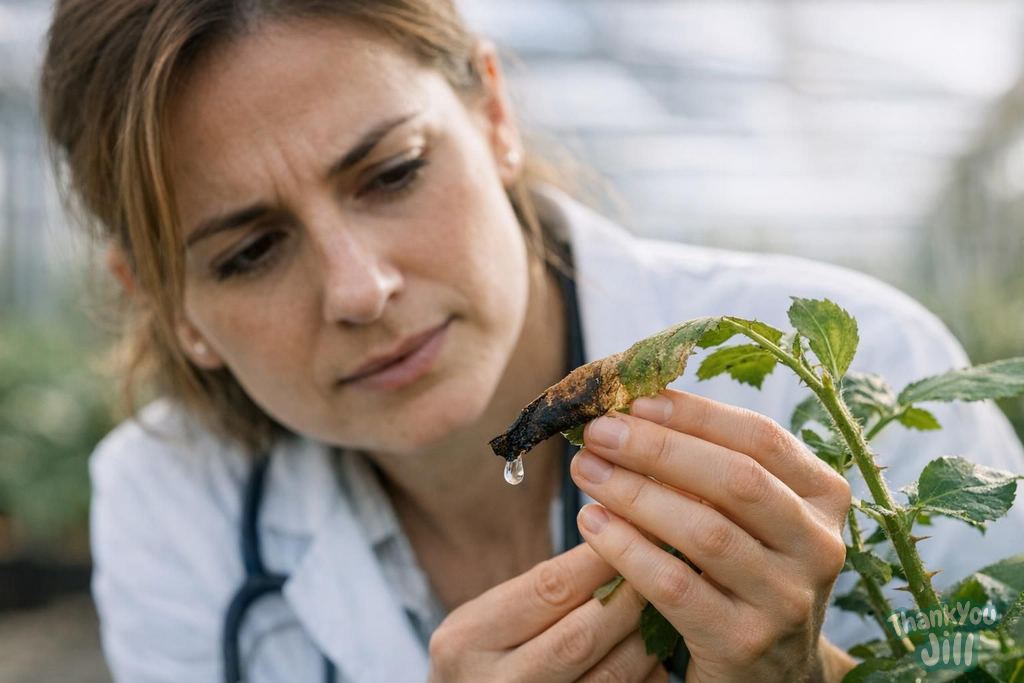
The question "do plants suffer?" isn't merely philosophical—it has concrete ethical implications (if plants suffer, is plant-based eating ethically as problematic as eating animals?) and biological ones (what are the minimal biological correlates necessary for suffering?). Current scientific consensus is that plants have damage-detection and damage-response systems that functionally resemble nociception (damage detection: the first step in the chain leading to pain perception in animals), but they lack the neurological structures (central nervous system, cerebral cortex, limbic system) that in animals are necessary for transforming nociception into subjective pain experience (suffering). Yet this answer is provisional: our understanding of consciousness remains incomplete.
How Plants Respond to Damage: Plant Nociception
When a leaf is damaged (by an herbivore, a cut, a burn), the plant responds with a cascade of rapid, specific signals. Electrical signals: Masatsugu Toyota and Takashi Ueda (University of Tokyo, 2018) published a study in Science showing that transgenic Arabidopsis thaliana, equipped with a fluorescent calcium biosensor, displayed calcium signaling waves propagating from the damage site throughout the plant within minutes, traveling through phloem cells. This calcium signal is functionally analogous to nerve impulse propagation through pain fibers in animal tissues. Glutamate as a plant neurotransmitter: the same research by Toyota et al. showed that glutamate (the primary excitatory neurotransmitter in animals, also used by nociceptive neurons) is the chemical signal triggering calcium waves in plants. Cutting a leaf releases glutamate into the phloem, activating GLR (glutamate-like receptors) in neighboring cells, propagating the calcium wave. Jasmonic acid (JA): the primary hormone of damage response in plants. Produced rapidly at the damage site (within minutes), it spreads systemically throughout the plant, activating defense genes (toxin synthesis, protease inhibitors, defense proteins). It functions as a systemic "danger signal" that is functionally similar to prostaglandins and opioids in animal pain response.
Plants Respond to Anesthetics: What Does This Mean?
One of the most provocative experiments on pain perception in plants involves anesthetics. Monica Gagliano and colleagues (2016, Oecologia) showed that ether, chloroform, and isoflurane (anesthetics used in human medicine) inhibit the response of Mimosa pudica tendrils to mechanical stimuli (the plant doesn't close its leaves), the movement of climbing plants toward support, and seed germination. Gagliano's conclusion: plants "respond" to anesthetics in the same direction as they do in animals (reduction of movements and stimulus responses). This doesn't prove plants are conscious, but it suggests that the molecular mechanisms on which anesthetics act (ion channels, lipid membranes) are conserved in plants and functionally relevant to their behaviors. The controversy: Lincoln Taiz and co-authors (Trends in Plant Science, 2019) strongly criticized Gagliano's interpretations, arguing that the effect of anesthetics on plants is simply explained by their physicochemical actions on lipid membranes, without needing to postulate any form of sensation or consciousness. The debate continues, driving much more careful research into the molecular mechanisms of plant behavior.
Plant Ethics: Should We Worry About Plant Suffering?
The ethical question of plant suffering is taken seriously by some moral philosophers. The most cautious position (current scientific consensus): absent evidence of subjective consciousness in plants (which requires neurological systems that plants lack), we have no reason to attribute to them the capacity to suffer in a moral sense. The plant response to damage is mechanistic (though complex), not experiential. The more critical position (Paco Calvo, University of Murcia; Michael Marder, philosopher): the absence of recognizable neurological structures doesn't necessarily imply the absence of subjective experience. Consciousness might manifest in forms very different from human/animal consciousness. Excluding a priori the possibility of subjective experience in plants is a form of neurological chauvinism. The implications for diet: even if we accepted that plants have some form of damage experience (speculative hypothesis), it wouldn't follow that eating plants is morally equivalent to eating animals. The complexity of experience (and thus the severity of suffering) is almost certainly correlated with the complexity of the nervous system. An insect, a lizard, a dog, a human: increasing complexity of probable subjective pain experience.

Science tells us that plants detect damage and respond in complex, systemic ways. It doesn't say that plants suffer in the subjective sense of the term: they lack the neurological structures that in animals transform the nociceptive signal into pain experience. But the question remains open, stimulating, and philosophically important. It asks us to examine what consciousness is, where the moral boundary of suffering lies. It's not a question with an easy answer. And that's precisely why it's worth asking.
Mimosa pudica: The Plant of Visible Pain
Mimosa pudica (sensitive plant or "touch-me-not") is the most-used plant in damage-response experiments because its response is visible to the naked eye within seconds: at touch or damage, the leaves close rapidly (in 1-2 seconds) and the entire branch bends downward. The mechanism: touch or damage produces a rapid change in membrane potential of pulvinus cells (a specialized structure at the base of each leaflet pair), mediated by calcium and potassium ion channels. The change in osmotic pressure in the pulvinus (water leaving motor cells) causes mechanical collapse of the structure: the leaf closes. The signal propagates at high speed (up to 40 mm/second) through the stem to nearby leaves via action potentials (electrical membrane variations) similar to nerve impulses. The function of closing: probably defensive (making the plant less appetizing to the herbivore that touched it, simulating a wilted or dead plant; causing insects to fall from the leaf) and protective (reducing the surface exposed to wind or heavy rain). Gagliano's Mimosa memory experiment: in 2014 Gagliano showed that Mimosa habituates its closing response after repeated exposure to the same non-damaging stimulus (dropping from a fixed height). The plant stops closing (conserving energy) after "learning" that the drop isn't dangerous. Habituation is the simplest form of learning. And it lasts for weeks.
Opioid Compounds in Plants: A Pain-Response System?
Plants produce some compounds that in animals act on the opioid system (pain receptors): morphine (from the poppy Papaver somniferum) acts on mu-opioid receptors in neurons; codeine (also from the poppy) is an analgesic. In animals, the opioid system is part of pain regulation. In plants, these opioid alkaloids probably serve as chemical defenses against herbivores (poisoning or sedating them). But their presence in plants has raised the question: do plants produce these compounds as part of their own pain-response system, or is it an evolutionary coincidence that the same compounds affect animal nervous systems? The most likely answer: functional coincidence. Opioid alkaloids in plants evolved as chemical defenses, not as part of an internal pain-management system. The fact that they act on animal opioid receptors reflects the presence of common molecular substrates (ion channels, receptors) between plant and animal kingdoms, not the same "pain" function in both. However: the question has driven research toward discovering opioid-like receptors in plants themselves, a search still ongoing.
Plant Neurobiology and the Future of Research
The field of plant neurobiology officially emerged as a discipline with the founding of the Society for Plant Neurobiology in 2005 (later renamed Society of Plant Signaling and Behavior to reduce terminological controversy). Active research themes in plant neurobiology: electrical signaling in plants (action potentials, variation potentials: in vivo measurements with increasingly sensitive electrodes), calcium as a second messenger and propagated signal (real-time imaging with fluorescent biosensors), the role of glutamate and GLR receptors in damage signaling, molecular mechanisms of habituation and memory in plants, plant psychopharmacology (effects of anesthetics, narcotics, stimulants on plant physiology). Research limitations: it's very difficult to distinguish between complex behavior driven by "simple" molecular mechanisms (genetically programmed) and behavior implying something like subjective experience. No experiment can ever "prove" plant consciousness definitively, because consciousness (even in animals and humans) remains one of science's unsolved problems. But research on plant signaling and behavior is producing extraordinary discoveries regardless of the philosophical question of consciousness.
Frequently Asked Questions
What's the difference between damage response in plants and pain perception in animals?
Plants respond to damage with electrical and chemical signals similar to nociception, but they lack neurological structures like a central nervous system necessary to transform these signals into subjective pain experience, which animals possess.
How do anesthetics work on plants and what does this reaction imply?
Anesthetics like ether and chloroform inhibit plant responses to mechanical stimuli, reducing movements and reactions. This indicates that the molecular mechanisms on which anesthetics act are conserved in plants, but it doesn't prove plants are conscious.
How does Mimosa pudica demonstrate a form of plant learning?
Mimosa pudica shows habituation: after repeated non-damaging stimuli, it stops closing its leaves, conserving energy. This behavior, which lasts for weeks, represents the simplest form of learning in plants.
Do plants produce opioid compounds to manage pain like animals do?
Plants produce opioid alkaloids like morphine and codeine primarily as chemical defenses against herbivores. Their action on animal opioid receptors is an evolutionary coincidence, not an internal pain-management system in plants.


Latest News




Comments
No comments yet. Be the first!
Leave a comment