


 Italiano
 Français
 Deutsch
 Español
 Português
 Svenska
 Suomi
Suomi
Summer
How trees survive extreme drought and heat
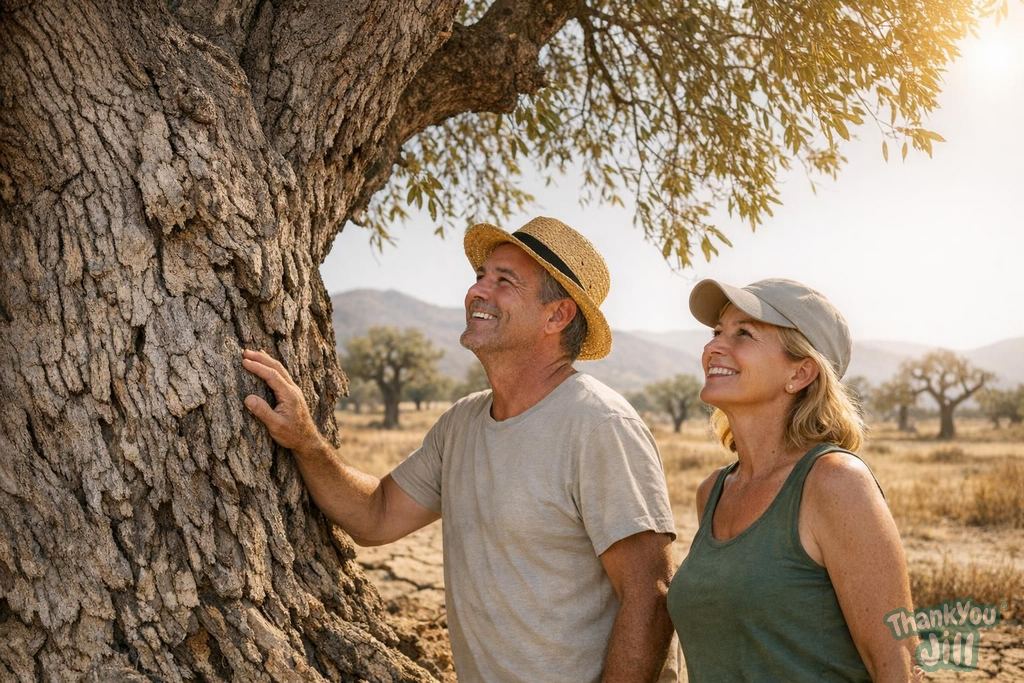
July, 38 degrees Celsius. You're sitting in the shade with an ice cream. The tree above you is doing something extraordinary: it's pumping liters of water from its roots to the top of its canopy, producing sugars under light that could burn, managing the temperature of its leaves, resisting insects that would like to eat it. It doesn't complain. It works.
Photosynthesis in the height of summer: the factory at full capacity
Summer is the season of maximum photosynthetic productivity for most Italian trees. With abundant daylight hours and optimal temperatures (between 20 and 30°C for most temperate species), leaves convert CO2 and water into sugars with maximum efficiency. An adult beech tree in August fixes carbon every hour in quantities equivalent to what a truck would save by not driving several kilometers. This extraordinary productivity comes at a cost: it requires enormous amounts of water. An adult tree transpires an average of 200-400 liters of water per day in summer — water is absorbed by the roots, rises through the xylem (the tree's vascular system) and evaporates through the stomata on the leaves. Transpiration is the engine of this pump: water evaporation from the leaves creates negative pressure that "sucks" water from the roots up to 40 meters high. It's the same mechanism as a syringe, but in a system that operates 24 hours a day for months.
Stomatal management: turning the tap on and off
Stomata are microscopic pores on the leaf surface (especially on the underside) that open and close dynamically. When open, CO2 enters for photosynthesis but water exits through transpiration. When closed, water loss stops but photosynthesis also slows down. On days of extreme drought, trees partially close their stomata during the hottest hours (midday to afternoon) to reduce water loss. This explains the phenomenon visible in summer of leaves curling or drooping in the afternoon heat and reopening the next morning. It's a precise adaptive mechanism, regulated by abscisic acid (ABA), a hormone produced when roots sense water shortage and transmit it to the leaves as a signal to "close the stomata."
Strategies against drought: diverse evolutionary approaches
Italian trees have developed very different strategies over the course of evolution to face summer drought. Deep roots: the downy oak (Q. pubescens) has roots that reach 10-15 meters deep, tapping into groundwater even during the driest summers. Small, leathery leaves: the holm oak, rosemary, and myrtle have leaves with thick cuticles and a reduced number of stomata to minimize water loss. Leaf orientation: some species (including eucalyptus) orient their leaves vertically during peak sun hours to reduce the surface area exposed to direct radiation. Summer dormancy: some species (such as certain Mediterranean shrubs) enter a state of partial quiescence in summer, reducing growth and metabolic activity during the most critical weeks. Canopy profile: the flattened, light-penetrating shape of the stone pine creates a layer of shade that reduces soil temperature and reduces water evaporation.
Extreme heat and climate change: a growing challenge
Italian summers in recent decades have become increasingly hot and dry. The summer of 2022 — the hottest ever recorded in Italy — caused severe water stress in millions of trees, with significant mortality in low-altitude Apennine beech forests and conifer plantations. The bark beetle (Ips typographus), a small beetle that is normally kept in check by the defenses of healthy conifers, multiplies explosively in trees weakened by drought: spruce forests in the Alps hit first by the Vaia storm (2018) and then by subsequent droughts suffered enormous damage. The isolation of urban trees: city trees suffer more from heat than those in forests, because artificial surfaces (asphalt, concrete) reach much higher temperatures than natural vegetation, aggravating thermal stress. A plane tree in an asphalt avenue in Rome in July faces soil temperatures that can exceed 60°C — conditions drastically harsher than those of the natural forest.

The tree you're sitting under in August is pumping 300 liters of water a day from the ground to its leaves. It's working for you, without stopping, without a break. The least you can do is raise a glass to its health.
How to help the trees in your garden during increasingly hot summers
- Deep, infrequent watering: avoid watering superficially every day. Prefer abundant watering every 7-10 days that soaks the soil deeply (40-60 cm). Shallow water evaporates quickly and encourages roots to stay near the surface, making them even more vulnerable to drought. Deep watering encourages roots to grow deeper, where the soil stays moist longer.
- Mulching: place a layer of shredded bark, mature compost, or dry leaves 8-10 cm around the trunk (without touching the base). Mulch reduces water evaporation from the soil by 30-50%, keeps the soil cool, and inhibits the growth of competing weeds.
- Don't mow the grass under trees: contrary to popular belief, short grass under trees doesn't help — bare soil heats up more and loses water faster. Tall grass (or even better, organic mulch) keeps the soil cool and moist.
- Signs of drought stress in trees: leaves that curl or droop in the afternoon (normal response to heat), leaves that yellow or brown at the edges (advanced water stress), premature leaf drop in August-September (emergency response). If you see these signs on a recently planted young tree, water it immediately and abundantly.
- For newly planted trees: the first 3-4 years of a tree's life are the most critical. A newly planted tree doesn't yet have the deep roots that will allow it to survive without watering. In hot summers, water it every 7-10 days with 30-50 liters at a time — more than seems necessary.
- Explain the heat to trees with children: show children the curled leaves of a shrub on a very hot day. Explain to them that the plant also feels the heat and tries to protect itself. Then, in the evening, show them that the leaves have straightened out. This daily cycle of stress and recovery is a tangible way to help them understand that trees are living organisms with their own reactions to the world.
Italian summers will continue to be hotter and drier in the coming decades. Learning to care for trees during difficult summers — even just the few in your garden or those in your neighborhood — is a concrete contribution to the resilience of urban green space that rewards us every day with shade, fresh air, and beauty.
Frequently Asked Questions
How do trees reduce water loss during days of extreme drought?
Trees partially close their stomata during the hottest hours to limit transpiration, thereby reducing water loss. This process is regulated by the hormone abscisic acid, which signals the leaves to close the stomata in response to water shortage perceived by the roots.
What evolutionary strategies do trees adopt to resist summer drought?
Trees use various strategies such as deep roots to reach deep water, small and leathery leaves with fewer stomata to limit evaporation, vertical leaf orientation to reduce sun exposure, and summer dormancy to reduce metabolic activity during the hottest periods.
How important is deep, infrequent watering in keeping trees healthy during summer?
Deep watering every 7-10 days is essential because it soaks the soil deeply (40-60 cm), encouraging roots to grow deeper where the soil stays moist longer, reducing vulnerability to drought compared to frequent shallow watering that promotes shallow roots.
What happens to urban trees during extreme heat waves compared to those in natural environments?
Urban trees suffer more because artificial surfaces like asphalt and concrete increase soil temperature to over 60°C, aggravating thermal and water stress compared to trees in natural forests, which enjoy cooler and more humid conditions.
Latest News




Comments
No comments yet. Be the first!
Leave a comment