


 Italiano
 Français
 Deutsch
 Español
 Português
 Svenska
 Suomi
Suomi
The Ten Oldest Trees in the World
Living witnesses to vanished civilizations and millennia of history
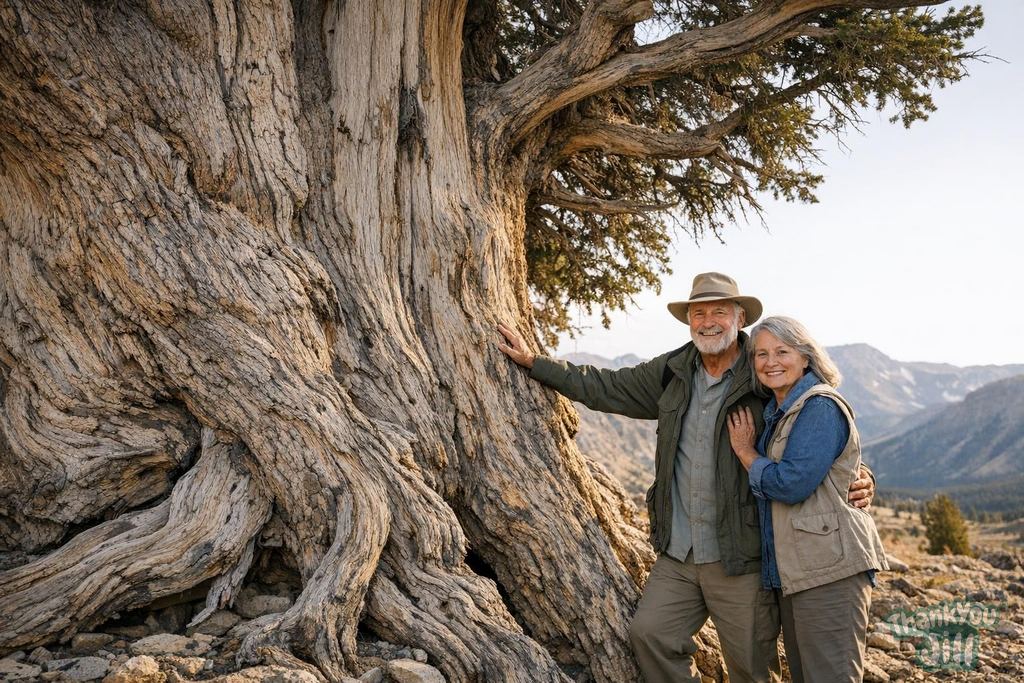
There is a tree in California that is 4,855 years old. It was already ancient when the Egyptians built the pyramids. It is still alive, still growing, still capable of producing viable seeds. Its name is Methuselah, and its exact location is kept secret to protect it. Meeting it—or even just knowing it exists—changes something in the way we think about life and time.
Methuselah: The King of Documented Longevity
The longevity record for a single non-clonal tree belongs to Methuselah, a Pinus longaeva (Great Basin bristlecone pine) growing in California's White Mountains at over 3,000 meters elevation. Confirmed age as of 2023: 4,855 years. It was identified and dated by dendrochronologist Edmund Schulman in 1957. Its location in the White Mountains is known but not disclosed to the public by the National Forest Service: trampling of the roots by excessive visitors could damage them irreparably. Bristlecone pines (Pinus longaeva) are absolutely the longest-living single organisms on Earth. They grow in extreme conditions—high altitude, poor soils, harsh temperatures, minimal water—and this environmental harshness, paradoxically, contributes to their longevity: they grow slowly (just a few millimeters of wood per year), produce incredibly dense wood that resists decay, and are exposed to little moisture that would facilitate decomposition. A bristlecone pine can survive even with 80-90% of its trunk dead, maintaining life only through a thin strip of cambium connected to its roots and a few still-functional branches.
Before Methuselah: The Unnamed Trees
Curiously, before Methuselah there was an even older bristlecone pine: Prometheus, at 4,862 years old. It was cut down in 1964 by a university researcher who lacked the tools to date it without felling it. When ring counting revealed its extraordinary age, the scientific scandal was enormous. The incident led to the introduction of specific protection regulations for bristlecone pines. This irretrievable mistake has remained in the scientific community's consciousness as a warning: do not fell what you do not yet understand.
Europe's and Italy's Oldest Trees
In Europe, longevity records belong to species different from North American pines. The Fortingall Yew (Scotland): a European yew (Taxus baccata) in a Perthshire churchyard, estimated between 2,000 and 5,000 years old—the estimate is difficult because the trunk is hollow and fragmented. The Sarv-e Abarkuh (Iran): a cypress (Cupressus sempervirens) estimated between 4,000 and 5,000 years old. The Olivastro of Luras (Sardinia, Italy): radiocarbon-dated between 3,000 and 4,000 years old, it is one of Europe's oldest documented olive trees. The Chestnut of the Hundred Horses on Mount Etna: estimated age 2,000-4,000 years (the estimate is uncertain due to the impossibility of dendrochronology on such an ancient, partially hollow trunk). The Monumental Olives of Puglia: many olive trees in Salento and the Fasano area have documented or estimated ages between 1,000 and 2,000 years.
How to Date a Tree: Dendrochronology and C14
There are two main methods for determining a tree's age. Dendrochronology (ring counting): the most precise method for trees that produce clear annual rings (conifers and broadleaves in temperate zones). Each ring corresponds to one year of growth. It can be done non-destructively using a core extracted with a special drill (increment borer) that takes a very thin cylinder without seriously damaging the tree. Radiocarbon (C14): for very old trees with missing or non-dateable heartwood. It measures the decay of the radioactive isotope C14 in organic tissues. Accurate but with error margins of ±50-200 years. It's used especially for trees with hollow or fragmented trunks (baobabs, ancient olives, yews) where complete dendrochronology isn't possible.
Why Protecting These Trees Is an Ethical Issue
A 4,000-year-old tree is not just a biological record—it is a historical presence in the most literal sense of the term. It lived during Rome's founding, during the Crusades, during the Italian Renaissance, during the French Revolution, during both world wars. It has breathed the air of every epoch. It has stored in its wood the climate variations of 4,000 years. Felling it—for any reason—is to lose an irretrievable historical document that no copy can replace. In Italy, monumental trees are protected by Law 10/2013 and its related ministerial decree, which establishes the National Register of Monumental Trees. Yet every year in Italy, centuries-old trees are illegally felled to make way for construction, out of unfounded fear of falling, or through ignorance of their value. Knowing about them is the first step to defending them.

Methuselah has been alive since before the pyramids. It doesn't know we call it the oldest. It continues doing what it has always done: growing a millimeter a year, with the quiet tenacity of something that is never in a hurry because it has all the time in the world.
How to Recognize and Report Monumental Trees Near You
- Search the National Register: on the Ministry of Agricultural Policies portal (www.politicheagricole.it) you can consult the National Register of Monumental Trees with over 3,500 specimens catalogued throughout Italy. Search for those in your municipality or province. Visiting them is an experience worth any tourist trip.
- How to estimate the age of a tree in your garden: measure the trunk circumference at 1.30 meters from the ground in centimeters. Divide by 2.5: you get an approximate age estimate in years (this formula applies to broadleaves with average growth in normal conditions; trees in difficult or favorable conditions grow faster or slower). A linden with 75 cm circumference is about 30 years old. A beech with 250 cm is about 100 years old. An oak with 400 cm is about 160 years old.
- How to report an unregistered monumental tree: if you know a very old or large tree that doesn't appear in the national register, you can report it to your municipality (Environmental Department) or directly to your region (Forestry Sector). The report initiates an evaluation procedure and possible inclusion in the register, which provides legal protection for the tree.
- Visit the Chestnut of the Hundred Horses: if you're in Sicily, it's a must-see. Located in the municipality of Sant'Alfio on the northeast slope of Mount Etna, it's easily accessible by car. The visual impact of what remains of this ancient organism is unforgettable.
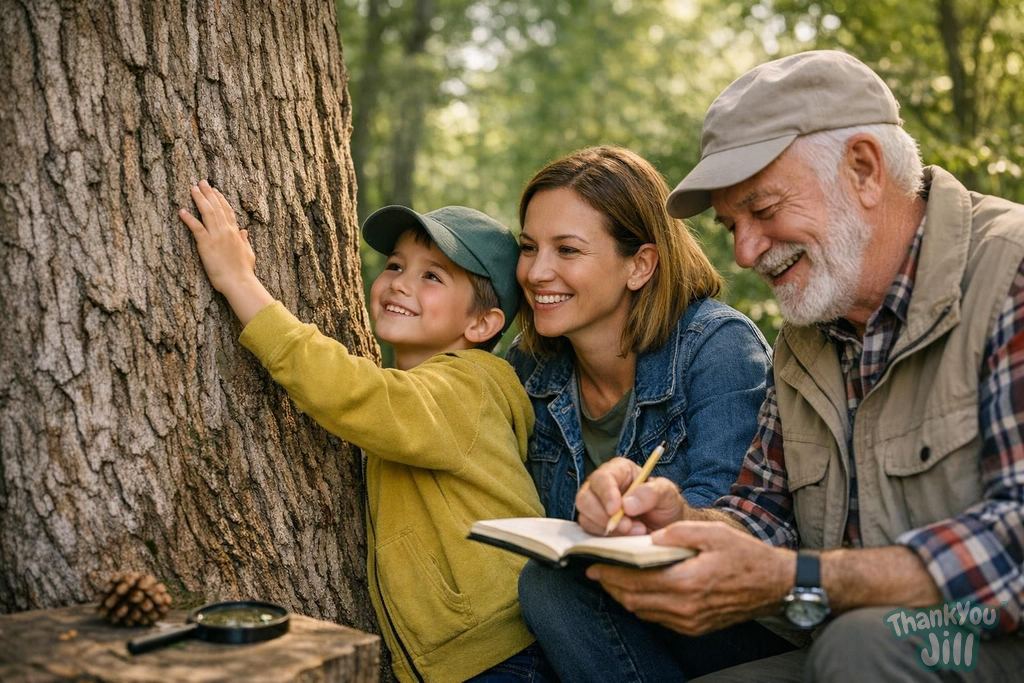
- Explain the time scale to children: to help a child understand how old a 2,000-year-old tree is, use this comparison: 2,000 years ago, Augustus reigned in Rome and Jesus was being born. The tree was already a mature plant when the Roman Empire was at its height. It has watched everything we studied in school pass by. This concrete visualization of the time scale has a much stronger impact than any abstract number.
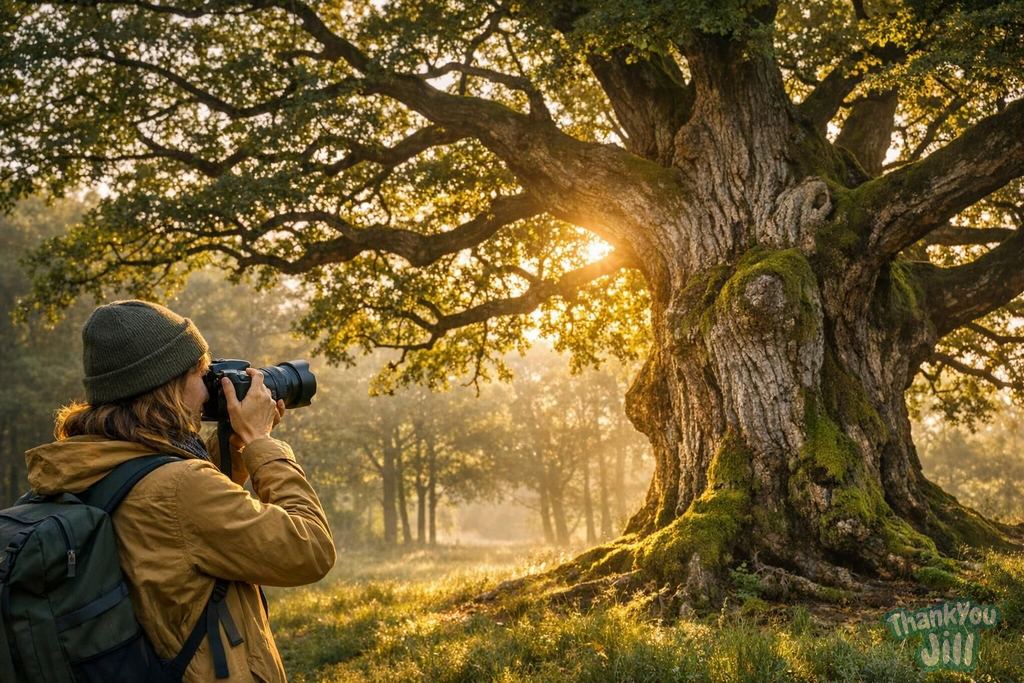
- Photograph your local "oldest tree": every area of Italy has its historic trees, even if they don't reach world records. A 300-year-old chestnut is already an accessible miracle of longevity. Photograph it, share it on iNaturalist, contribute to the map of Italian arboreal heritage.
The world's oldest trees don't ask to be famous. They ask only to be left in peace. We can do more: know them, protect them, visit them with respect, and tell children about them the way we tell stories of the greatest living beings ever to walk this planet. Without taking a single step.
Frequently Asked Questions
What are the most effective methods for determining the age of a very old tree?
The main methods are dendrochronology, which counts annual growth rings, and radiocarbon dating (C14), used especially for trees with hollow or fragmented trunks where dendrochronology isn't possible.
Why can bristlecone pines live thousands of years in extreme conditions?
Bristlecone pines grow slowly in harsh environments like high altitude and poor soils, producing incredibly dense wood resistant to decay, and can survive even with most of the trunk dead by maintaining only a small vital zone.
How can you estimate the age of a tree in your own garden without scientific instruments?
By measuring the trunk circumference at 1.30 meters from the ground in centimeters and dividing by 2.5, you get an approximate age in years, valid for broadleaves with average growth in normal conditions.
What is the ethical and historical importance of protecting thousand-year-old trees?
Thousand-year-old trees are living witnesses to unique historical and climate events; felling them means losing irretrievable natural documents that no copy can replace, making their protection a global ethical responsibility.
Latest News
Comments
No comments yet. Be the first!
Leave a comment