


 Italiano
 Français
 Deutsch
 Español
 Português
 Svenska
 Suomi
Suomi
The Hedgehog and the Forest
A precious animal among tree roots: life, defenses, and dangers

Few things make you smile with the same certainty as a hedgehog crossing your garden at dusk — hurried steps, pointed snout, the rustle of leaves. It's one of those animals that seem straight out of a children's book, yet they lead a nocturnal hunting life that's anything but peaceful. And the forest without them would be a very different place.
Who is the hedgehog
The Western European hedgehog (Erinaceus europaeus) is an insectivorous mammal with approximately 6,000-7,000 spines on its back — modifications of hair made of keratin, hollow inside, 2-3 cm long. It weighs between 600 and 1,200 grams (depending on the season — it reaches maximum weight before hibernation). It has an elongated snout with a very sensitive nose, small rounded ears, short legs but surprisingly fast (it can run at 3 km/h and swim). It's distributed throughout Italy, from the plains to the mountains up to about 1,000 meters elevation, in broadleaf forests but especially at forest edges, in orchards, gardens, and urban green spaces. It's a crepuscular and nocturnal animal — rarely visible during the day unless in distress (a hedgehog active during the day is almost always a sign of illness or stress).
The spines: the oldest defense system
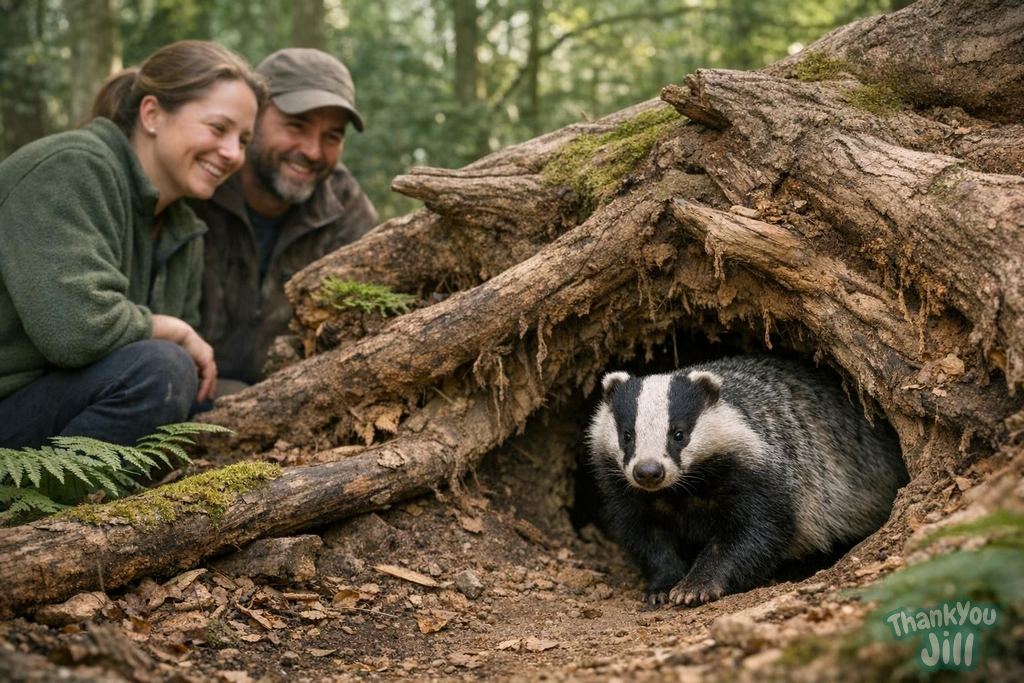
The hedgehog's spines are its only defense against predators. When threatened, the hedgehog curls into an almost perfect sphere by contracting the powerful orbicularis muscle that runs along the edge of its back — a muscle that has no equivalent in any other mammal. Curled up, it exposes only spines in every direction: there's no grip possible for a predator's mouth without pain. This defense is effective against almost all predators in the European forest — foxes, weasels, martens — with two exceptions: the badger, which has clawed paws strong enough to force open a hedgehog, and the eagle owl, which seizes the hedgehog from above before it has time to curl up completely. Hedgehogs also have moderate resistance to snake venom: they tolerate doses of viper venom that would be lethal to a dog of the same size. The molecular mechanism of this resistance is still being studied.
The diet: the forest's nocturnal gardener
The hedgehog is a generalist nocturnal predator that feeds mainly on snails, slugs, earthworms, beetle larvae, beetles, crickets, centipedes, spiders and, occasionally, eggs of ground-nesting birds, nestlings, and small rodents. This diet makes it a valuable ally for gardeners and farmers: an adult hedgehog consumes dozens of slugs every night — one of the main pests of vegetable crops. This is why the ancient practice of welcoming hedgehogs in the garden has a concrete ecological basis. In forests, its predation on wood-boring beetle larvae living in soil and leaf litter helps regulate species that, in excess, could damage the roots of young trees.
The hedgehog's hibernation
The hedgehog hibernates between October-November and March-April, building a winter nest of compressed dry leaves under tree roots, in cavities at the base of stumps, among brambles, or under compost piles. The nest is a compact, insulating structure that maintains an internal temperature of about 5-7°C even when it's much colder outside. During hibernation, body temperature drops to 5°C, heart rate from 190 to 20 bpm, breathing becomes extremely rare. The hedgehog wakes episodically but doesn't eat during hibernation — it burns fat reserves accumulated in autumn. A hedgehog entering hibernation weighing less than 450-500 grams will rarely survive the winter: it doesn't have sufficient reserves. Hedgehogs born late in autumn (from late litters) are particularly vulnerable.
Dangers for the hedgehog in Italy
The hedgehog is in decline throughout Europe, including Italy, due to a combination of factors: road traffic (they die in enormous numbers hit at night), use of slug baits with metaldehyde (ingestion of poisoned mollusks), habitat loss (hedgerows, forest edges, uncultivated gardens), fences that prevent nocturnal movement, autumn bonfires on leaf piles where they take shelter. In Britain, the hedgehog population has declined by 50% in the last 25 years. In Italy, data is less precise but the trend is concerning.

The hedgehog crosses your garden every night without you knowing and eats the slugs that would eat your basil. It doesn't ask for food, it doesn't ask for care, it only asks that you don't use poison and that you leave a hole in the fence. It's the most convenient contract that exists in nature.
How to help the hedgehog in your garden and neighborhood
- Leave a 'hedgehog passage' in the fence: hedgehogs travel 1-3 km a night searching for food. Continuous fences trap them in areas that are too small. Create an opening of 13×13 cm at the base of your garden fence or wall — large enough for the hedgehog, too small for the fox. Ask your neighbors to do the same: connecting gardens creates ecological corridors that enormously increase the available area for local hedgehogs.
- Don't use slug baits with metaldehyde: use ferric phosphate-based pellets instead (safe for hedgehogs, dogs, birds). Or simply let hedgehogs control the slugs — if you protect them, they'll do the job better than any chemical product.
- Build a hedgehog house: a rough wooden box (25×25×15 cm, with a 10 cm entrance corridor to prevent cat access) positioned in a quiet corner of the garden, filled with dry leaves, can be accepted as a hibernation site. Cover it externally with leaves and soil for better insulation. Don't disturb it between October and April.
- Don't make bonfires in autumn without checking first: hedgehogs hide in autumn leaf and branch piles. Before lighting a bonfire, move the pile with a rake to check that there are no hedgehogs hidden inside. Moving the pile with a rake each year also reduces the likelihood they'll use it as a hibernation site.
- What to do if you find an injured hedgehog: a hedgehog found during the day, staggering, with visible wounds or covered in flies should be collected with gloves and placed in a cardboard box with air holes and a cloth on the bottom. Contact the nearest CRAS (Wildlife Recovery Center). Don't give it milk (it's lactose intolerant) or kitchen food: fresh water and wait for CRAS instructions.
- With children — nocturnal monitoring: in the summer months (June-August), go out at night in the garden 1-2 hours after sunset with a red-light flashlight (less disturbing for nocturnal animals). Slowly follow the garden's edge near the hedge. If hedgehogs are present, you'll hear them moving through the leaves before you see them. This type of nocturnal garden outing is one of the most accessible and memorable nature experiences for children.
The hedgehog is an animal that needs us only to the extent that we stop harming it. It doesn't need special feeders, it doesn't need complex interventions. It needs us not to hit it with cars, not to poison its insects, not to block all its passages. Small requests, for an animal that works every night for us.
Frequently Asked Questions
How can you tell if a hedgehog is in trouble during the day?
A hedgehog active during the day is often a sign of illness or stress. If you see it staggering, with wounds or covered in flies, it may be injured and needs immediate help from a wildlife recovery center.
What's the best way to help hedgehogs move freely in your garden?
Leaving a passage of at least 13×13 cm at the base of fences allows hedgehogs to move between gardens without obstacles, creating ecological corridors that increase available area and improve their survival.
Why is it important to avoid using slug baits with metaldehyde if you have hedgehogs in your garden?
Slug baits with metaldehyde are toxic to hedgehogs, which can ingest them indirectly by eating poisoned slugs. It's better to use ferric phosphate-based products or let hedgehogs naturally control the slug population.
How do you build a suitable shelter for hedgehog hibernation in your garden?
A rough wooden box about 25×25×15 cm with a 10 cm entrance, filled with dry leaves and positioned in a quiet corner, provides an ideal hibernation shelter. It should be insulated with leaves and soil and left undisturbed from October to April.

Latest News




Comments
No comments yet. Be the first!
Leave a comment