


 Italiano
 Français
 Deutsch
 Español
 Português
 Svenska
 Suomi
Suomi
The Forest in Fairy Tales
From Hansel and Gretel to Italian classics: the forest as a world of imagination
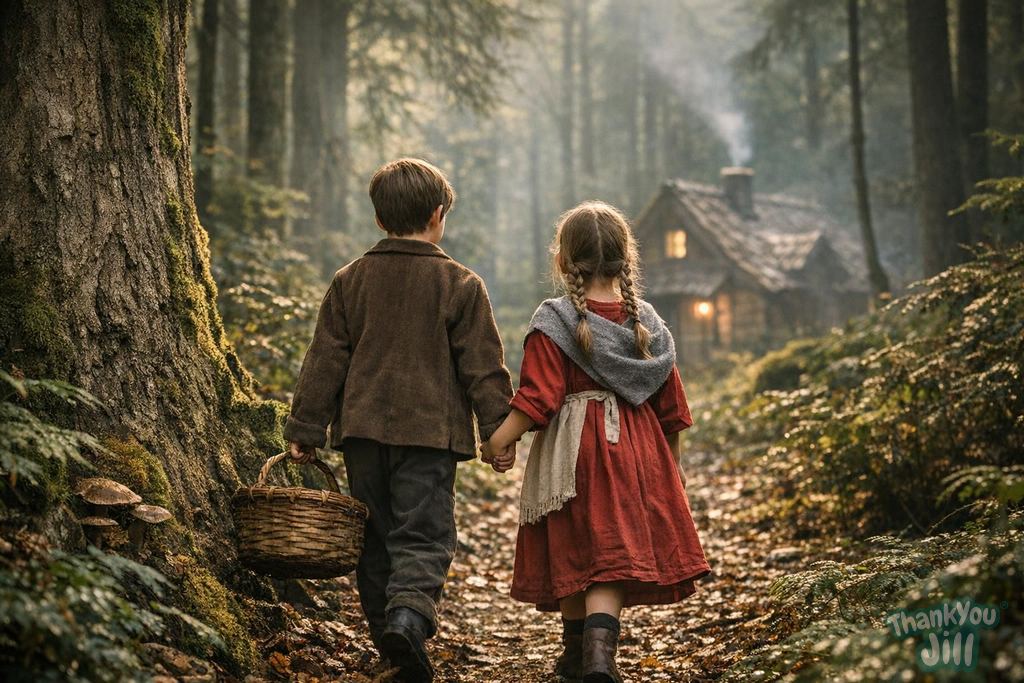
Hansel and Gretel are abandoned in the forest. Little Red Riding Hood walks through it to reach her grandmother. The sleeping prince lies in a castle surrounded by a forest of thorns. Sleeping Beauty. Snow White flees into the forest. Nearly all the great European fairy tales pass through a forest — and it's no accident. The forest in a fairy tale isn't just a backdrop: it's the place where transformation happens.
The Forest as a Threshold: The Passage into the World of Adventure
Bruno Bettelheim, in his influential essay The Uses of Enchantment (1976), analyzed the psychological role of the forest in fairy tales. The forest represents the unconscious — the territory of the unknown, of danger, of forces beyond our control. Leaving the village and entering the forest is a metaphor for the child abandoning the safety of the familiar world to face the challenges of growing up. The forest is dark because growth is difficult. It's dangerous because adult life is full of perils. The child who walks through the forest and emerges transformed has completed the rite of passage from childhood to adulthood. This isn't an analysis that applies mechanically to all fairy tales — but the forest as a place of trial and transformation is a constant that runs through the fairy tale traditions of different cultures.
Hansel and Gretel: The Forest as Abandonment and Return
Hansel and Gretel (Brothers Grimm, 1812) is the quintessential fairy tale of the forest. The two children are abandoned in the forest by their parents — the moment of absolute childhood terror: being left alone by the protective adult. The forest swallows them. Inside it they find the gingerbread house (temptation, oral regression) and the witch (danger). They defeat the witch through cleverness and return home. The journey through the forest has transformed two frightened children into children capable of facing danger and surviving. Some folklorists have conducted a botanical analysis of the Hansel and Gretel forest: references to fir trees, a path in the snow, and a wooden house suggest a setting in the Black Forest of the Rhineland or Bavaria — exactly the kind of temperate coniferous forest where Grimm collected his stories.
The Forest in Italian Fairy Tales: Basile and Calvino
Giambattista Basile, the first great Italian collector of fairy tales (The Tale of Tales, 1634-1636), sets many stories in the forests of Southern Italy — oak and holm oak forests of Campania and Calabria, pine and chestnut woods of the Apennines. The fairies, ogres, and sprites in Basile's tales inhabit specifically Italian forests, not abstract Northern European woodlands. Italo Calvino, in his Italian Folktales (1956) — the most comprehensive and literarily successful collection of Italian folklore — identified the forest as one of the fundamental narrative spaces of peninsular folklore: from the forests of Liguria to those of Sicily, each region has its enchanted trees, its dark woods, its forest spirits. Regional botanical differences (the chestnut forests of the Emilian Apennines, the olive groves of the South, the alpine fir forests) are reflected in the different atmospheres of local fairy tales.
The Forest in Romanticism: The Woodland as Natural Sublime
In European Romanticism (late 18th to early 19th century), the forest takes on new meaning: no longer merely a place of danger and folk magic, but a symbol of the natural Sublime — that aesthetic category designating nature as a superhuman force that frightens and fascinates simultaneously. Caspar David Friedrich paints fir forests shrouded in mist where tiny human figures confront the immensity of nature. The Romantic forest is a place where the individual faces something greater than themselves — not the monster of fairy tales, but the grandeur of nature itself. This conception of the forest as a place of confrontation with the superhuman is the cultural root of which the modern practice of Shinrin-yoku (forest bathing) is — in some sense — the secular and scientifically grounded heir.

The fairy tale forest isn't a place to get lost: it's a place to find yourself. Hansel and Gretel return home different from how they left. The forest has transformed them. Perhaps that's why we still take children into the forest — not just to show them trees, but to let them encounter who they don't yet know they can become.
How to Use Forest Fairy Tales with Children
- Read Calvino before going into the forest: choose an Italian fairy tale set in the forest from Calvino's Italian Folktales (available in every library and bookstore). Read the tale at home, then take the children to a forest similar to the one described. Invite them to identify the trees from the story: is it a chestnut forest? Oak? Pine? The fairy tale becomes a key to reading the real forest.
- Build a gingerbread house in the forest: using cardboard, paints, and edible materials (cookies, chocolate, candy), construct a small gingerbread house and bring it to the forest for a picnic. Place it at the base of a large tree. Tell the story of Hansel and Gretel on location. The real forest serving as backdrop to the narration creates an immersive experience that reading at home cannot replicate.
- With older children — analyze the forest in fairy tales: have teenagers read a chapter from Bettelheim (The Uses of Enchantment, Feltrinelli) on the psychological meaning of the forest in fairy tales. Then ask: do you see yourself in Hansel and Gretel? Has there been a moment in your life when you "walked through the forest"? The fairy tale as a mirror of growth experience is a powerful reading exercise for adolescents.
- Tell fairy tales in the dark forest: one of the most intense narrative experiences you can offer children is telling a fairy tale in the forest at night, sitting in a circle with flashlights off. The fairy tale that's normally told in the safe comfort of home takes on a different dimension when the real forest is around you in the darkness. There's no need to frighten them: just the story of an enchanted forest, moonlight filtering through the trees, and the feeling that the forest is listening.
- Create your own local forest fairy tale: with the children, invent together a fairy tale set in the forest of your region. Who lives in that forest? Which specific trees does the protagonist recognize? What magic does it hold? The local fairy tale — with the chestnut, oak, and beech of your Apennines — is the most direct way to connect the imaginative heritage to the concrete tree species of your own territory.
The fairy tale forest and the real forest are the same thing, seen with different eyes. Taking a child into the forest after reading a fairy tale changes how they look at trees — they see them as characters, as living presences with stories inside. It's not fantasy: it's the first step toward respect. And respect always comes before protection.
Frequently Asked Questions
What is the symbolic meaning of the forest in European fairy tales according to Bruno Bettelheim?
According to Bettelheim, the forest symbolizes the unconscious and the unknown, representing the challenge of growth. Entering the forest is a metaphor for the passage from childhood to adulthood, facing dangers and inner transformations.
How do forests in Italian fairy tales differ from those in Northern European ones?
Italian fairy tales set forests in specific woodlands such as oaks, holm oaks, pines, and chestnuts, reflecting local flora, while Northern European fairy tales often use more abstract coniferous forests, creating different atmospheres tied to the territory.
How can reading forest fairy tales be used to educate children during a visit to a real forest?
You can read a fairy tale set in the forest before the visit, then invite children to recognize the trees described, transforming the narrative into an immersive experience that helps them understand and respect the surrounding nature.
Why can telling fairy tales in the forest at night be an intense educational experience for children?
Telling fairy tales in the dark forest creates a magical and engaging atmosphere, making children perceive the forest as a living and mysterious place, strengthening imagination and emotional connection with nature without frightening them.
Latest News


Comments
No comments yet. Be the first!
Leave a comment