


 Italiano
 Français
 Deutsch
 Español
 Português
 Svenska
 Suomi
Suomi
How to Report a Tree in Danger
A practical guide for every citizen: channels, procedures, and tips
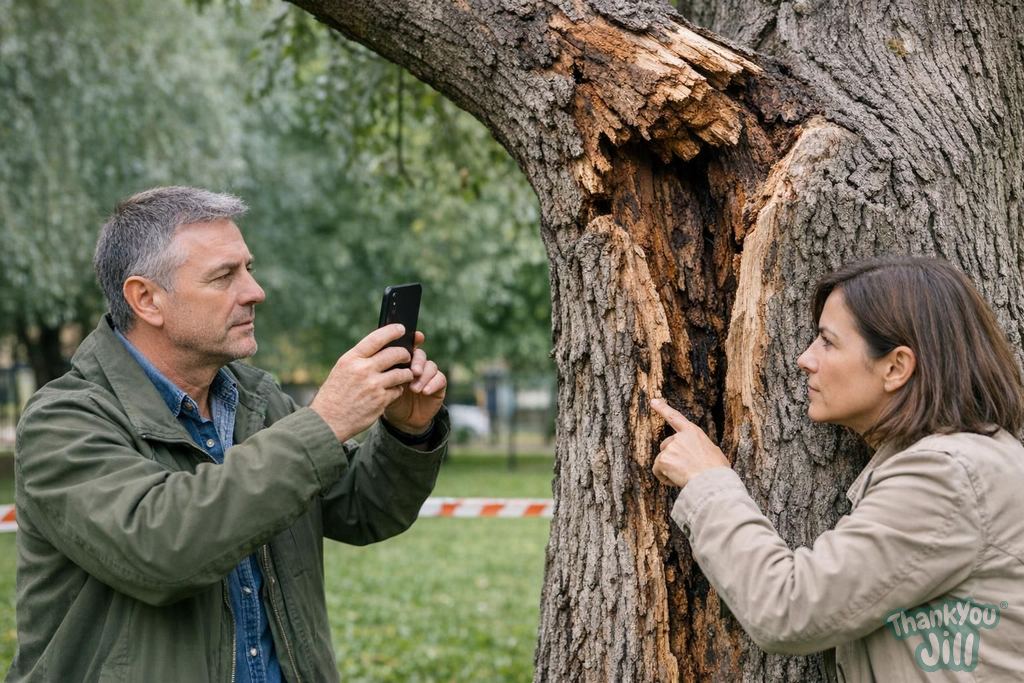
You're walking through the park and notice a centuries-old tree with a red paint mark on its trunk—the signal it's been condemned for removal. Or you find an old walnut tree in the municipal forest with a hollow base and wood-rotting fungi. Or you discover a neighbor felling an oak without permission. What do you do? Many people want to take action but don't know who to contact, how to do it effectively, or what to expect. This guide aims to answer those questions.
Who to report to: a map of the right contacts
The first step is identifying the right person or agency based on your specific situation. Public tree in poor condition (diseased, unstable, showing signs of decay): Contact your municipal Parks and Public Green Spaces Department, or the Technical Office if no dedicated department exists. Many cities have a hotline or online portal for maintenance reports. Public tree about to be felled (you have doubts about its legitimacy): Parks Department (to get information about the authorization) plus the municipal Landscape Commission if the area is protected. Illegal felling in progress or recently completed: Forest Carabinieri (1515)—they have specific authority over forest and environmental crimes. Also file a written report with your municipal Environmental Office. Historic or monumental tree at risk: Forest Carabinieri plus the regional Superintendency for Landscape and Environmental Heritage. Tree in a landscape-protected zone: Municipal Landscape Commission plus the Superintendency. Tree showing symptoms of Xylella or other quarantine pathogens: Regional Phytosanitary Service—reporting even suspected cases is legally required.
How to document an effective report
A well-documented report is far more likely to get a response and produce real results. Essential elements include: Precise location: street address or—better yet—GPS coordinates (available on any smartphone via Maps or Google Maps). Photographs: take at least 4–6 photos of the tree (full trunk, base, canopy, problem details—fungi, cracks, hanging branches, ongoing work). Photos should be date-stamped (automatic if using a smartphone). Problem description: what you saw, when, and who was doing what (if work was underway). Tree ownership: is it public (on a street, in a park) or private? This information directs your report to the right agency. Urgency level: is the tree in immediate danger (branches falling over a frequented area) or is the problem chronic? Clearly indicate the urgency.
Reporting channels available in your country
Beyond direct reports to relevant authorities, citizen science platforms collect reports on trees in danger and tree heritage. iNaturalist: the most widely used platform for observations of living organisms. By uploading a photo of a tree showing disease symptoms or suspected illegal felling, with location and appropriate tags ("tree health," "tree disease"), you contribute to a database consulted by researchers. LIFE4OAK: an EU project monitoring oak trees—accepts reports of oaks showing disease symptoms. National Biodiversity Monitoring Network: collects biodiversity data including forest ecosystem health. Regional portals: many regions have online environmental reporting portals—search "environmental report + your region's name."

A citizen's report has saved centuries-old trees that would have been felled in silence. It doesn't always work. Bureaucracy doesn't always respond in time. But a well-documented report sent to the right people is the only civil tool we have. And sometimes, that's enough.
What to do before, during, and after filing a report
- Before: Document everything with photographs and written notes. Check the National Register to see if the tree is listed as a monument (this completely changes the reporting channels and urgency). Identify the tree's ownership precisely by consulting the online cadastral map at visura.it or contacting the Revenue Agency.
- Submit your report in writing: Avoid verbal or phone-only reports — they leave no paper trail. Always use certified email (PEC) or registered mail with return receipt for formal communications to public authorities. Keep a copy of your report with the submission date.
- Set a reasonable deadline for response: In your report, request a response within a reasonable timeframe (10 days for urgent situations, 30 days for chronic issues). This formalizes your request and creates a legal obligation for the public authority to respond.
- If you don't get a response: After the deadline passes without a reply, send a formal follow-up. If the situation is serious and urgent, consider involving local environmental organizations (Legambiente, WWF, ProNatura) — they carry more institutional weight than individual reports. As a last resort, you can file a complaint with the Prefect for failure to respond to an urgent report.
- Tell the story: Citizen-led campaigns to save trees often succeed when they get public visibility — on social media, in local news, through environmental groups. If you have an important report, share it publicly too (with documentary photos and accurate facts). Public pressure sometimes works better than formal channels.
Every tree saved by a timely citizen report is a small victory of awareness over bureaucracy, of attention over neglect, of respect for life over the comfort of indifference. It doesn't always work. But not trying guarantees nothing will change. And not trying is what you regret most when a hundred-year-old tree is already gone.
Frequently asked questions
How do I know who to contact to report a sick or dangerous public tree?
For a sick or dangerous public tree, contact your city's Parks and Public Green Spaces Department or Public Works Office if there's no dedicated parks department. Many cities offer hotlines or online portals for maintenance reports.
What information is essential to effectively document a report about a tree in danger?
An effective report includes precise location (street address or GPS coordinates), 4-6 dated photos of the tree, detailed description of the problem, ownership status (public or private), and indication of urgency level.
When should I involve environmental organizations or file a complaint if my report goes unanswered?
If you don't receive a response after the stated deadline (10 days for urgent cases, 30 days for chronic issues), send a formal follow-up. In case of serious urgency, contact local environmental organizations or, as a last resort, file a complaint with the Prefect for failure to respond.
How do I report a tree showing symptoms of diseases like Xylella?
For trees showing symptoms of Xylella or other quarantine pathogens, you must report the suspected case to your Regional Plant Health Service, which has specific authority to manage these diseases.
Latest News
Comments
No comments yet. Be the first!
Leave a comment