


 Italiano
 Français
 Deutsch
 Español
 Português
 Svenska
 Suomi
Suomi
Grain and Legume Pairings
Complete Plant-Based Proteins
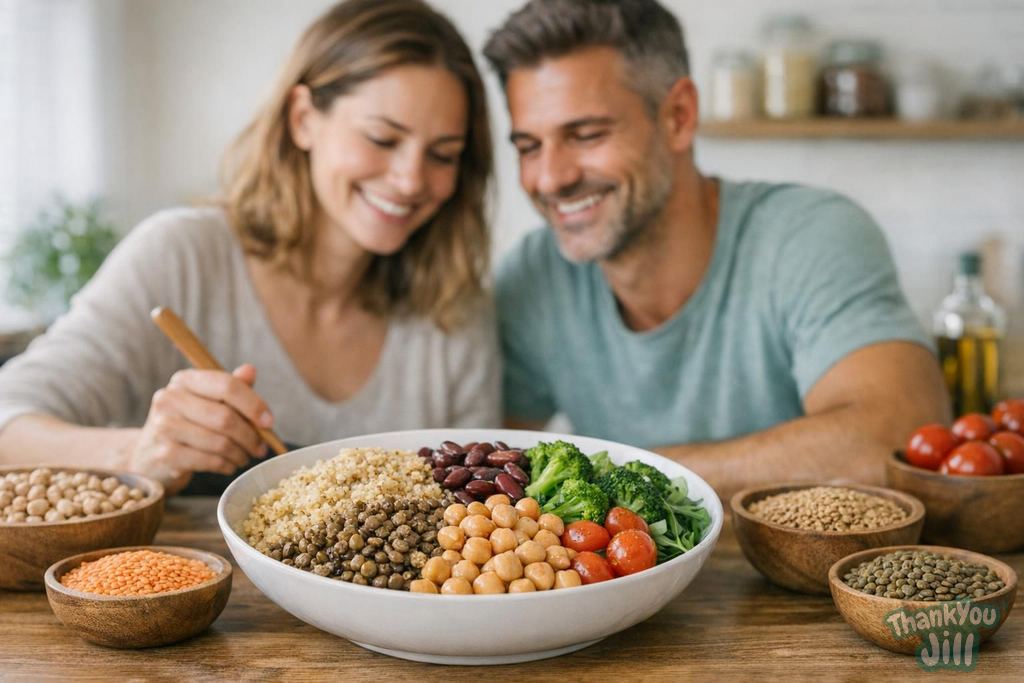
Before amino acid science was understood, food cultures around the world had already discovered the same solution empirically: pairing grains and legumes. Pasta and beans in Southern Italy. Rice and dal in India. Tortillas and beans in Mexico. Rice and soy in China and Japan. Couscous and chickpeas in North Africa. Every culinary tradition, independently, had found the perfect combination. Today, biochemistry explains why it works.
Essential Amino Acids: The Puzzle to Complete
Proteins are chains of amino acids. The human body needs 20 types, of which 9 are "essential": it cannot synthesize them and must obtain them from food. Historically, "complete" proteins (containing all 9 essential amino acids in adequate proportions) were associated with animal sources: meat, fish, eggs, dairy.
Most plant proteins are "incomplete": they lack or are deficient in one or more essential amino acids. Grains are rich in methionine but poor in lysine. Legumes are rich in lysine but poor in methionine. Combine them: you get a complete amino acid profile. The sum of two incomplete proteins creates a complete one.
The Myth of "Complementing in the Same Meal"
For many years, it was taught that grains and legumes had to be consumed in the same meal to "complement" each other. This belief has been reconsidered. Research over recent decades has shown that the body maintains a "pool" of free amino acids in the bloodstream for several hours. Eating grains at lunch and legumes at dinner still provides the body with all necessary amino acids within the same day.
It's therefore not necessary to eat pasta and beans at every meal to obtain complete proteins: it's enough that both grains and legumes are present in your daily diet, even in separate meals. Complementarity is daily, not meal-by-meal. This makes managing a vegetarian diet much more flexible in practice.
The Most Nutritionally Effective Combinations
Pasta (or bread) + beans/chickpeas/lentils: the Italian classic. Pasta provides methionine and slow-release carbohydrates; legumes provide lysine, iron, fiber. It's a complete single dish that doesn't require another protein source. Rice + soy (tofu, edamame, tempeh): the quintessential Asian combination. Rice is deficient in lysine, which soy provides abundantly. Corn (polenta) + beans: an ancient Mesoamerican combination. Corn is severely deficient in lysine and tryptophan; beans complete it. Couscous/bulgur + chickpeas: a classic North African and Middle Eastern pairing. Whole grain bread + hummus (chickpea paste): a complete protein snack in minutes.
How Much Protein You Get from the Combination
A serving of pasta and beans (80g pasta + 150g cooked beans) provides about 20-22g of complete proteins, with all essential amino acids in balanced proportions. A 100g beef burger provides about 20-25g of protein. The protein comparison is essentially equal. The difference lies in environmental impact (producing 100g of plant-based protein requires a fraction of the water and CO2 emissions compared to animal protein), fiber content (the plant-based combination has much more), and fats (predominantly unsaturated in legumes versus more saturated in meat).
Combinations with Pseudocereals
Quinoa and amaranth already have complete amino acid profiles: pairing them with legumes gives you an abundance of excellent-quality protein. Useful for those with high protein needs (athletes, elderly with sarcopenia) following a predominantly plant-based diet. Quinoa + chickpeas in a salad, amaranth + lentils in soup: simple combinations with high protein density.
Soy: The Special Case
Soy (Glycine max) is the only legume with a complete protein profile on its own. It contains all essential amino acids in adequate proportions, similar to meat. Tofu, tempeh, edamame, soy milk: complete protein sources without needing to combine with grains. Tempeh (fermented soy) is the most digestible form and has the best levels of vitamin B12 (from bacterial fermentation), the only vitamin normally absent in plants.

The culinary tradition of the poor had solved the complete protein problem without biochemistry: pasta and beans, rice and dal, tortillas and beans. They were pairings of instinctive wisdom that modern science has simply confirmed.
Five Ready-to-Go Pairings for the Week
Monday: red lentil and pearl barley soup (or spelt). Tuesday: whole wheat pasta and chickpeas (with rosemary and extra virgin olive oil). Wednesday: brown rice with sautéed tofu and edamame. Thursday: rye bread with chickpea hummus and vegetables. Friday: quinoa salad with black beans and corn. Five completely protein-rich meals of the week without meat, with complete proteins and all the benefits of plant-based fiber and antioxidants.
Homemade Hummus: Protein-Rich, Economical, Versatile
Hummus is the perfect grain-legume combination in sauce form: chickpeas (legume, lysine) + tahini (sesame, methionine) + bread or crackers for serving. Basic recipe: 400g cooked chickpeas (or canned, rinsed), 2 tablespoons tahini, juice of one lemon, one garlic clove, salt, a few tablespoons of cooking water, extra virgin olive oil. Blend everything. Keeps for 5 days in the refrigerator. More economical, fresher, and more nutritious than store-bought hummus.
Calculate Your Plant-Based Protein Needs
Protein requirements are about 0.8-1g per kg of body weight for sedentary adults, 1.2-1.6g for those who exercise. For a 70kg adult: 56-70g of protein daily. A diet with whole grains at every meal + 2-3 servings of legumes daily covers this requirement easily, even on a completely vegetarian diet. Use apps like Cronometer (free) to track protein during your first months of vegetarian transition: it reassures you and teaches you which foods really contribute.
For Those Who Can't Give Up Meat
You don't have to eliminate meat to benefit from grain-legume pairings. Even reducing it by 50% and replacing some portions with the plant-based combination significantly reduces your diet's environmental impact and improves your fiber and complex carbohydrate profile. A realistic goal: two completely vegetarian protein meals per week. Then three. Then four. Gradual transition is always more sustainable than total revolution.
Frequently Asked Questions
What's the difference between complete and incomplete proteins in grains and legumes?
Complete proteins contain all 9 essential amino acids in adequate proportions, while incomplete ones are deficient in some. Grains are rich in methionine but poor in lysine, legumes are rich in lysine but poor in methionine. Pairing them gives you a complete protein profile.
Do you need to eat grains and legumes in the same meal to get complete proteins?
No, you don't need to eat them in the same meal. The body maintains a pool of free amino acids for several hours, so it's enough that grains and legumes are present in the same day's diet to ensure complete proteins.
What are some traditional grain and legume combinations that provide complete proteins?
Examples include pasta and beans, rice and soy, corn (polenta) and beans, couscous and chickpeas, whole grain bread with hummus. These combinations balance essential amino acids for a complete and nutritionally effective protein intake.
How can someone following a vegetarian diet calculate and meet their daily protein needs?
Protein requirements range from 0.8-1g per kg of body weight for sedentary adults to 1.2-1.6g for those who exercise. Eating whole grains at every meal and 2-3 servings of legumes daily easily covers this requirement. Apps like Cronometer help monitor intake.


Latest News




Comments
No comments yet. Be the first!
Leave a comment