


 Italiano
 Français
 Deutsch
 Español
 Português
 Svenska
 Suomi
Suomi
Meat
Intensive vs. Extensive Farming
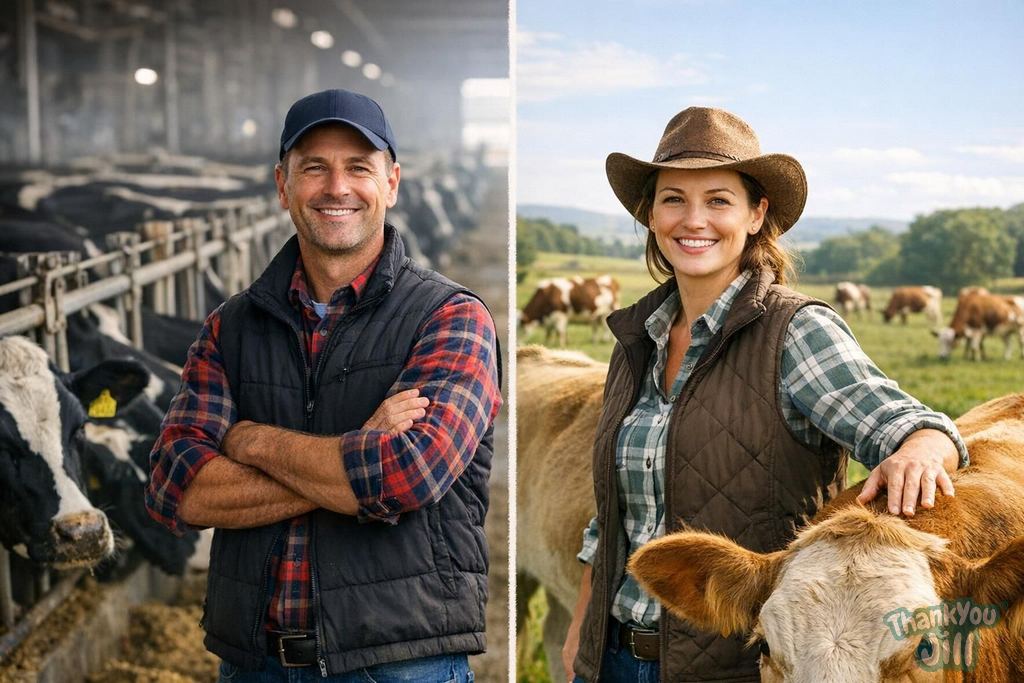
When you buy a chicken breast at the supermarket for €3 per kg, you're not just buying meat. You're purchasing the result of a precise production system: intensive farming with high animal density, life cycle shortened to the maximum, standardized feed, antibiotics used as a preventive measure. When you buy free-range chicken from a local farmer for €12 per kg, you're buying something fundamentally different. Understanding the difference helps you make choices aligned with your values and nutritional needs.
Intensive farming: how it works and what it produces
Intensive farming is optimized for maximum production in minimum time at minimum cost. Broiler chickens reach slaughter weight (2-3 kg) in just 35-42 days. Their wild ancestor took 3-4 months. This accelerated growth is achieved through: genetic selection for muscle hypertrophy, high-calorie feed with high energy and protein concentration, high density (up to 33 kg of chicken per square meter in final stages), antibiotics as disease prevention in overcrowded conditions.
In Europe (unlike the USA), growth hormones have been banned in farms for decades. The use of preventive antibiotics has been progressively limited by European regulations: since 2022, prophylactic use of antibiotics critical to human medicine is prohibited. This is significant progress compared to ten years ago.
The antibiotic question and antimicrobial resistance
Intensive farming has been the world's largest consumer of antibiotics for decades: more than 60% of antibiotics produced globally were used in livestock, not human medicine. The problem isn't the presence of residues in meat (European limits are very strict and monitored), but the selection of antibiotic-resistant bacteria in farms that can then transfer to humans.
Antimicrobial resistance is defined by the WHO as one of the major global health threats of the 21st century. Reducing consumption of meat from intensive farming, supporting increasingly restrictive European regulations on antibiotic use, choosing meat from systems with lower antibiotic use: these are concrete actions every consumer can take.
Nutritional differences: what research shows
Meat from pasture-raised or outdoor-access animals has documented nutritional differences compared to intensive farming meat. Fatty acid profile: pasture-raised meat has more omega-3 and conjugated linoleic acid (CLA, associated with anti-inflammatory effects). Intensive meat has more omega-6 (less favorable omega-6/omega-3 ratio). The absolute difference isn't huge for moderate meat consumption, but becomes relevant for those eating meat daily.
Vitamin E and antioxidants: pasture-raised animals consume fresh grass rich in vitamin E and beta-carotene. Pasture-raised meat has more vitamin E, which also contributes to fat stability (less oxidation during cooking). Microbiota: outdoor-raised animals have more diverse intestinal microbiota and less antibiotic treatment, with potential implications for consumer microbiome quality (research still preliminary).
How to recognize superior quality meat on the label
For poultry: in Europe, EU Regulation 543/2008 establishes mandatory labeling for poultry. "Outdoor-raised" requires at least 2 m² of outdoor space per animal. "Free-range" requires access to pasture for at least half the bird's life, feed with at least 70% cereals, minimum slaughter age of 81 days. "Traditional extensive indoor farming": less restrictive, without mandatory outdoor access. For beef: breed and geographic origin are often indicated. "100% grass" or "grass-fed" indicates predominantly pasture feeding.
The fair price of quality meat
Superior quality meat costs more because producing it costs more: longer life cycles, fewer animals per space, quality feed. Free-range chicken at €12 per kg isn't a luxury—it's the real price of dignified production. Chicken at €3 per kg externalizes real costs (animal welfare, environmental impact, antibiotic use) that society pays in other ways.
The practical solution: not everyone can afford high-quality meat daily. But reducing the amount of meat consumed and spending more on superior quality is a strategy that optimizes both budget and health. Less meat, but better.

The difference between intensive and extensive farming isn't just an ethical issue—it's biochemistry, it's public health, it's the kind of food world we build with every purchase. Less meat, chosen better: the simplest formula to make a difference.
Read poultry labels correctly
Next time you buy chicken, look for these words on the label in order of increasing quality: "intensive indoor farming" (minimum standard), "extensive indoor farming" (more space, no outdoor access), "outdoor-raised" (guaranteed outdoor access), "free-range" (pasture-raised, grain-fed, longer life). The price almost always reflects the hierarchy: don't expect free-range quality at intensive prices.
The practical rule: less meat but better quality
Try this for a month: instead of buying meat every day at low prices, buy it two or three times a week at higher quality and price. Your overall food budget can stay the same or decrease (better meat is often more satisfying and flavorful: you use less for the same enjoyment). Health improves (less total red meat), animal welfare improves, and taste is generally superior.
Find your trusted butcher
The artisanal butcher who knows their suppliers, knows where the farms are, can tell you how the animals were raised, is your most valuable ally for quality meat. It's not necessarily more expensive than certain supermarket cuts of quality. And it offers you something the supermarket can't: a relationship of trust and transparency in the supply chain.
Lesser-known meats worth exploring
Beyond beef and chicken, explore: pasture-raised lamb (high omega-3, intense flavor), rabbit (lean meat, highly protein-rich, often raised artisanally), heritage chicken breeds (Livorno, Valdarno, Ancona: ancient Italian breeds with more flavorful meat), free-range turkey (much less common than intensive but superior quality). Diversifying species reduces dependence on the most intensive systems and values Italian livestock biodiversity.
Frequently Asked Questions
What are the main nutritional differences between meat from intensive and extensive farming?
Meat from extensive farming contains more omega-3, conjugated linoleic acid (CLA), and vitamin E, thanks to grass-based feed and pasture. Intensive meat has a less favorable omega-6/omega-3 ratio and fewer antioxidants, affecting overall nutritional quality.
How do you recognize outdoor-raised or free-range chicken on the label?
On the label, "outdoor-raised" indicates at least 2 m² of outdoor space per animal, while "free-range" requires pasture access for at least half the bird's life, feed with at least 70% cereals, and a minimum slaughter age of 81 days, guaranteeing superior quality.
What are the risks associated with antibiotic use in intensive farms?
Preventive antibiotic use in intensive farms promotes the selection of resistant bacteria, which can transfer to humans, contributing to antimicrobial resistance, one of the major global public health threats according to the WHO.
When is it worth reducing intensive meat consumption and choosing superior quality meat?
It's worth reducing intensive meat consumption and choosing superior quality meat when you want to improve health, reduce exposure to antibiotic residues, and support animal welfare. Buying less meat but of better quality can also optimize overall spending.
Latest News




Comments
No comments yet. Be the first!
Leave a comment