


 Italiano
 Français
 Deutsch
 Español
 Português
 Svenska
 Suomi
Suomi
Problem Solving
How Plants Solve Problems
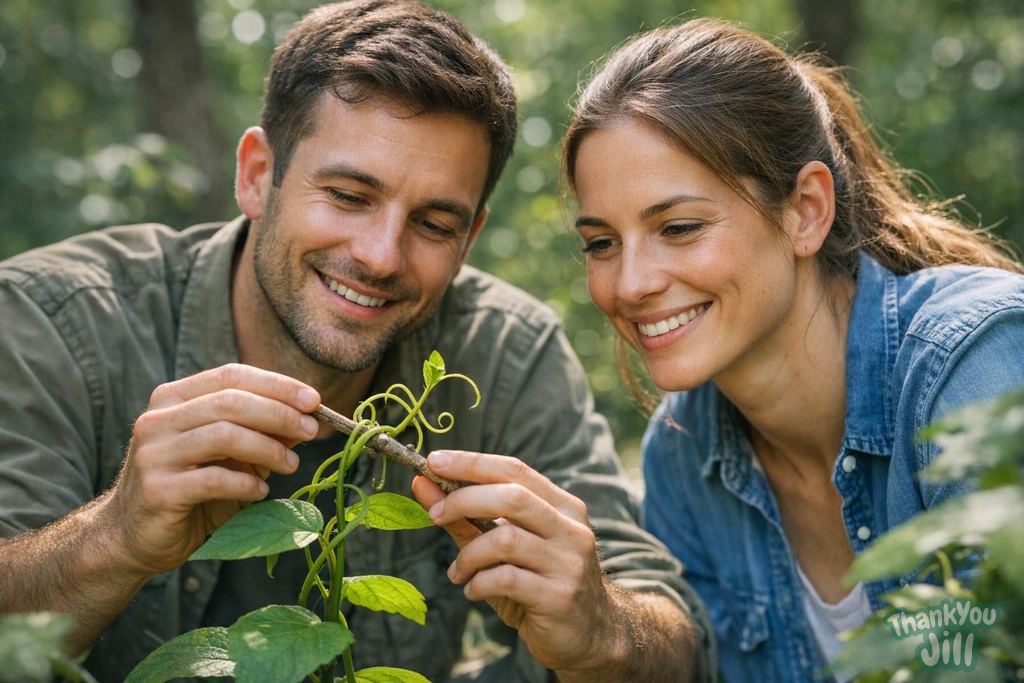
Problem solving is traditionally considered a higher cognitive ability requiring reasoning, planning, and memory. Plants don't reason in the human sense, but they "solve" structural, energetic, and adaptive problems with efficiency often surpassing human solutions. The study of plant problem-solving has fueled entire fields of bio-inspired engineering (biomimicry): many of the most elegant solutions in architecture, materials, and algorithmic optimization have been inspired by how plants tackle their adaptive challenges.
The Light Problem: Emerging from the Shade
In a tropical forest, 97-99% of sunlight is intercepted by the canopy of mature trees before reaching the ground. For a seedling germinating in the understory, the light problem is existential: without sufficient light, photosynthesis cannot sustain growth. Plant solutions to the light problem: shade avoidance response: phytochromes (light detectors) sense the reduced red/far-red light ratio typical of shade (caused by red light absorption by chlorophyll in overhead leaves). In response, the plant activates a signaling cascade that: accelerates internode growth (the stem elongates rapidly, seeking to emerge), reduces lateral branching (concentrating resources on vertical growth), reduces leaf production and shifts growth toward the apex, orients leaves to maximize lateral light capture. The result: a plant in shade is morphologically completely different from the same species in full light: taller, with a thinner stem, larger and more vertical leaves. Extraordinary phenotypic plasticity in response to the light problem. Climbing plants and vines: the most efficient evolutionary solution to the light problem in forests. Climbers don't invest in building a sturdy, lignified stem (costly in resources): they use tree structures as support (via tendrils, adhesive discs, adventitious roots) and invest almost all resources in leaves for photosynthesis. The Monstera deliciosa vine develops leaves with large fenestrations (holes): it has been hypothesized (Muir, 2013) that fenestrations allow the leaf to be larger (capture more light) without being subject to wind damage and without occupying too much space in shadow interception for lower leaves.
The Water Problem: Ingenious Solutions for Every Environment
The problem of finding and conserving water has produced some of the most spectacular solutions in plant evolution. Deep roots: Welwitschia mirabilis (Namibia) has roots descending up to 30 meters deep to reach groundwater in the desert. The Banksia tree (Australia) has proteoid roots that create zones of acidic pH around the root apex to solubilize otherwise inaccessible phosphates in poor Australian sandy soil. Fog collection: desert plants in the Atacama collect moisture from fog through specialized leaf structures. The Opuntia cactus (prickly pear) collects nighttime dew through its hydrophilic spines and directs it toward roots through micro-channels on the surface. Engineering inspiration for "fog-collecting" materials comes directly from these structures. CAM (Crassulacean Acid Metabolism): plants in dry deserts (cacti, agaves, pineapples) open their stomata only at night (when temperatures are low and water loss through evaporation is minimal) and fix CO2 in malic acid. During the day, with stomata closed, they use the CO2 released from malic acid for photosynthesis. A solution to the problem of performing photosynthesis (which requires CO2: thus stomatal opening) while minimizing water loss (which requires stomatal closure): a "temporal compromise" solution. Water reservoirs: succulent plants (cacti, fat euphorbias, aloe) store enormous amounts of water in stem or leaf tissues (aquiferous parenchyma). A mature saguaro cactus can contain 200-700 liters of water. A reserve that allows survival for months without rain.
The Structural Problem: Building a Tall, Lightweight Stem
A 60-meter-tall tree that must support the weight of its own leaves, resist wind, transport water from roots to the top and carbohydrates from foliage downward: it's an extremely complex structural engineering problem, solved with biological materials. Plant structural solutions: wood as a bio-inspired composite: wood is a natural composite of cellulose (tensile fibers, resistant to tension), hemicellulose (binding matrix), lignin (rigidity, compression resistance). The combination produces a material with a strength-to-weight ratio superior to steel under certain conditions. Fractal architecture: tree branching follows fractal laws (Murray's law: the cube of the trunk radius equals the sum of the cubes of all daughter branch radii) that optimize sap flow and structural material distribution. This law has been applied to water distribution network design. Structural tensegrity: surface roots of trees don't support the tree alone: they support it in combination with tension produced by the ensemble of roots in tension in the opposite direction. A "tensegrity" system (tension + structural integrity) that engineer Buckminster Fuller drew inspiration from plants for his geodetic structures.

Forest architecture, water distribution networks, lightweight and strong composite materials, optimization algorithms: many of the most important technological innovations of recent decades are inspired by solutions that plants have perfected over 500 million years of evolutionary problem-solving. The problem is that plants don't patent their inventions.
The Problem-Solving of Climbing Plants: Finding Support
Climbing plants have the "problem" of finding physical support to climb on. Their solution is a system of active detection and tropic response combining touch, gravity, and light. The tendril of peas and vines: a specialized organ that moves slowly in continuous circles (circumnutations) through the air, "searching" for an object to touch. When it touches a support, it responds within seconds with rapid asymmetrical growth that wraps it around the support in 1-2 minutes. After initial contact, the tendril thickens and lignifies, becoming a permanent support structure. Orientation toward darkness (skototropism): many tropical forest vines initially grow toward darkness rather than light. Darkness is a reliable indicator of the presence of a large tree trunk (which casts shade): the vine grows toward the shadow to reach the trunk to climb, then once attached, it grows toward light. A "support first, then light" strategy that solves the problem of accessing the canopy more reliably than direct growth toward light. Optimal attachment site: some climbing plants (Boquila trifoliata, a Chilean vine) even change the shape of their own leaves to camouflage themselves with the tree they use as support, assuming the same size, shape, venation, and color of the host's leaves. A case of adaptive mimicry linked to climbing problem-solving behavior.
Biomimicry: Plant Solutions Replicated by Engineering
Biomimicry (bio-inspiration) is the discipline that studies biological solutions to apply them to engineering and design. Plants are among the most fertile sources of inspiration. Lotus effect: lotus leaves have a micro-structured nanotopographic surface (microscopic wax papillae) that makes water super-hydrophobic: droplets slide off, dragging dirt with them (self-cleaning). Replicated in paints, fabrics, self-cleaning architectural surfaces. Fog collection: inspired by plants and desert insects. Fog collection nets installed in arid zones (Chile, Namibia, Morocco) replicate the hydrophilic/hydrophobic micro-structures of biological surfaces to collect water from the air. Fractal structures for heat exchange: bio-inspired radiators and heat exchangers replicate the fractal structure of leaves (branched venation optimized for fluid transport) to maximize heat exchange efficiency. Optimization algorithms: Karl Mattias Fischer's Virtual Cambium (TU Munich) uses the same adaptive growth principles as trees (adding material where stress is greatest) to optimize mechanical structures designed by engineers. Trees solved the structural optimization problem 300 million years ago.
Root Competition as Social Problem-Solving
When roots of different plants meet in soil, a form of "competition" for resources unfolds that has characteristics similar to problem-solving in a resource-limited environment. Self/non-self recognition: a plant's roots recognize roots of the same plant (self) from those of another plant (non-self), probably through chemical signals secreted in root exudates. With "self" roots (e.g., roots from different branches of the same plant): cooperation and absence of intensive competition. With "non-self" roots (another plant): direct competition for space and nutrients. Competitive root behavior: some plants (like wild onion Allium vineale) project roots in all directions and then "withdraw" roots in directions where they encounter occupation by a competitor, concentrating on free zones. A sort of "exploration + occupation + strategic withdrawal" that optimizes soil coverage. Allelopathy (chemical inhibition of competition): many plants secrete allelopathic chemical compounds from roots (organic acids, phenols, terpenes) that inhibit germination and root growth of competitors in surrounding soil. Black walnut (Juglans nigra) produces juglone, a potent allelopathic compound that creates a competition-free space around the tree. A chemical solution to the root competition problem.
Frequently Asked Questions
How do plants solve the problem of low light in the understory?
Plants use the shade avoidance response activated by phytochromes that detect reduced light. They grow rapidly in height, reduce lateral branching, and orient leaves to maximize light capture, modifying their morphology to emerge from the shade.
What strategies do plants adopt to find and conserve water in arid environments?
Plants develop deep roots, collect moisture from fog with specialized structures, use CAM metabolism to open stomata only at night, and store water in succulent tissues, as in cacti, to survive long periods without rain.
How do climbing plants find and attach to supports to grow toward light?
Climbing plants use organs like tendrils that move seeking a support to wrap around quickly. Some grow toward darkness to locate tree trunks, and others modify leaf shape to camouflage with the host, optimizing support before growing toward light.
How do plant solutions inspire engineering and design through biomimicry?
Plants inspire super-strong materials like composite wood, self-cleaning surfaces (lotus effect), water-collection systems from fog, and structural optimization algorithms based on adaptive growth, improving efficiency and sustainability in architecture and technology.
Latest News




Comments
No comments yet. Be the first!
Leave a comment