


 Italiano
 Français
 Deutsch
 Español
 Português
 Svenska
 Suomi
Suomi
Parasitic Plants
How They Deceive Their Hosts
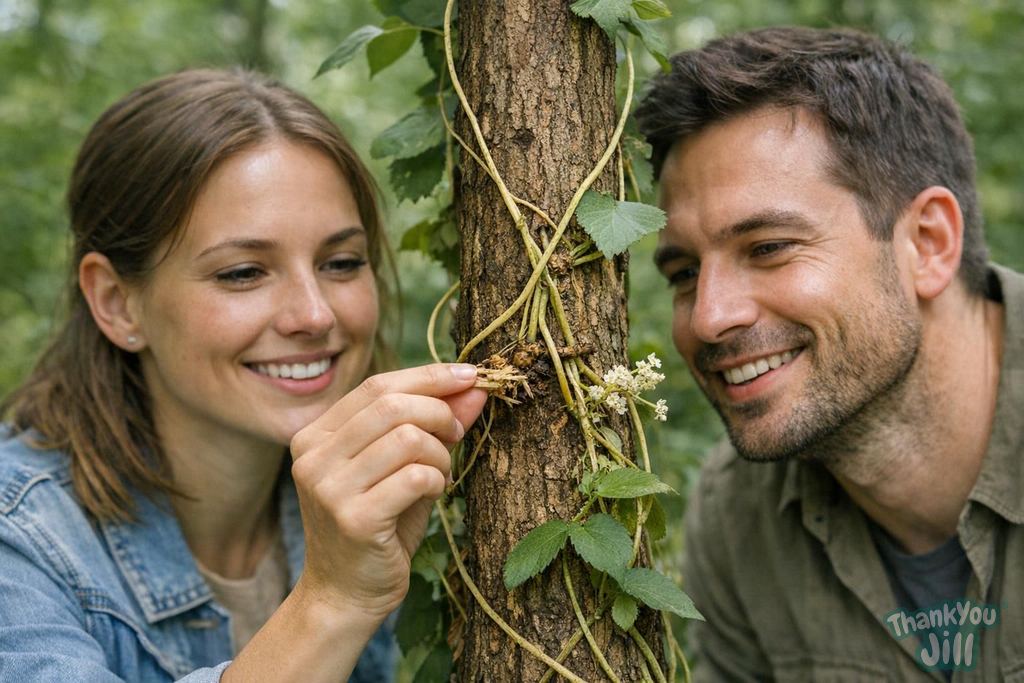
Parasitism is an effective evolutionary strategy: more than 1% of flowering plant species are parasites of other plants. These plants have evolved independently at least 12-13 times across different families, demonstrating that plant parasitism is an adaptive solution that evolution "discovers" repeatedly through convergent evolution. Parasitic plants are parasites of other plants, not animals: they attach physically to the roots or stems of their host through specialized structures called haustoria and extract water, minerals, carbohydrates, or all three.
Types of Parasitic Plants: From Partial to Total Parasites
Parasitic plants are classified based on their degree of dependence on the host and the site of attack: Holoparasites (total obligate parasites): completely dependent on the host for all nutrients, including carbohydrates. They lack chlorophyll and do not photosynthesize. Examples: Dodder (Cuscuta): a yellowish or orange filament that coils around the stems of host plants, emitting haustoria that penetrate the phloem and xylem. No leaves, no permanent roots. A generalist parasite (attacks hundreds of species). Rafflesia arnoldii (Borneo): produces the world's largest flower (up to 1 meter in diameter, weighing up to 11 kg). It has no visible stem, leaves, or roots: it exists only as a network of filaments within the tissue of Tetrastigma (vine) roots. The enormous flower (and foul-smelling: it mimics rotting flesh to attract pollinating flies) is the only visible part. Orobanche (broomrape) and Phelipanche: root parasites of legumes, tomato, carrot, and sunflower. Devastating in Mediterranean crops. Hemiparasites (semi-parasites): have chlorophyll and photosynthesize, but depend on the host for water and minerals. Examples: Mistletoe (Viscum album): the most well-known. Grows on the branches of host trees (apple, elm, linden, fir), attaches to the xylem of the host to extract water and minerals. Photosynthesizes with its own green leaves. Striga (witch weed): the most destructive root parasite of maize and sorghum in sub-Saharan Africa (causing losses of 7-10 billion dollars/year). Photosynthesizes but depends on the host for water and minerals. Root parasites vs. stem parasites: root parasites (Orobanche, Striga, Rafflesia) attach to the roots of the host, often invisible until flower production. Stem parasites (Dodder, Mistletoe, Loranthus) attach to stems or branches, visible on the host plant.
The Attack Mechanism: Haustoria
The haustorium is the specialized organ through which the parasitic plant penetrates host tissues. Haustorium formation is a complex molecular process involving detection of host chemical signals. How it works: host detection through chemical signals: Striga roots germinate only in response to strigolactones (hormones released by cereal host roots under phosphorus deficiency conditions). This "germination stimulants" mechanism is precise: Striga germinates only in the presence of crops it parasitizes. Primary haustorium formation: after physical contact with the host root, specific quinones and mechanical signals cause differentiation of root apex cells into a specialized attack structure (the primary haustorium). Mechanical and enzymatic penetration: haustorium cells secrete enzymes that break down the host cell wall (cellulase, pectinase, xylanase) and mechanically insert themselves into host tissues. Vascular connection: haustorium cells differentiate into conducting elements that connect directly with the xylem (for hemiparasites) and phloem (for holoparasites) of the host. Once connected, the parasitic plant has direct access to the host's water and nutrient stream. Evasion of host defenses: parasitic plants have developed mechanisms to suppress the host's defense responses to attack. Some parasites inject molecular effectors (proteins that interfere with host defense signaling) through plasmodesmata (intercellular channels), similar to effectors from pathogenic bacteria.
Striga: The Parasite Threatening African Food Security
Striga (genus Striga, family Orobanchaceae) is the world's most destructive root parasite of grasses. It affects maize, sorghum, millet, and rice in sub-Saharan Africa, India, and the Middle East. In Africa, it infests over 50 million hectares and causes crop losses of 30-100%. It is estimated to threaten food security for 300 million people. The destructive mechanism: Striga attaches to maize roots before the host plant emerges from the soil. Damage to the host root causes significant yield losses before Striga flowers are visible above ground (when diagnosis becomes obvious to the farmer). Each Striga plant produces 50,000-500,000 tiny seeds that remain viable in the soil for 15-20 years. Seeds germinate only in the presence of specific host strigolactones. Controlling striga: controlling Striga is one of the most difficult agricultural problems in the world. Solutions being studied include: resistant maize varieties (through conventional breeding and CRISPR: modification of strigolactone production genes), use of the "suicidal germinator" (synthetic compounds that stimulate Striga germination in the absence of the host crop: seeds germinate and die from lack of host), the Push-Pull system (ICIPE): Desmodium intercropped with maize produces compounds that suppress Striga germination, biological control system (biocontrol agents: Fusarium oxysporum sterilizing fungi that specifically parasitize Striga).

Striga does what any successful parasite does: it camouflages itself, waits for the right moment, and strikes before damage is visible. Fifty years of research have yet to find a simple solution. The evolutionary complexity of a parasite that has coexisted with its host for millions of years cannot be solved with a pesticide: it requires strategies equally sophisticated and biologically informed.
Mistletoe: Parasite and Cultural Symbol
Mistletoe (Viscum album) is the most well-known plant hemiparasite in Europe, with a rich cultural history (mistletoe in Celtic and Druidic tradition, kissing under the mistletoe in Nordic Christmas). From a biological perspective, it is a fascinating example of parasite-host coevolution. Mistletoe biology: evergreen shrub with thick, leathery leaves (autonomous photosynthesis: it is a hemiparasite), shiny white fruits (berries containing a sticky seed in a gelatinous substance called viscin), attaches to the xylem of host trees (apple, pear, poplar, linden, elm, rarely oak and beech) through a primary haustorium and cortical roots (sinkers) that progressively penetrate the host wood over years. Propagation: white fruits are eaten by birds (especially mistle thrush and robin). Sticky seeds are defecated or wiped from the beak onto tree branches → germination on the branch. Mistletoe distribution depends entirely on birds (ornithochory). Damage to the host: mistletoe is a relatively "gentle" parasite: it reduces the growth of the infested branch (especially if infestation is severe) but rarely kills the tree. In olive groves and orchards, severe infestations reduce yield. In Italy, mistletoe is more common in the North (Piedmont, Lombardy, Veneto). In medicine: mistletoe (especially Viscum album var. austriacus, on silver fir) is used in traditional medicine and in a form of integrated medicine (Iscador: standardized extract) as support in oncology. Clinical evidence is limited and controversial: some systematic reviews show benefits on quality of life in cancer patients, but not on primary outcome (survival).
Dodder: The Plant Vampire
Dodder (Cuscuta, witch's lace) is a stem holoparasite present worldwide, with approximately 200 species. In Italy it is present as a parasite of forage crops (Cuscuta epithymum on clover, Cuscuta campestris on alfalfa) and as a parasite of roadsides (Cuscuta europaea on nettle). Dodder biology: the seed germinates in the soil producing a rootlet and a filament that rotates in space (circumnutations) seeking a host to touch. If it does not find a host within a few days, the seedling dies (it has insufficient reserves without photosynthesis). Upon contact with the host: the filament coils around the stem and forms haustoria that penetrate the phloem (for sugars) and xylem (for water). Dodder "chooses" its host: experiments by Runyon et al. (2006, Science): Dodder orients toward preferred host plants (tomato) over non-preferred ones (wheat), detecting the host's VOCs before contact. Dodder orients toward tomato (an excellent host) and away from wheat (a poor host). A very sophisticated host chemical detection system. Agricultural damage: Dodder is among the most difficult weeds to control in forage crops because it grows tightly intertwined with cultivated plants, making herbicide treatments impossible without damaging the crop.
Frequently Asked Questions
What is the difference between total parasitic plants (holoparasites) and semi-parasitic plants (hemiparasites)?
Holoparasites are completely dependent on the host for all nutrients and do not photosynthesize, while hemiparasites have chlorophyll, photosynthesize but depend on the host for water and minerals.
How does the attack mechanism of parasitic plants work through haustoria?
Haustoria are specialized structures that penetrate host tissues, secreting enzymes to break down the cell wall and connecting to conducting vessels to extract water and nutrients, evading the host's defenses with molecular effectors.
Why is Striga considered a serious threat to food security in Africa?
Striga attacks the roots of crops like maize and sorghum before they emerge, causing crop losses up to 100%. Its seeds can remain viable in the soil for decades, making control very difficult and threatening millions of people.
How does mistletoe spread and what damage can it cause to host plants?
Mistletoe spreads through birds that distribute sticky seeds on tree branches. It is a relatively mild parasite that reduces the growth of infested branches and can decrease yield in orchards and olive groves, but rarely kills the tree.

Latest News



Comments
No comments yet. Be the first!
Leave a comment