


 Italiano
 Français
 Deutsch
 Español
 Português
 Svenska
 Suomi
Suomi
Biodiversity
A Single Tree Hosts Thousands of Species
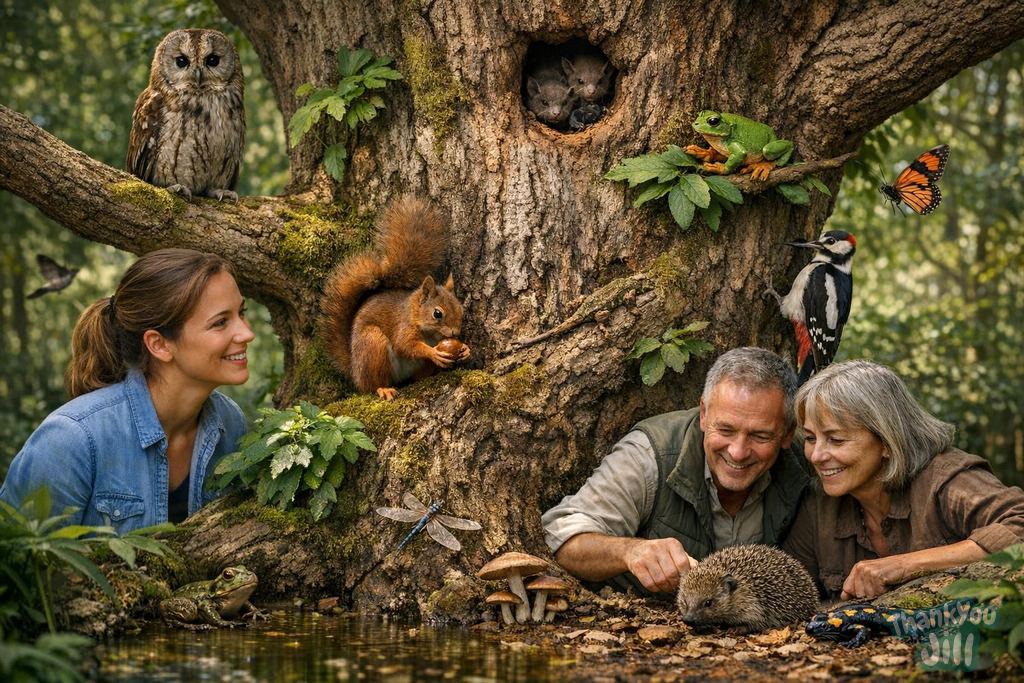
A tree is not just a single organism—it's an entire ecosystem. A single centuries-old oak can support up to 2,000–2,300 species of animals, fungi, lichens, and epiphytic plants. A monumental beech in the Alps can host 200–400 species of arthropods, 100–200 fungal species, 50–100 lichen species, 20–30 moss species, 15–20 bird species that feed in its branches throughout the year, and 5–10 mammal species that use its cavities or feed on its fruit. This concentration of associated biodiversity ranks among the highest of any European terrestrial habitat.
Species Associated with a Single Oak: A Census
The oak (Quercus robur in lowlands, Quercus petraea in hills, Quercus pubescens in warm scrubland) hosts the highest animal biodiversity among European trees. A census of a single monumental oak identified: Insects (the richest category): over 500 beetle species (many saproxylic—dependent on dead wood), 200–300 true bug and aphid species, 200–300 Lepidoptera species (butterflies and moths) whose larvae feed on leaves, 100–150 Hymenoptera species (wasps, solitary bees, ichneumonids), 80–100 Diptera species. Fungi: 150–300 macrofungal species (ectomycorrhizal, wood-decay saprophytes, parasites), plus thousands of microfungal species (molds, yeasts). Lichens: 50–120 species on the bark. Birds: 30–50 species that nest or feed in the oak throughout the year (woodpeckers, tits, redstarts, thrushes, finches, sparrowhawks). Mammals: squirrels, dormice, hazel dormice, bats (multiple species in cavities), voles, and mice (feeding on acorns). The role of cavities: natural cavities that form in large old trees (from dead branches, heartwood decay) are the most precious habitats for many rare species. In Italy: great spotted woodpecker, lesser spotted woodpecker, green woodpecker, wryneck, tawny owl, little owl, blackcap, great tit, blue tit, redstart, Natterer's bat, Bechstein's bat—all species that nest in tree cavities. Many are classified as "vulnerable" or "endangered" due to the reduction of old trees with cavities in European forests. The VETERAN TREES certification (UK Woodland Trust): a program identifying and protecting veteran trees (large, old, cavity-bearing)—recognition of their inestimable ecological and cultural value.
Dead Wood: The Richest and Most Threatened Habitat
Dead wood—whether standing (snags) or fallen (coarse woody debris)—is one of the richest biodiversity habitats in forest ecosystems and one most depleted by conventional forestry. Saproxylic species: organisms dependent on dead wood in various decomposition stages (saproxylic: from Greek sapros = rotten, xylon = wood) form an enormous, specialized group. For saproxylic beetles alone, an estimated 25–30% of all European beetle species (roughly 3,000–4,000 species) are saproxylic, dependent on dead or dying trees. Many are rare or threatened by dead wood reduction in managed forests. Decomposition stages: dead wood is progressively decomposed by a succession of organisms. Stage 1 (hard wood, recently dead): bark beetles and longhorn beetles (the "pioneer borers"). Stage 2 (wood with white molds and fungal hyphae): stag beetles and sap beetles. Stage 3 (soft wood, advanced decomposition): late-stage longhorn beetle larvae, jewel beetles. Stage 4 (nearly completely decomposed wood, woody humus): annelids, mites, springtails, dipteran larvae. Each stage has specialized species: the "decomposition chain" produces a temporal succession of biodiversity. The importance of dead wood volume and distribution: European sustainable forestry guidelines recommend maintaining at least 20–30 m³ of dead wood per hectare in managed forests (standing and fallen combined). In European primary forests, this reaches 60–200 m³ per hectare. In managed Italian forests, dead wood availability often falls below 5–10 m³ per hectare—a major factor in forest biodiversity loss.
Forests and Soil Biodiversity: Beneath the Litter
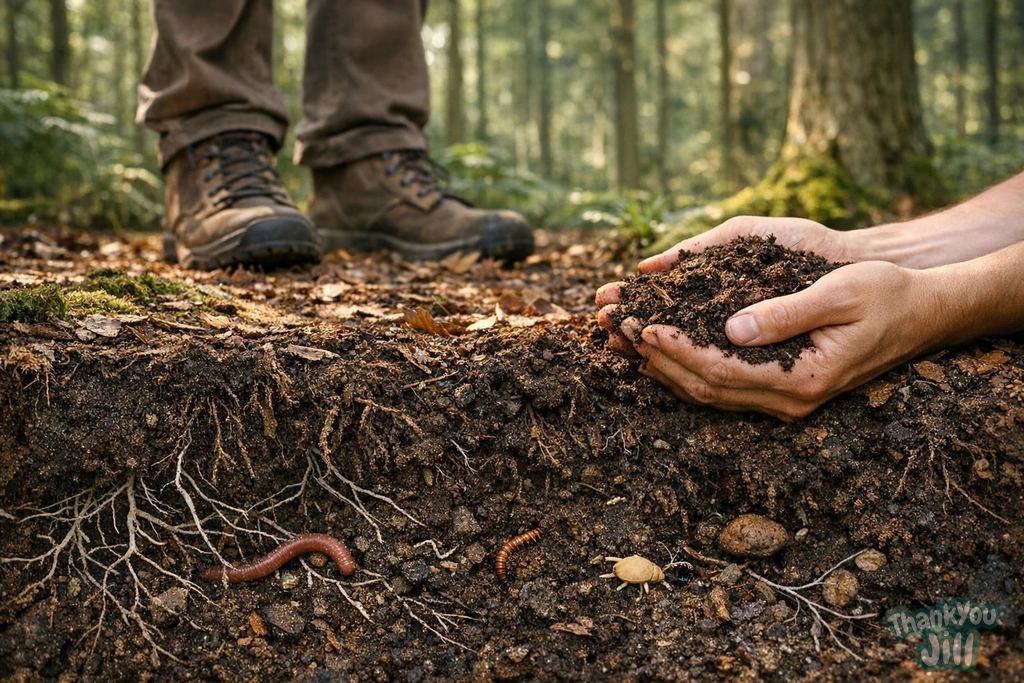
Forest biodiversity extends far below ground: beneath the leaf litter and within the soil lives a community of organisms that surpasses the above-ground portion in species number and biomass. Soil microbial diversity: a single gram of forest soil contains thousands of distinct bacterial species (molecular metabarcoding estimates: 5,000–50,000 species per gram). This microbial diversity is fundamental for soil fertility and nutrient mineralization. Soil mesofauna: mites (Acari: thousands of species, the most abundant soil mesofauna), springtails (Collembola: small hexapods feeding on fungi and bacteria, food source for many soil predators), enchytraeids (tiny annelids resembling microscopic earthworms). Soil macrofauna: earthworms (discussed earlier), millipedes (Diplopoda: fungal and detrital feeders), centipedes (Chilopoda: predators), ground beetles (predators of soil surfaces), terrestrial flatworms. Mycorrhizae as functional biodiversity: a healthy forest maintains 50–200 mycorrhizal fungal species per hectare. This functional diversity ensures mycorrhizal symbiosis resilience: if one fungal species is damaged by drought or pathogens, others continue functioning. Loss of mycorrhizal diversity (occurring in degraded forests and monoculture plantations) is a vulnerability factor for tree nutrition.

A centuries-old oak is not just a tree—it's a biological apartment building with 2,000 residents. When it's felled, 2,000 species simultaneously lose their habitat. Not all will perish immediately: some relocate, some wait in the soil. But the most specialized species—those living only in old-tree cavities or only in specific wood-decay stages—have no alternative. Protecting old-growth trees means protecting the most concentrated biodiversity in our landscapes.
The Stag Beetle: A Symbol of Italy's Deadwood Biodiversity
The stag beetle (Lucanus cervus) is Europe's largest beetle and one of the most iconic symbols of forest biodiversity associated with deadwood in Italy. Biology: larvae live for 3–5 years in dead wood from trees (preferably oak, beech, or chestnut) at intermediate decomposition stages. They feed on wood that has been broken down by fungi (without killing the tree). They then pupate in the soil. Adults live only 3–6 weeks (they barely feed at all), mate, and females lay eggs in dead wood. The antlers (males only): elaborate structures used in ritualistic combat to gain access to females. They're not used for feeding—they're "sexual weapons" shaped by sexual selection. Conservation status: classified as "near threatened" in Europe (IUCN), with declining populations across many regions due to reduced deadwood in managed forests. In Italy, it's protected under Annex II of the EU Habitats Directive as a species of community interest requiring special conservation areas. How to support them: keep oak stumps and logs dead on the forest floor (females lay eggs beneath them), reduce systematic deadwood removal in lowland forests, and leave large decaying trees standing (snags). Monitoring programs: the European "Citizen Science Lucanus" project engages citizens in surveying stag beetle populations through dedicated apps. In Italy: the iNaturalist app lets you report stag beetle sightings, contributing to mapping of saproxylic biodiversity. A concrete way to participate in forest biodiversity conservation.
How to Boost Biodiversity in Your Forest or Garden
Even on a small scale, you can increase tree-associated biodiversity through simple management choices. In a private forest: leave at least 5–10 dead trees standing (snags) per hectare. Don't burn pruning waste—pile it up instead (habitat for hedgehogs, toads, lizards, and insects). Maintain at least one hollow tree per hectare; if none exist naturally, install nest boxes. Don't disturb the forest floor (no plowing or compacting). In a garden: don't remove tree stumps after felling—they become habitat for saproxylic beetles. Install nest boxes for different species (blue tit boxes with 30 mm entrance holes, tawny owl boxes with larger cavities, bat boxes with rear slots). Plant native species (oak, linden, rowan, wild cherry, crab apple)—far more insect species feed on native plants than on exotic ornamentals. Create a deadwood pile in a garden corner—essential habitat for hedgehogs, salamanders, beetles, and snails. Reduce or eliminate pesticides, especially insecticides that indiscriminately kill all insects, including beneficial insectivores and pollinators. A garden with nest boxes, a decaying stump, a native hedge, and no pesticides can host 200–300 more species than a "tidy" garden with manicured lawn and exotic ornamental monocultures.
Frequently Asked Questions
Why are cavities in old trees so important for biodiversity?
Cavities in old trees provide essential habitat for many rare and specialized species, including birds and bats. Their loss drives these species into decline, making the protection of ancient trees fundamental to biodiversity conservation.
How does deadwood management affect forest biodiversity?
Deadwood is a rich habitat for saproxylic species, but conventional forest management often drastically reduces it. Maintaining at least 20–30 cubic meters of deadwood per hectare is recommended to preserve biodiversity associated with different decomposition stages.
What are practical ways to increase biodiversity in a private garden or forest?
You can boost biodiversity by leaving dead trees standing, preserving stumps, and installing nest boxes for birds and bats. Planting native species and reducing pesticide use further encourages the presence of diverse animal and plant species.
Why is the oak tree considered such a rich biodiversity ecosystem?
A century-old oak hosts thousands of different species—insects, fungi, lichens, birds, and mammals. This concentration of biodiversity makes it one of the richest and most vulnerable ecosystems, with many specialized species that depend exclusively on it.

Latest News




Comments
No comments yet. Be the first!
Leave a comment