


 Italiano
 Français
 Deutsch
 Español
 Português
 Svenska
 Suomi
Suomi
Decomposer Fungi
The Forest's Recyclers
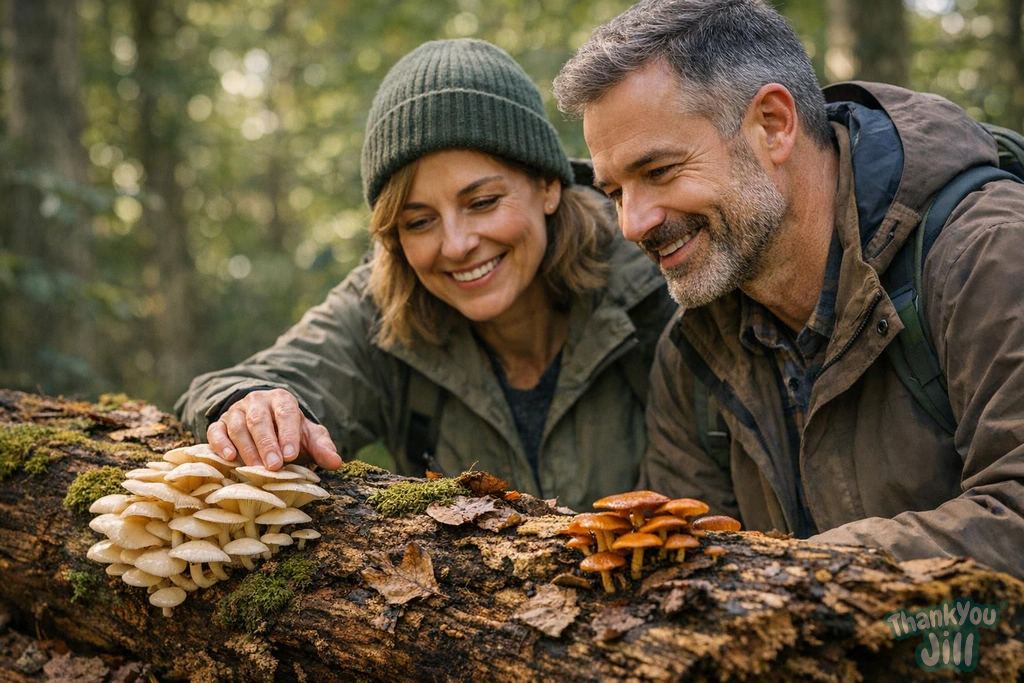
Forest decomposer fungi are among the most important and most undervalued organisms in the biosphere. Without them, dead wood from trees would accumulate without decomposing (lignin, which makes up 20-30% of wood, is effectively degraded almost exclusively by "white rot basidiomycete" fungi). Forests would suffocate under an accumulation of non-degradable wood. The nutrients locked in dead wood would never return to the cycle. Life on Earth as we know it would not be possible without decomposer fungi.
Lignin degradation: the problem only fungi can solve
Lignin is the most abundant organic polymer on Earth after cellulose and soil carbon. It's the substance that makes wood resistant and hard: a three-dimensional network of phenolic polymers linked by C-C and C-O bonds that are virtually indestructible through normal enzymatic hydrolysis. The challenge of lignin degradation: almost no bacteria can degrade lignin. Almost no animals can degrade lignin. Only a specific group of fungi (the "white rot" basidiomycetes) has evolved the necessary enzymes to break it down. The mechanism: white rot fungi produce peroxidases (Lignin Peroxidase: LiP, Manganese Peroxidase: MnP) and laccases. These enzymes produce highly reactive free radicals (oxidation) that break lignin bonds in a non-specific manner. It's a "shotgun" oxidative mechanism that degrades lignin into soluble fragments. The discovery of fungal peroxidases (1983-1984, US and Swedish laboratories) was one of the great discoveries in applied microbiology of the 1980s. Biotechnologies derived from lignin: fungal laccases and peroxidases are intensively studied for biotechnology applications: bioremediation of soils contaminated with phenolic compounds (xenobiotics, pesticides, industrial dyes), bioethanol production from lignocellulosic biomass (the main problem with ethanol production from straw is precisely lignin), chlorine-free paper production (the same peroxidases used for industrial bleached paper are fungal-produced), and treatment of wastewater containing industrial dyes. Lignin biobatteries: recent research uses the lignin oxidation mechanism to generate electricity from lignocellulosic material.
The main groups of forest decomposer fungi
Forest decomposer fungi are divided into three main functional groups based on the type of substrate they degrade and the type of decomposition they produce. White rot: degrades both cellulose and lignin. Decomposed wood becomes soft, fibrous, and whitish. Species: Fomes fomentarius (beech polypore: the hoof-shaped polypore common on dead beeches), Trametes versicolor (turkey tail: a colorfully banded polypore very common on dead broadleaves), Pleurotus ostreatus (oyster mushroom: the edible oyster fungus that grows on dead stumps), Ganoderma lucidum and G. adspersum (lacquer fungus: common on broadleaf stumps). Brown rot: degrades cellulose but not lignin. Decomposed wood becomes crumbly, cubical, and brown (residual lignin gives the color). Species: Fomitopsis pinicola (red pine fungus: common on felled conifers), Serpula lacrymans (the fungus responsible for dry rot in wooden buildings), Laetiporus sulphureus (sulfur fungus: edible, common on oaks). Soft rot: produced mainly by Ascomycetes and Deuteromycetes, degrades cellulose in high-humidity conditions. Less common in forests, more important in wooden materials in water (pilings, docks). Litter decomposers: fungi that decompose fallen leaves (not wood). Marasmius oreades (fairy ring fungus), Mycena spp., Collybia spp. They form "fairy rings" in meadows: the centrifugal growth of mycelium produces rings of greener grass (due to nitrogen mineralization).
Fungal succession on dead wood: an ecological sequence
On dead wood (a felled trunk or dead tree), an ecological succession of decomposer fungi unfolds over decades and creates habitat for a series of animal species. Years 1-2: "pioneer" fungi colonize the wood through wounds and bark (Stereum hirsutum, Hypholoma fasciculare). Years 3-10: large woody polypores (Fomes fomentarius, Trametes versicolor, Ganoderma spp.) establish themselves and begin lignin degradation. The wood becomes soft and spongy inside. Wood-boring insects begin colonization. Years 10-30: the wood is advanced in decomposition. Fungal species that prefer advanced decayed wood (Oudemansiella mucida, Pleurotus spp.). Late-stage saproxylic insects settle in. Years 30-50: wood almost completely transformed into woody humus. Soil fungi and basidiomycetes complete decomposition. The wood "disappears" into the soil, enriching it with stable organic carbon. The value of snags (standing dead trees): a large standing dead tree (beech, oak, fir) goes through this decomposition sequence over 30-80 years, hosting hundreds of species of insects, fungi, birds, and mammals in the meantime. Each snag is a temporary ecosystem of extraordinary richness. The speed of decomposition depends on: climate (warm + humid = faster decomposition), wood species (conifers decompose more slowly than broadleaves due to their more refractory lignin and antimicrobial resins), size (large logs decompose much more slowly than thin branches).

Without decomposer fungi, dead wood would accumulate forever and the nutrients it contains would never return to the cycle of life. The oyster mushroom on the poplar stump in your forest, the hoof-shaped polypore on the dying beech in the park: these are not diseases, they are the recyclers that maintain the forest's fertility. Seeing them as enemies to be eliminated is a complete misunderstanding of their ecological role.
Edible decomposer fungi: finding food in the forest
Many of the most prized edible fungi in Italy are decomposers of dead wood. Understanding their ecology is essential for harvesting them sustainably. Pleurotus ostreatus (oyster mushroom): grows on stumps and logs of broadleaves (poplar, beech, elm, willow) in autumn and winter-spring. One of the most cultivated edible fungi in the world (on pasteurized lignocellulosic substrates). It has documented medicinal properties (immunostimulant, cholesterol-lowering). Laetiporus sulphureus (sulfur fungus, chicken of the woods): yellow-orange polypore that grows on stumps of oak, chestnut, cherry (rarely conifers) in spring and autumn. Edible only when young (when still tender and yellow): when old it becomes bitter and fibrous. Cauliflower mushroom (Sparassis crispa): not a classic polypore but a fungus with the appearance of a white-cream cauliflower that grows at the base of pines (saprophytically). Edible, rare, excellent. Agrocybe aegerita (poplar mushroom): one of the most appreciated fungi in Italian cuisine, grows on living or dead poplar, elderberry, and alder stumps. Cultivated on inoculated poplar stumps in poplar plantations. Sustainable harvesting: collect only young and healthy fungi. Don't harvest everything: leave at least half of the fruiting bodies for sporulation and propagation. Don't damage the mycelium (don't extract fruiting bodies with woody roots or bark damage). Regional harvest limits: each Italian region has regulations on mushroom harvesting (maximum daily quantity: typically 3 kg per person in areas without restrictions). The regional mycological license is required in many regions.
Mycorrhiza and decomposition: two systems in dialogue
Mycorrhizal fungi (which live in symbiosis with tree roots) and decomposer fungi (which degrade dead wood and litter) are two functionally different categories but strongly interconnected in the forest ecosystem. Competition for nitrogen: both decomposers and mycorrhizae "use" soil nitrogen for their fungal biomass. There is direct competition for N between decomposers (which immobilize N in their biomass during litter degradation) and mycorrhizae (which transfer mineralized N to plants). Mycorrhizal dominance: in mature forests with high mycorrhizal biomass, mycorrhizae tend to "compete" effectively with decomposers for nitrogen, "slowing down" litter decomposition. This produces an accumulation of litter (thick forest floor litter layer) characteristic of conifer forests with dominant ectomycorrhizae. Mineralized nitrogen is captured by mycorrhizae before bacteria convert it to mobile nitrate. The benefit of humus: mycorrhizae contribute to humus formation by producing glomalin (a stable glycoprotein) through the decomposition of their own dead hyphae. Glomalin is one of the main components of stable humus in forest soil. Saprotrophic fungi as "priming" of decomposition: paradoxically, some research shows that mycorrhizal hyphae secrete enzymes (amylases, glucosidases) into the surrounding soil environment that "trigger" decomposition of nearby organic matter, promoting mineralization and thus N availability for root uptake. A mechanism of "mycorrhizal decomposition priming" that is still only partially understood.
Frequently Asked Questions
What is the specific role of white rot fungi in decomposing dead wood?
White rot fungi degrade both cellulose and lignin in dead wood, making the wood soft and whitish. They are the only ones capable of breaking down lignin thanks to enzymes like peroxidases and laccases, which are essential for nutrient recycling in forests.
How does ecological succession of decomposer fungi occur on dead wood?
Succession begins with pioneer fungi that colonize the wood in the first 1-2 years, followed by polypores that degrade lignin between 3-10 years. After 10-30 years, fungi that prefer advanced decayed wood arrive, while after 30-50 years the wood transforms into humus thanks to soil fungi.
When is it best to harvest edible decomposer fungi to ensure sustainability?
It's best to harvest only young and healthy fungi, leaving at least half of the fruiting bodies for sporulation. It's important not to damage the mycelium and to respect local regulations on maximum daily quantities to preserve biodiversity and forest fertility.
What is the difference between decomposer fungi and mycorrhizal fungi in the forest nutrient cycle?
Decomposer fungi degrade wood and litter, immobilizing nutrients, while mycorrhizal fungi live in symbiosis with roots and transfer nutrients to plants. They compete for nitrogen, but mycorrhizae slow down decomposition and contribute to stable humus formation.
Latest News

Comments
No comments yet. Be the first!
Leave a comment