


 Italiano
 Français
 Deutsch
 Español
 Português
 Svenska
 Suomi
Suomi
Houseplants: Measurable Psychological Benefits
The science behind indoor plants and mental health
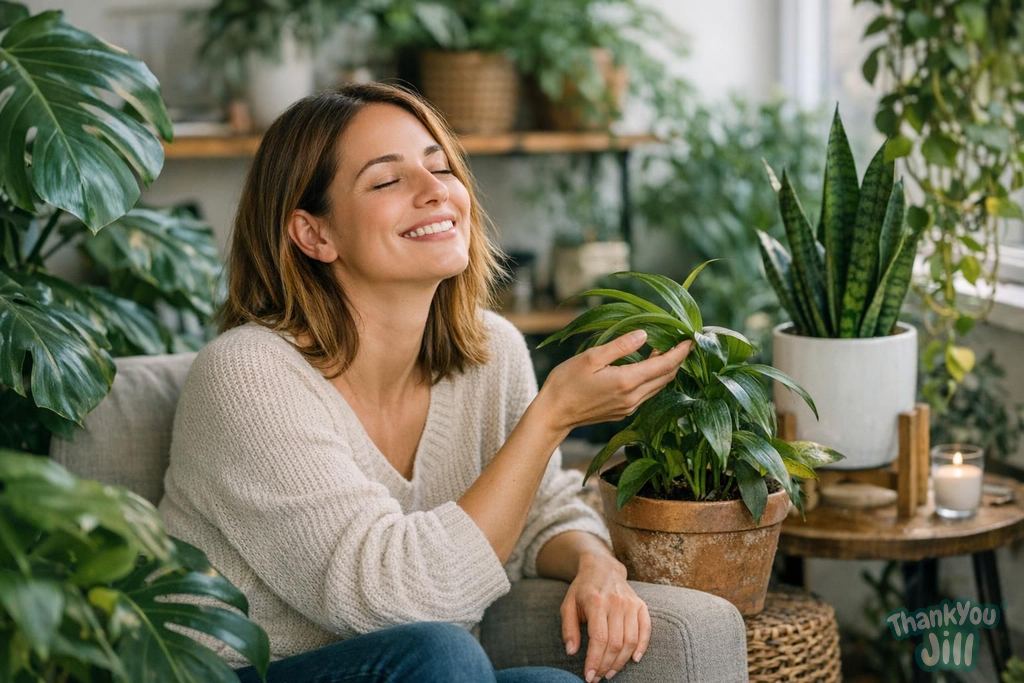
Houseplants have been part of the human home environment for millennia. Yet only recently has science begun to quantitatively measure their effects on occupants' health. The results are generally positive, though the more enthusiastic claims in popular science writing—"plants purify indoor air of toxic VOCs better than any mechanical system"—often need qualification against actual data.
Houseplants and indoor air quality: the scientific reality
The 1989 NASA study (Wolverton et al.): one of the most cited studies on air purification by plants. NASA tested houseplants in sealed chambers with high concentrations of VOCs (benzene, trichloroethylene, formaldehyde). Some plants showed the ability to remove these VOCs from the air within hours. This study was heavily amplified in popular science: "plants clean your home's air." The problem: Michael Waring's critique (2019, Journal of Exposure Science & Environmental Epidemiology): Waring analyzed 30 years of research on indoor plants and air purification. His conclusion: the ability of plants to remove VOCs from real apartment air is practically negligible. The reason: VOC removal rates measured in sealed chamber studies don't scale to actual rooms with natural air exchange (cracks, doors, windows). To have a measurable effect on air quality in a typical apartment, you'd need hundreds or thousands of plants per room. Air purification by plants is primarily the work of soil bacteria in the pot (not the leaves): bacteria degrade the VOCs. Soil rich in bacteria without a plant has similar effects. The correct conclusion: houseplants have measurable psychological benefits, localized effects on humidity and temperature, but are NOT effective air purification systems under real-life living conditions.
The real psychological benefits of houseplants
Despite the disappointment about air purification, the psychological benefits of houseplants are real and well-documented. Stress reduction: simple visual contact with plants measurably reduces cortisol and heart rate. A study by Park and Mattson (2009) showed that post-operative recovery patients in rooms with plants had: lower analgesic requirements, lower blood pressure and heart rate, improved self-reported mood, reduced fatigue. Increased productivity: a study by Nieuwenhuis et al. (Journal of Experimental Psychology: Applied, 2014) in real offices compared "lean" offices (without plants) to offices with plants. Offices with plants showed: 15% increase in productivity, improved concentration, increased job satisfaction. A single office with plants increases productivity by 15%—an extraordinary return on investment for the cost of a few plants. Improved mood: flowering plants (particularly geraniums, cyclamens, begonias) boost self-reported mood more than green plants without flowers. The color yellow (sunflowers, potted daffodils) is associated with the greatest positive effects on mood. Reduced anxiety: a study by Beukeboom et al. (2012) in a hospital showed that patients exposed to plants and flowers in the waiting area experienced lower pre-visit anxiety and stress. Biophilia effect applied to indoor environments.
The best houseplants for your home: a practical guide
Choosing the right plants for your home means balancing ease of care, aesthetic appeal, and documented benefits. Plants for low-light environments: Spathiphyllum (peace lily): survives with minimal light, marginally purifies air (one of the plants from the NASA study). Elegant white flowers. Very tolerant of neglect (doesn't require frequent watering). Pothos (Epipremnum aureum): one of the easiest plants ever. Climbing or trailing with variegated green-yellow foliage. Survives almost anything. Sansevieria (snake plant): an almost indestructible plant. Tolerates near-total darkness, heat, and drought. Plants for bright environments: Ficus lyrata (fiddle leaf fig): a large apartment tree with enormous leaves. Requires plenty of light. Very dramatic visual impact. Monstera deliciosa: the plant symbol of contemporary design. Rapid growth, large leaves with fenestrations. Requires indirect light. Strelitzia (bird of paradise): a tropical plant with large leaves and orange flowers. Requires plenty of light. Plants for psychological benefit: Lavender (Lavandula angustifolia) in pots on the balcony: the monoterpenes in its fragrance have documented anxiolytic effects. Jasmine (Jasminum polyanthum): its nighttime fragrance is therapeutic. Jasmonates and benzyl acetate have measurable sedative effects. Aromatic herbs on the windowsill (basil, mint, rosemary, thyme): dual benefit (horticultural therapy + aromatic benefits). Involving children in growing herbs is a valuable pedagogical tool.

Houseplants don't significantly purify your home's air—you'd need an entire forest for that. But lowering cortisol by looking at green leaves, increasing office productivity by 15% with a few plants, improving mood with colorful flowers: these effects are real and measurable. Houseplants in your home aren't the cure for indoor pollution—they're the cure for mental pollution from hyperconnected, hyperaccelerated urban life.
Balcony gardening: urban gardening as therapeutic practice
For city dwellers without a garden, the balcony and terrace are the primary space for contact with nature. Balcony gardening combines the benefits of horticultural therapy with a miniaturized version of Shinrin-yoku (forest bathing). Specific benefits of balcony gardening: miniaturized horticultural therapy (all the psychological benefits of gardening in a small space), food production (even small amounts of tomatoes, herbs, and salads produce satisfaction and food connection), urban biodiversity (flower pots on a balcony can become refuge and food source for solitary bees, butterflies, and migratory birds), improved home microclimate (balcony plants reduce the temperature of the adjacent room by 1-2°C in summer). Plants best suited to Italian balconies (south and west exposure): tomatoes (balcony varieties: Tumbling Tom, Micro Tom, Pimodoro), peppers (dwarf varieties), lettuce and salad greens (rapid growth and staggered harvest), aromatic herbs (basil, mint, rosemary, parsley), strawberries (cascading on vertical planters), geraniums (heat-resistant, low water), lavender (drought-resistant, fragrant). For north-facing balconies: ferns, impatiens, begonias, foliage begonias, and aromatic herbs tolerant of partial shade (parsley, mint, chives). The home vertical garden: felt pocket systems or vertical structures allow you to grow many species in reduced space. Felt pockets on a wall net can host 20-30 plants per square meter of wall. Green balcony communities (sharing plants in apartment buildings): some experiences with "shared building gardens" show social benefits beyond individual ones: shared plant care creates opportunities for neighbor socialization, reducing the social isolation typical of densely populated urban areas.
Frequently Asked Questions
What is the real effect of houseplants on indoor air purification?
Houseplants have a negligible effect on air purification in real environments. To significantly remove VOCs would require hundreds of plants per room, since purification is primarily due to bacteria in the soil, not the leaves.
How do houseplants affect stress and mood?
Houseplants reduce stress by lowering cortisol and heart rate, improve mood especially with colorful flowers like geraniums and sunflowers, and decrease anxiety, offering measurable and concrete psychological benefits.
Which plants are best for low-light environments and which for bright spaces?
For low-light environments, Spathiphyllum, Pothos, and Sansevieria are ideal—resistant and easy-care plants. For bright environments, Ficus lyrata, Monstera deliciosa, and Strelitzia are recommended, as they require more light and offer strong visual impact.
When is it worth growing a balcony garden and what benefits does it offer?
Growing a balcony garden is worthwhile in urban spaces without a yard, as it offers horticultural therapy, food production, urban biodiversity, and improves home microclimate by reducing summer temperature by 1-2°C.


Latest News




Comments
No comments yet. Be the first!
Leave a comment