

 English
 Italiano
 Français
 Deutsch
 Español
 Português
 Svenska
 Suomi
Suomi
Nutritional Claims
"Light", "whole grain", "natural" — what do they really mean?

Food marketing is a precise science. It knows exactly which words make you grab a product off the shelf. "Light", "natural", "whole grain", "high in fiber", "fat-free" — words that evoke health, lightness, and wellness. But many of these terms have precise legal definitions that rarely match what we intuitively think they mean. Understanding them is an act of consumer self-defense.
The European Regulation on Nutritional Claims
In Europe, "claims" (nutritional and health declarations) on food products are regulated by EU Regulation 1924/2006. Only claims appearing on the European positive list can be used, and only if the product meets precise quantitative criteria. This matters: it's not up to the manufacturer's interpretation, but a verifiable legal definition.
"Light" or "Lite": What It Means by Law
A product can only be labeled "light" if it contains at least 30% less calories, fat, or sugar compared to the standard reference product. But this means it could still be high in sugar (if the 30% reduction came from fat) or high in fat (if the 30% reduction came from sugar).
"Light" yogurt can have the same calorie content as regular yogurt if the manufacturer added sweeteners instead of sugar. A "light" biscuit can have less fat but the same number of calories because it has more sugar. The key question is: 30% less than what? Always read the nutrition facts table and compare total calories — don't rely solely on the label claim.
"Whole Grain": Beware of Fake Whole Grains
The term "whole grain" for cereals means the entire grain kernel (bran, germ, and endosperm) is used instead of just the endosperm of refined grain. Whole grain products have more fiber, more B vitamins, more minerals. All true.
The problem is that Italy doesn't yet have precise regulations on the minimum percentage of whole grain flour needed to use the term. Some "whole grain" products contain only 20-30% whole grain flour, made up with refined flour. The dark color is often from barley malt or caramel, not from actual whole grain content.
How to spot real whole grain: in the ingredients list, the first item should be "whole wheat flour" (or another whole grain). If you see "wheat flour" followed by "bran", you're looking at a product that mimics whole grain by mixing refined flour with added bran.
"Natural": A Word With No Legal Definition
This is the most important one to know: "natural" has no binding legal definition in Europe for general food products. Any company can write it on any product without any obligation to meet specific criteria.
"Natural" doesn't mean organic. It doesn't mean additive-free. It doesn't mean preservative-free. It doesn't mean minimally processed. It's pure marketing, except in rare cases where the product's specific regulations define what it means (like natural flavors, which have a precise definition).
"No Added Sugars" vs "Sugar-Free"
"No added sugars" means sugar wasn't added during production. But the product can contain naturally occurring sugars (fructose from fruit, lactose from milk). For fruit juices, "no added sugars" can still mean high levels of total sugars from the fruit itself.
"Sugar-free" means the product contains less than 0.5 grams of sugar per 100 grams or 100 ml. It's a much more restrictive definition.
"High in Fiber" and "Source of Fiber"
"Source of fiber" requires at least 3 grams of fiber per 100 grams of product. "High in fiber" requires at least 6 grams per 100 grams. Useful for evaluating breakfast cereals: many claim to be "high in fiber" with just 6 grams per 100g, but if you eat 30-40 grams per serving, you're getting less than 2.5 grams of fiber. Not that high.
"High Protein" and "Source of Protein"
"Source of protein": at least 12% of the product's calories come from protein. "High protein": at least 20%. You see these claims a lot on sports bars and fitness products. Always check the absolute amount per serving, not just the percentage.

Words on packaging sell dreams. The nutrition facts table tells the real story. Learn to read the numbers instead of the labels — that's where the truth about every product hides.
The Direct Comparison Method
When you're facing a shelf with a "regular" product and a "light" version: grab both and compare the nutrition facts table. Look at total calories, total sugar, total fat. Often you'll discover the difference is minimal, or that the light version compensates with worse ingredients (artificial sweeteners instead of sugar, modified starches to make up for removed fat).
How to Spot a Real Whole Grain Product in Five Seconds
Read the first ingredient in the list. If it says "whole wheat flour" (or whole grain rice, oats, rye), you're looking at a genuinely whole grain product. If the first ingredient is "wheat flour" (without "whole"), the rest is window dressing — dark colors, evocative words, but refined flour first and foremost.
Ignore the Front of the Package, Read the Back
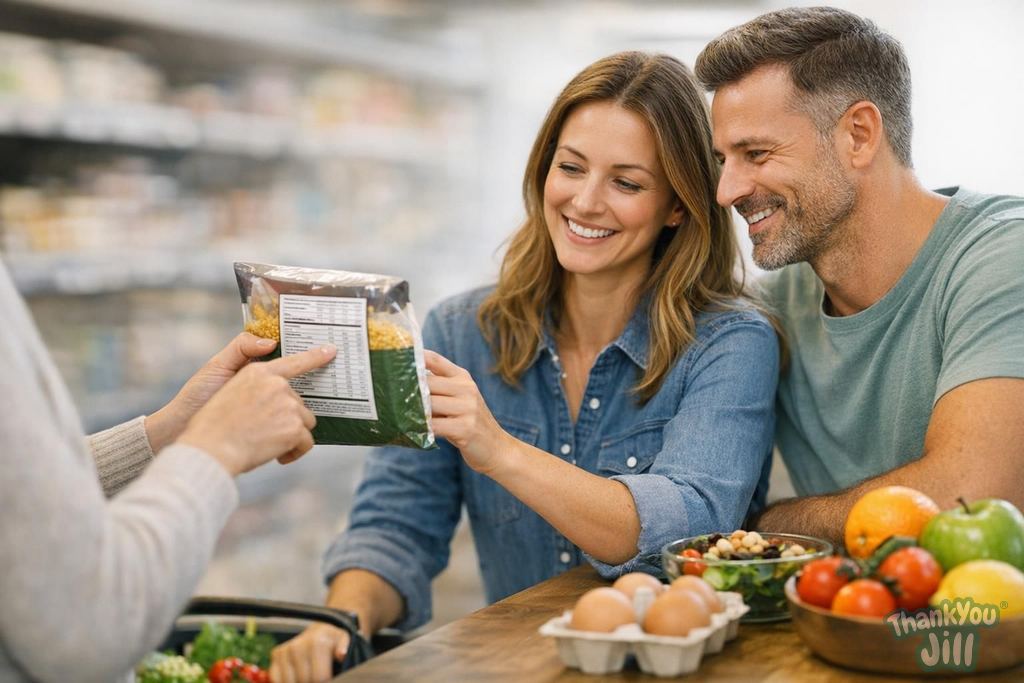
Companies invest heavily in front-of-package design: natural colors, images of green fields, words like "authentic" and "genuine". The back, with the ingredients list and nutrition facts table, is where the truth lives. Make it a habit to always flip the package over before putting it in your cart.
Download EU Regulation 1924/2006 and Keep It as a Reference
It might seem excessive, but the annex of EU Regulation 1924/2006 lists all permitted claims and the exact conditions for using them. It's available online on the EUR-Lex website (eur-lex.europa.eu), in English, for free. Reading even just the first few pages gives you a complete map of your rights as a consumer and manufacturers' obligations.
Frequently Asked Questions
What is the legal criterion for defining a product as "light" under EU Regulation?
A product can only be labeled "light" if it reduces calories, fat, or sugar by at least 30% compared to the standard reference product. However, the reduction can apply to just one of these elements, so the product can still contain high amounts of the others.
How do you spot a real whole grain product by reading the label?
The first ingredient in the list must be "whole grain flour" of the specific cereal (e.g., whole wheat). If the first ingredient is "wheat flour" followed by bran, the product isn't genuinely whole grain but a mixture of refined flour and added bran.
What does the "natural" claim really mean on food products in Europe?
"Natural" has no binding legal definition in Europe for generic foods. It can be used without specific criteria and doesn't imply the absence of additives, preservatives, or industrial processing. It's primarily a marketing term.
What's the difference between "no added sugars" and "sugar-free"?
"No added sugars" means sugar wasn't added during production, but the product can contain naturally occurring sugars. "Sugar-free" means the product contains less than 0.5 grams of sugar per 100 grams or ml — a much more restrictive definition.

Latest News




Comments
No comments yet. Be the first!
Leave a comment