


 Italiano
 Français
 Deutsch
 Español
 Português
 Svenska
 Suomi
Suomi
Exotic Fruit
Environmental Impact and Local Alternatives
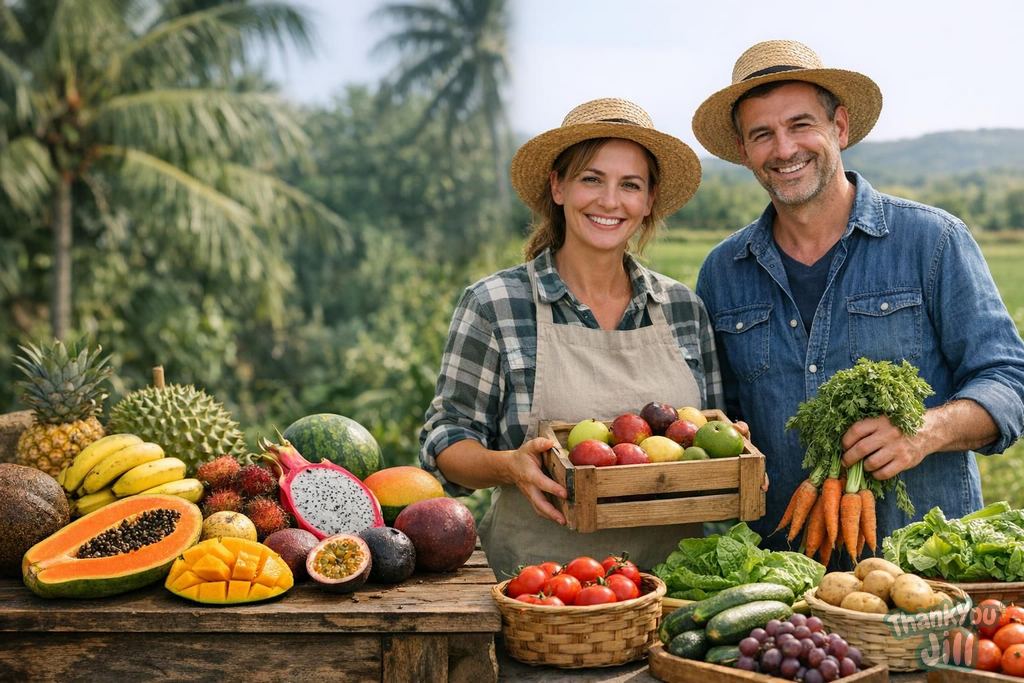
Exotic fruit has conquered European supermarkets over the past few decades. Bananas, avocados, pineapples, mangoes, papayas, lychees, passion fruit: products that were expensive rarities just decades ago are now available year-round at affordable prices. This availability comes with a hidden cost that the per-kilogram price doesn't reflect: environmental cost, water cost, human cost for those who grow it.
Bananas: the most emblematic case
Bananas are the most imported fruit in Europe. They come primarily from Ecuador, Colombia, Costa Rica, and Peru. The journey to Europe takes 2-4 weeks on refrigerated cargo ships. The carbon footprint is relatively modest thanks to sea transport (far more efficient than air), but intensive cultivation is another story entirely.
Conventional banana plantations are among the most heavily chemically treated crops in the world: up to 40 fungicide treatments per year to combat Fusarium (a disease threatening the Cavendish variety we eat). Plantation workers are exposed to pesticides in alarming ways. Working conditions in many producing countries fall far short of European standards.
An alternative? Fairtrade and organic bananas are available in supermarkets: they cost a bit more but guarantee dignified working conditions and reduced pesticide use. Reducing purchase frequency and pairing bananas with seasonal local fruit is another practical strategy.
Avocado: the superfood with a massive water footprint
Avocado has become the symbol of global "millennial food." Its popularity has exploded in just a few years. Production is concentrated in Mexico, Chile, Peru, and South Africa. The main problem: water consumption is enormous. Producing a single avocado requires about 320 liters of water. An avocado tree consumes 1,000 liters of water per day in the dry climates where it's typically grown.
In Chile, avocado-producing regions are facing severe water crises, with rivers running dry and rural communities without access to drinking water. In Mexico, deforestation for new avocado plantations is advancing rapidly. European avocado consumption has direct consequences on these ecosystems.
Local alternatives for avocado's nutritional properties (healthy fats, potassium): walnuts, hazelnuts, Italian extra virgin olive oil, flax seeds. They don't have the same taste and texture, but nutritionally they cover the same needs.
Mango and papaya: the air transport problem
Fresh mangoes and papayas reach Europe predominantly by air, because they're highly perishable. Air transport has a carbon footprint 50-100 times higher than sea transport. A kilogram of fresh mango imported by air can have a CO2 footprint of 5-10 kg: about twenty times that of a local apple.
Pineapple: better than mango, worse than apple
Pineapple arrives almost entirely by ship (less perishable than mango and papaya). Its carbon footprint from transport is more modest. However, there remains the problem of working conditions on plantations in Costa Rica and the Philippines, and intensive pesticide use.
Surprising local alternatives
Italy has extraordinary fruit biodiversity that we often overlook. Instead of mango: late apricots, yellow plums, peaches. Instead of exotic berries: blackberries, raspberries, currants, arbutus berries (typically Italian). Instead of papaya as a source of papain and enzymes: fresh figs, dried pineapple in small quantities. Instead of exotic citrus: Sicilian and Calabrian oranges, Ciaculli mandarins, Amalfi lemons: world-class excellence at nearly zero kilometers.
When consuming exotic fruit makes sense
It's not about eliminating exotic fruit, but contextualizing it. One Fairtrade banana per week: it makes sense, the environmental cost is manageable. Avocado three times a week imported by air: hardly sustainable. Fresh mango year-round without local seasonality: significant air impact. Conscious moderation is more effective than radical elimination.

Every exotic fruit carries an invisible journey with it: thousands of kilometers, liters of water, working conditions far from your eyes. Knowing the journey makes you a more conscious consumer, not someone who gives things up.
Build your own "locally exotic" version
Explore ancient Italian varieties you find at farmers markets: Sibillini pink apples, Sicilian tobacco peaches, Martin sec pears, Cosenza figs, Lugnano persimmons. They have flavors that standardized supermarket products don't. Ask the vendors at farmers markets: they often know surprising local varieties that never make it to supermarkets.
For bananas: always choose Fairtrade
Fairtrade bananas cost on average 0.20-0.30 euros more per kilogram. For those who buy them regularly (one bunch per week) that means 10-15 euros more per year. A sum that significantly changes the living conditions of those who grow them. Look for the yellow-blue Fairtrade logo on bananas: it's the minimum you can do without changing any habits.
Limit avocado or choose organic and certified varieties
If you love avocado, reduce it to once or twice a week and choose varieties with organic certification and preferably Fairtrade. Mexican and Peruvian producers with organic certification have higher standards on water use and working conditions. It doesn't solve the structural water problem, but it reduces the impact of your specific consumption.
Explore dried fruit as a substitute for exotic nutrients
Mediterranean dried fruit (almonds, walnuts, hazelnuts, pistachios, dried figs, dried apricots) is produced largely in Italy, Spain, and Turkey. It contains many of the same nutrients attributed to exotic fruit: unsaturated fats, potassium, magnesium, antioxidants. It has long shelf life, requires no refrigerated transport, comes from relatively nearby countries. It's the most sustainable snack food you have.
Frequently Asked Questions
What is the main environmental impact of conventional banana cultivation?
Intensive conventional banana cultivation involves massive pesticide use, with up to 40 fungicide treatments per year, which damages the environment and puts the health of workers exposed to dangerous chemicals at risk.
How can you reduce the water impact related to avocado consumption?
To reduce the water impact of avocado, it's best to limit consumption to once or twice a week and prefer organic and Fairtrade-certified avocados, produced with more sustainable water use standards and better working conditions.
Why does air transport of mango and papaya have such a high environmental impact?
Fresh mangoes and papayas are often transported by air due to their perishability, and air transport has a carbon footprint 50-100 times higher than sea transport, causing very high environmental impact for every kilogram imported.
What local alternatives can replace exotic fruit in terms of nutrients?
Local alternatives such as walnuts, hazelnuts, Italian extra virgin olive oil, and flax seeds offer nutrients similar to avocado, while apricots, plums, and peaches can replace mango and papaya, allowing you to reduce environmental impact while maintaining a balanced diet.


Latest News



Comments
No comments yet. Be the first!
Leave a comment