


 Italiano
 Français
 Deutsch
 Español
 Português
 Svenska
 Suomi
Suomi
Homemade Preserves
Food Safety
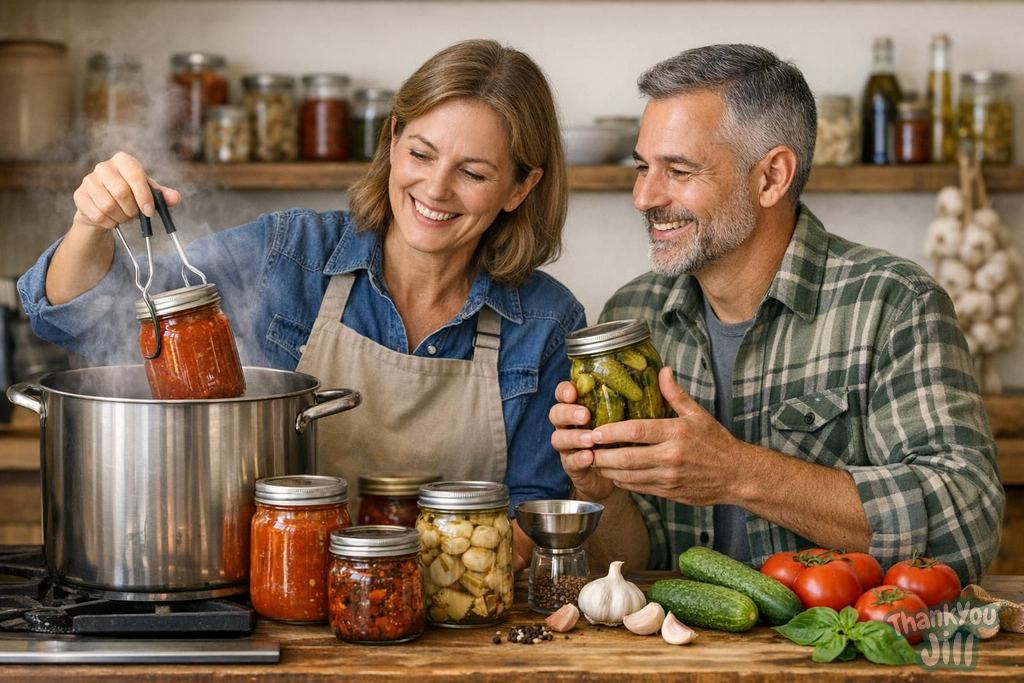
Homemade preserves evoke fragrant cellars, jars lined up in rows, grandma in the kitchen. They're an authentic and precious piece of Italian food culture. Yet every year Italy records cases of foodborne botulism, almost all linked to homemade preserves prepared incorrectly. Not from bad intentions: from lack of information about the few but crucial safety rules. Knowing them doesn't spoil the pleasure of homemade preserves—it makes them sustainable and safe.
Botulism: Why It's the Only Truly Serious Risk
Clostridium botulinum is a bacterium that produces one of the most potent biological toxins known. It develops in anaerobic environments (without oxygen), at low acidity (pH above 4.6), at room temperature. A jar of marinated vegetables sealed hermetically is the ideal habitat: no oxygen, naturally low acidity of vegetables, cellar temperatures.
Botulinum toxin is odorless and tasteless: you can't detect its presence without laboratory analysis. Symptoms (nausea, double vision, difficulty swallowing, descending paralysis) appear 12 to 36 hours after ingestion. Botulism is potentially fatal without immediate medical treatment.
The good news: it's completely preventable with a few precise rules.
The Acidity Rule: The Main Protective Wall
C. botulinum doesn't develop in acidic environments (pH below 4.6). Vinegar, lemon juice, citric acid: they lower the pH and make the environment uninhabitable for the bacterium. All safe home preserves must either have sufficient acidity or be processed at high temperature.
High-acidity preserves (safe without high-pressure sterilization): naturally acidic peeled tomatoes, jams and preserves (low pH from fruit + sugar that absorbs available water), pickles with vinegar (pH 4 or less), fruit in acidic syrup.
Low-acidity preserves (require high-pressure sterilization or acidification): marinated vegetables in oil (eggplant, mushrooms, carrots, peppers), vegetables in water without vinegar, canned meats, canned fish.
The Safe Method for Marinated Vegetables
Marinated vegetables in oil are the riskiest in homemade preserves. The safe solution requires two steps: acidification before the oil. Vegetables must be pre-treated in vinegar or water and vinegar (at least 1 part vinegar to 2 parts water) to lower the pH below 4.6 before being immersed in oil. Oil doesn't acidify vegetables: it seals them. Acidification must happen first.
Correct procedure for marinated eggplant: slice the eggplant, salt and let drain for an hour (to eliminate excess water). Briefly cook in water and vinegar in a 1:1 ratio for 5-7 minutes. Drain, dry well on paper towels (water in oil promotes bacterial growth). Place in sterilized jars, cover completely with oil. Seal hermetically. Pasteurize in boiling water for 30 minutes.
Tomatoes: The Safest Preserve and How to Make It Right
Peeled tomatoes or tomato sauce are the safest homemade preserves, but with a caveat: the pH of modern tomatoes is often at the upper limit (4.6-4.9). For added safety, always add lemon juice (two tablespoons per 500 ml jar) or citric acid (a quarter teaspoon per 500 ml jar) before sealing.
Procedure: sterilize empty jars in boiling water for 10 minutes. Prepare the sauce or peeled tomatoes, add the lemon juice. Fill the jars leaving 1 cm of space at the top. Seal. Immerse in boiling water for 35-45 minutes (500 ml jars). Let cool in the water. Verify that the lid is recessed (makes a "click" if you press the center): it's the signal of correct vacuum.
Jams and Preserves: The Simplest and Safest
High sugar concentration (at least 60g of sugar per 100g of finished product) reduces the activity of available water to levels that inhibit bacterial growth. Jams from acidic fruit (oranges, lemons, strawberries, currants) are practically self-protecting. For less acidic fruits (figs, melon, peach), add lemon juice.
Water Bath Pasteurization: How to Do It Right
Sealed jars must be completely immersed in water (at least 2-3 cm above the lid). The water should be hot when you place hot jars in it (otherwise you risk them breaking from thermal shock). Bring to a boil, then maintain the boil for the time indicated by the recipe. Let cool in the water (don't remove boiling jars from cold water). Verify the vacuum after complete cooling: if the lid is flat and doesn't move when pressed, the vacuum is correct.

Homemade preserves are love in a jar. But love also wants safety: acidification, sterilization, vacuum verification. Three steps that transform a beautiful tradition into a safe gift to give to yourself and your family.
Starter Kit for Safe Preserves
Glass jars with hermetic sealing and new lids (used lids may not seal perfectly: change the cap every year). A pot tall enough to cover the jars by at least 2-3 cm. A kitchen thermometer. White vinegar or food-grade citric acid. Lemon juice in a bottle (or fresh lemons). With these four elements you have everything you need to make safe preserves of any kind.
Signs of a Preserve to Discard
Throw away immediately without tasting if: the lid is swollen or no longer flat, you smell an unusual odor (acidic, putrid, strange) when opening, the contents are visibly fermented or moldy, the liquid is unusually cloudy. Botulism doesn't produce unusual odors and flavors: don't rely on your senses to rule it out. When in doubt, throw it away. It's not worth the risk.
Always Label with Date and Contents
Every jar must show the production date and contents. Use preserves within 12-18 months of production. Older preserves aren't necessarily dangerous (if the seal is intact) but lose organoleptic quality. Arrange jars with the oldest in front (FIFO): use the less fresh ones first.
Where to Find Safe and Validated Recipes
The National Center for Home Food Preservation (nchfp.uga.edu) is the world's scientific reference for safety in homemade preserves. Available free online. In Italy, the National Institute of Health has published specific guidelines on botulism and safe preparation of preserves. Recipes validated by these sources are tested for safety: don't improvise with ingredients and proportions, especially for low-acidity preserves.
Frequently Asked Questions
What is the safe method for preparing homemade marinated vegetables in oil?
To safely preserve marinated vegetables in oil, acidify the vegetables first by immersing them in a solution of vinegar and water (at least 1 part vinegar to 2 parts water) to lower the pH below 4.6. Then dry them well, place them in sterilized jars, cover with oil and pasteurize in boiling water for 30 minutes.
How can you tell if a homemade preserve is contaminated with botulinum?
Botulinum doesn't alter odor, taste or appearance, so it can't be detected with your senses. Throw away the preserve immediately if the lid is swollen or unsealed, if there's an unusual odor, fermentation or mold. When in doubt, it's always safer to discard the preserve.
When should you add lemon juice or citric acid to tomato preserves?
It's recommended to add lemon juice or citric acid to tomatoes because their pH can be at the upper safety limit (4.6-4.9). Two tablespoons of lemon juice or a quarter teaspoon of citric acid per 500 ml jar lowers the pH, preventing the development of Clostridium botulinum.
How important is water bath pasteurization for the safety of homemade preserves?
Water bath pasteurization is essential for eliminating dangerous bacteria. Immersing jars in hot water that covers at least 2-3 cm above the lid, bringing to a boil and maintaining for the time indicated by the recipe ensures the vacuum and microbiological safety of preserves.
Latest News




Comments
No comments yet. Be the first!
Leave a comment