


 Italiano
 Français
 Deutsch
 Español
 Português
 Svenska
 Suomi
Suomi
Cheese
How to Recognize Artisanal Quality
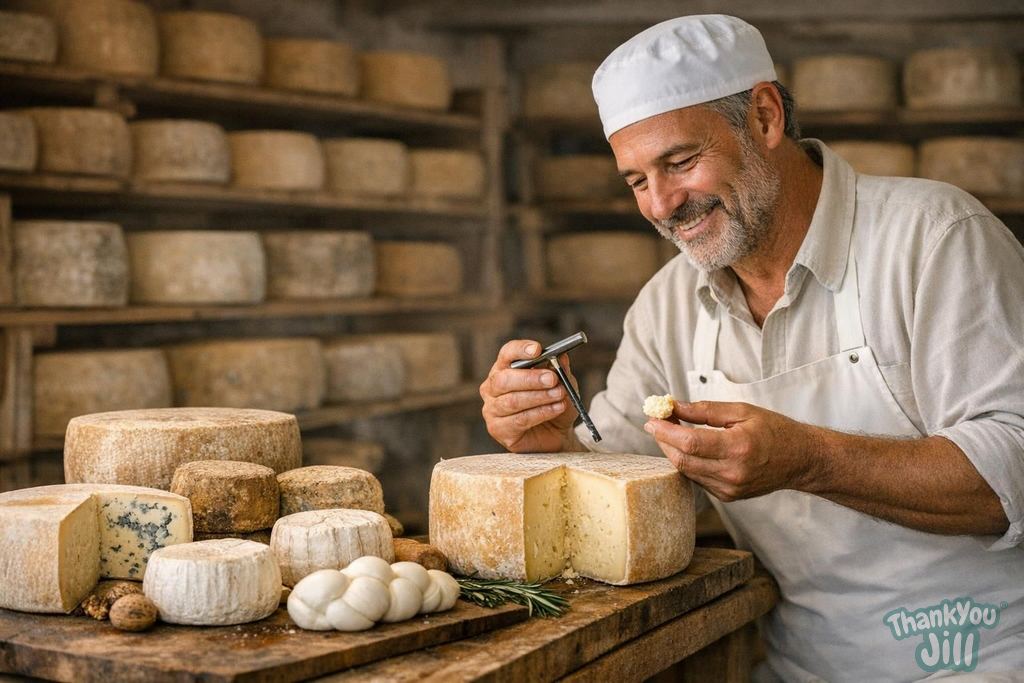
Italy is the cheese country par excellence: over 450 registered varieties, 52 PDO designations, a thousand-year cheesemaking tradition spanning from Parmigiano Reggiano to Pecorino Romano, from Mozzarella di Bufala to Taleggio. Yet most of the cheese consumed daily in Italian households comes from standardized industrial production that has little in common with artisanal products. Understanding the difference isn't gastronomic snobbery—it's about nutrition and respect for one of the country's great cultural treasures.
What Sets Artisanal Cheese Apart from Industrial Cheese
Industrial cheese is produced in standardized facilities using pasteurized milk collected from dozens or hundreds of different farms, often sourced from great distances. The process is optimized for efficiency, replicability, and shelf-life. The milk is normalized (adjusted for fat and protein content), heat-treated at high temperatures, and inoculated with standardized selected microbial cultures. The result is identical cheese month after month, season after season: predictable, safe, anonymous.
Artisanal cheese starts with milk that has a story: often from a single farm or local farms, preserving the microflora typical of the territory (cheese terroir). The milk may be raw (unpasteurized) or pasteurized at low temperature. The microbial cultures are often endemic to the production location: specific bacterial populations that create organoleptic characteristics that cannot be replicated elsewhere. Aging occurs in environments where microorganisms from the air, cellars, and wood contribute to complexity.
Raw Milk Cheese: More Risks or More Flavor?
Raw milk cheeses (unpasteurized) are at the center of a debate between flavor and safety. Raw milk preserves the natural microflora of the milk, the lipase and protease enzymes that contribute to intensity and flavor complexity during aging, and the native lactic acid bacteria that give the cheese its unique character.
The risk lies in the presence of pathogens (Listeria, Salmonella, E. coli) if production hygiene conditions aren't impeccable. Extended aging reduces this risk: a Parmigiano Reggiano aged 24 months has a pH and water activity that prevent the growth of major pathogens. Fresh or briefly aged raw milk cheeses carry a higher risk profile: they should be avoided by pregnant women, children under 5, the elderly, and immunocompromised individuals.
Designations That Guarantee Quality
PDO cheeses (Protected Designation of Origin) have regulations that define milk sourcing, production methods, and minimum aging periods. Parmigiano Reggiano PDO: milk from cattle in a specific zone, without silage, minimum 12 months aging. Mozzarella di Bufala Campana PDO: milk from buffalo in Campania, processing within 60 hours of milking, specific zone. Grana Padano PDO: similar to Parmigiano but with a broader zone and slightly less restrictive rules.
Protection consortiums verify compliance with regulations: PDO marks on cheeses are among Europe's most strictly controlled designations of origin.
How to Evaluate Quality at Purchase
For aged cheeses: the paste should be firm, without irregular holes or excessive cracks (signs of suboptimal aging). Color naturally varies from pale straw to amber depending on aging time. Aroma should be present but not unpleasant: notes of butter, hay, dried fruit (in long-aged cheeses). For fresh cheeses: compact or creamy paste without unusual softness, no excessive liquid in the packaging, clean dairy aroma.
Fat in Cheese: Understanding the Numbers
Fat content in cheese is expressed as a percentage of dry matter (not total weight, because cheeses have very different water contents). A cheese labeled "30% fat on dry matter" isn't necessarily fattier than one labeled "45% on dry matter" if the first is more moist. To truly compare fat content, check the nutritional table per 100g of product as sold.
Vegetarian and Vegan Cheeses: What Are They?
Traditional cheeses use animal rennet (extracted from calf stomach) to coagulate casein. Vegetarian cheeses use microbial rennet (from fungi) or plant rennet (from thistle, nettle, fig). Vegan cheeses contain no milk: they're made from fermented cashews, almonds, or coconut with lactic acid bacteria. The quality of high-end artisanal vegan cheeses has improved significantly, but the nutritional profile (calcium, protein) differs greatly from traditional cheeses.

An artisanal cheese tells the story of the pasture where the cow grazed, the cellar where it aged, the hands of the cheesemaker who turned it every morning. It's food with memory. It's worth every extra euro it costs compared to anonymous industrial cheese.
How to Find Quality Artisanal Cheeses
Farm cheesemaking facilities open to the public (many in Italy allow visits and direct sales), specialty cheese shops with curated selections (always ask to taste before buying), farmers' markets with local cheesemakers, regional cheese fairs (every Italian region has at least one): these are all channels where traceability is maximum and quality is directly verifiable.
How to Store Cheese Properly
Cheese is a living food: bacteria continue their work even after purchase. Hard aged cheeses should be stored wrapped in cheese paper (not plastic: it doesn't breathe) in the refrigerator for up to 2-4 weeks. Fresh cheeses should be kept in their liquid or in a sealed container for 3-7 days. Never store different cheeses together in the same package: microorganisms will cross-contaminate. Bring cheese to room temperature 30-60 minutes before serving: cold suppresses aromatic expression.
Parmigiano Reggiano: A Guide to Aging Numbers
Parmigiano Reggiano aging completely transforms the product: 12 months (young): sweet, milky, moist. Good for cooking. 24 months: balanced between sweet and savory, tyrosine crystals already present. The classic for grating. 36 months: intense, savory, long finish. Few crunchy tyrosine crystals. For those who love bold flavor. 48 months and beyond: refined, almost mineral, extraordinary complexity. On its own or with a few drops of traditional balsamic vinegar.
One New Cheese a Week
To explore Italy's vast cheesemaking tradition: try a cheese each week that you've never tasted before. Asiago fresco, Castelmagno, Bitto storico, Ragusano PDO, Caciocavallo Podolico, Squacquerone, Robbiola di Roccaverano PDO. Each cheese is a territory, a culture, a story. It's one of the most economical and delicious cultural journeys you can take without leaving home.
Frequently Asked Questions
What are the main differences between artisanal and industrial cheese?
Artisanal cheese uses local milk, often raw, with typical microflora and natural aging, while industrial cheese uses pasteurized milk from many sources, standardized processes, and selected microbial cultures for uniformity and shelf-life.
How can you tell if a raw milk cheese is safe to eat?
Raw milk cheeses aged for long periods, like Parmigiano Reggiano over 24 months, are safe thanks to pH and aging that inhibit pathogens. Fresh or briefly aged raw milk cheeses carry greater risks and should be avoided by pregnant women, young children, the elderly, and immunocompromised individuals.
How do you read labels to assess the quality of a PDO cheese?
PDO labels indicate milk from specific sources, production methods, and minimum aging periods. For example, Parmigiano Reggiano requires milk from cattle in a defined zone and at least 12 months of aging, guaranteeing authenticity and rigorous control.
What are the best methods for storing fresh and aged cheeses?
Aged cheeses are stored in the refrigerator wrapped in cheese paper for 2-4 weeks, while fresh cheeses should be kept in their liquid or in a sealed container for 3-7 days. Avoid storing different cheeses together to prevent cross-contamination of microorganisms.


Latest News




Comments
No comments yet. Be the first!
Leave a comment