


 Italiano
 Français
 Deutsch
 Español
 Português
 Svenska
 Suomi
Suomi
How Much Salt Per Day? Cut Back Without Losing Flavor
Cut back without losing flavor

The WHO estimates that reducing salt consumption from 10 to 5 grams per day worldwide would save 2.5 million lives annually. It's one of the most cost-effective public health interventions available. Yet it's among the hardest to implement in daily life, because salt does more than season food: it builds flavor, creates dependency, and hides in nearly every processed product. Understanding where it really comes from and how to cut back without sacrificing the pleasure of eating is a skill that transforms your health long-term.
Salt and blood pressure: the direct connection
Sodium regulates blood volume: more sodium in your body means more water is retained to balance concentration. More blood volume means more pressure on artery walls. Hypertension (pressure above 140/90 mmHg) affects 33% of Italian adults and 65% of those over 65. It's the leading risk factor for stroke, heart attack, kidney failure, and vascular dementia.
The relationship between salt and pressure isn't the same for everyone: "salt-sensitive" people (about 50% of the population, more common among the elderly, diabetics, and those with kidney disease) respond much more strongly to salt reduction with lower blood pressure. But even "non-salt-sensitive" individuals benefit from reduction, because salt has negative effects on arteries independent of pressure.
Where salt hides: the real sources
Contrary to intuition, the salt you add while cooking and at the table represents only 20-30% of total sodium consumed. The rest comes from processed products. The biggest sodium contributors in the Italian diet: bread and baked goods (30% of salt consumed in Italy comes from bread, a food perceived as "neutral"), cheese, cured meats and cold cuts, ready-made foods and preserves, bouillon cubes and flavor enhancers, sauces and industrial condiments, breakfast cereals (many contain more sodium than a potato chip), sodium-rich mineral waters.
This explains why simply "not salting your pasta" isn't enough: the real problem is salt in packaged products, not the salt you add by hand.
Your palate adapts: the window of opportunity
The taste for salt is partly learned. Salt taste receptors adapt to your level of exposure: people who eat very salty food perceive what's normal for others as bland. The good news: your palate can be retrained. Studies show that after 8-12 weeks of gradual salt reduction, your palate adapts and foods with less sodium start to taste normal. Foods that once seemed "flat" become flavorful. And foods that were previously normal start to taste overly salty.
The gradual reduction strategy
Drastic immediate reduction is the hardest path: food tastes bland, you feel like you're eating poorly, motivation drops quickly. The winning strategy is reducing salt by 10-15% every two weeks. If you use 10 grams daily, drop to 8-9 grams for two weeks. Then 7-8 grams. Then 6. Your final goal is under 5 grams. Over 3-4 months of gradual progression, you'll reach your target without ever feeling deprived.
Flavor substitutes that actually work
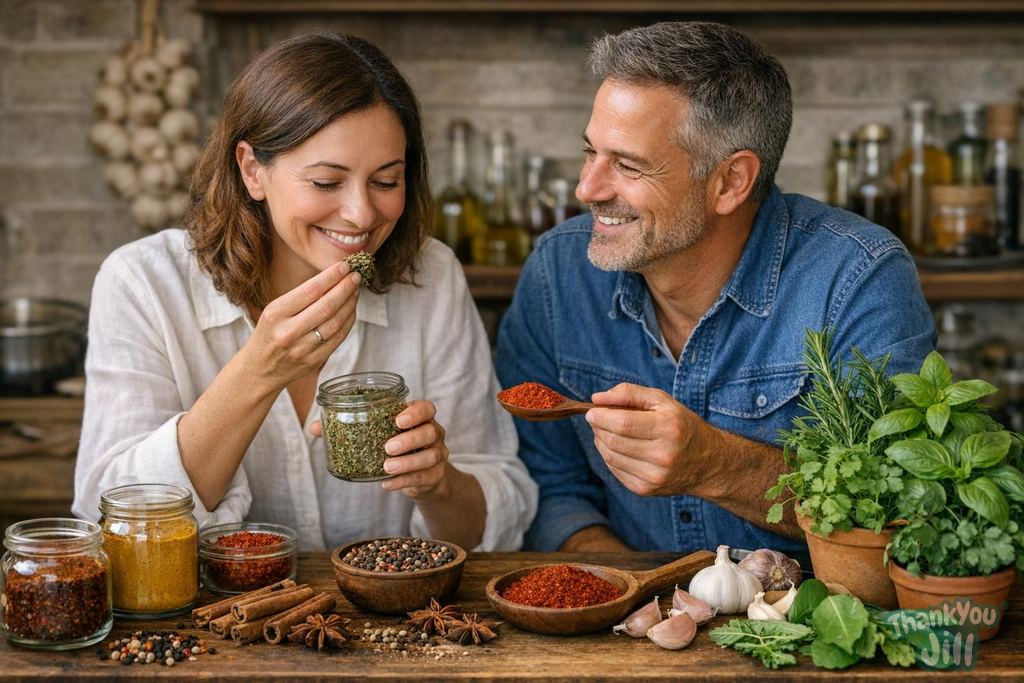
Acids: lemon juice, lime, vinegar. They activate the same taste receptors in a way that complements salt. A squeeze of lemon on vegetables, fish, or legumes amplifies flavors while reducing the need for salt. Fresh herbs: basil, parsley, cilantro, mint. They add aromatic complexity that salt alone can't provide. Spices: cumin, turmeric, paprika, chili pepper, cinnamon. Each spice adds a flavor dimension that reduces salt dependency. Natural umami: dried mushrooms, tomato paste, Parmesan, anchovies (used sparingly): they intensify flavor perception through naturally occurring glutamate.
The DASH diet: the most studied model
The DASH diet (Dietary Approaches to Stop Hypertension) was developed specifically to lower blood pressure through food. It calls for: reducing sodium to less than 2,300 mg daily (about 5.75g of salt), increasing potassium (fruits and vegetables), magnesium (legumes and nuts), and calcium (low-fat dairy). Potassium is sodium's natural counterweight: for every gram of potassium added to your diet, blood pressure drops almost as much as for every gram of sodium removed.

A palate accustomed to salt is like a radio volume stuck at maximum: it can't hear the nuances anymore. Turn it down gradually and you'll discover flavors that salt had been drowning out for years. Eating with less salt isn't a sacrifice: it's a sensory education.
The three-phase reduction plan
Phase 1 (weeks 1-2): stop adding salt at the table (after cooking). Reduce salt during cooking by 25%. Start reading labels and choose products with less than 0.3g of salt per 100g. Phase 2 (weeks 3-4): replace bouillon cubes with homemade broth or low-sodium bouillon. Choose low-salt versions of bread, crackers, and cereals. Add fresh herbs and spices instead of salt. Phase 3 (month 2): cut back on cured meats and aged cheeses to 2-3 times a week. Use marinades with vinegar and lemon instead of salt to flavor meats. Your palate has already adapted: you won't miss it.
How to use fresh herbs to forget about salt
On pasta: fresh basil, garlic, extra virgin olive oil, and very little salt (half your usual amount). On fish: parsley, lemon, capers (note: capers are salty, use sparingly): no additional salt needed. On steamed vegetables: cumin, cilantro, or just lemon juice with extra virgin olive oil. On chicken: rosemary, thyme, garlic, paprika: intense flavors without adding salt. In soup: bay leaf, celery, carrot, onion give the broth rich flavor without added salt.
Potassium as a natural antidote to sodium
Increase potassium in your diet: direct action to offset excess sodium. Potassium-rich foods (mentioned in the article on water retention): bananas, baked potatoes, white beans, spinach, avocado, tomatoes, dried apricots. A diet naturally rich in potassium lowers blood pressure with effects comparable to sodium reduction.
Measure your starting point
Keep a food diary for three days. Write down everything you eat and check the salt content from labels. Add it up. Many people are surprised: the final number is often between 8 and 15 grams daily, double or triple the recommended limit. Seeing the real number is more motivating than any theoretical advice.
Frequently asked questions
What's the most effective strategy for gradually reducing salt intake without losing flavor?
The most effective strategy is reducing salt by 10-15% every two weeks, going from 10 grams to less than 5 over 3-4 months. This allows your palate to adapt gradually without perceiving food as bland.
How can I replace salt in cooking while keeping my dishes flavorful?
You can use acids like lemon or vinegar, fresh herbs (basil, parsley), spices (cumin, paprika), and umami-rich foods like dried mushrooms or tomato paste to intensify flavor without adding salt.
Why does salt added at the table represent only part of total sodium intake?
Salt added at the table is only 20-30% of total sodium; most comes from processed products like bread, cheese, cured meats, sauces, and ready-made foods, which contain hidden amounts of salt.
What role does potassium play in reducing sodium's negative effects on blood pressure?
Potassium acts as a natural counterweight to sodium, helping lower blood pressure. Increasing intake of potassium-rich foods like fruits and vegetables can lower pressure almost as much as reducing sodium.

Latest News




Comments
No comments yet. Be the first!
Leave a comment