


 Italiano
 Français
 Deutsch
 Español
 Português
 Svenska
 Suomi
Suomi
Natural Sweeteners
Honey, maple syrup, stevia
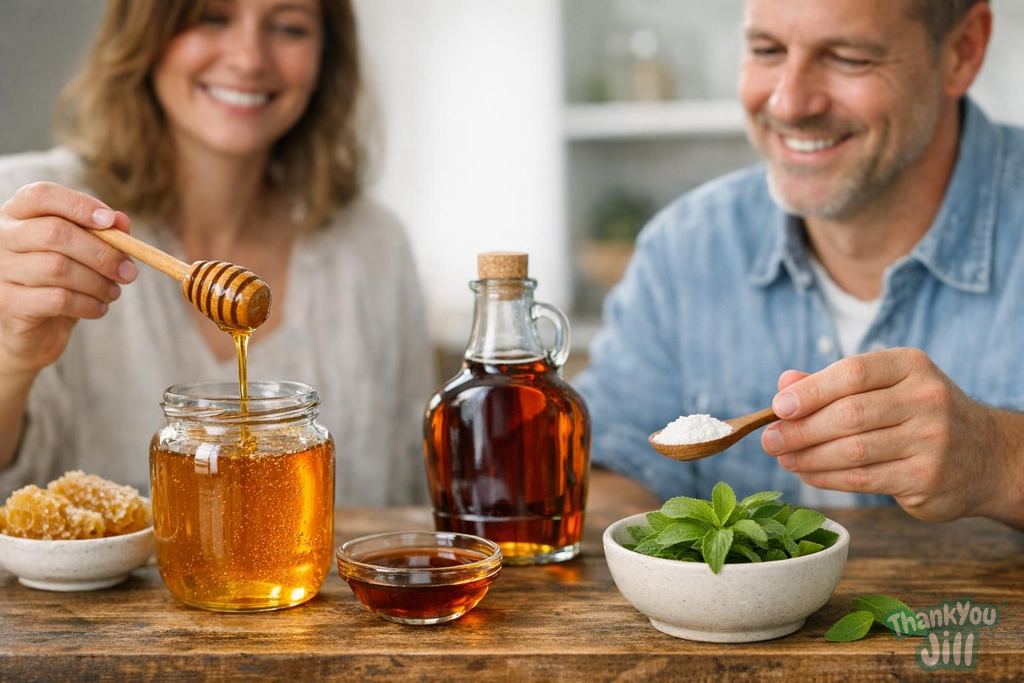
The market for "natural" sweeteners has exploded in recent years, driven by the flight from refined white sugar and fear of artificial sweeteners. Honey, maple syrup, coconut sugar, agave syrup, date paste, stevia, erythritol, xylitol: each option is presented as superior to white sugar. Some of these claims have a real basis. Many are pure marketing. Understanding the differences helps you make more informed choices.
Honey: the oldest natural sweetener
Honey is composed mainly of fructose (38%), glucose (31%), water (17%), and small amounts of other sugars. It also contains enzymes (diastase, invertase), organic acids, polyphenols, vitamin C, B vitamins, and flavonoids with antimicrobial and antioxidant properties. The glycemic index of honey varies between 45 and 64 depending on the type: slightly lower than pure sucrose (GI 65). The difference is modest but real.
Acacia honey has a particularly low GI (35-40) due to its high fructose content and high proportion of unhydrolyzed sucrose. Clover honey has a higher GI (65-70). The polyphenol content varies greatly between varieties: raw unpasteurized honey contains far more than filtered and industrially pasteurized honey.
Calories: honey has 304 kcal per 100g compared to 387 kcal of white sugar, but it's denser and used in similar quantities. It's not a "low-calorie" choice.
Maple syrup: real minerals and extraordinary flavor
Pure maple syrup (not the industrial maple-flavored version, which is glucose syrup with flavoring) is obtained by boiling and concentrating the sap of the sugar maple (Acer saccharum). It's composed of 66% sucrose, with traces of glucose and fructose, and contains minerals in significant amounts: manganese (a 30ml serving covers 33% of daily requirements), zinc (12%), calcium, potassium.
The GI is around 54: similar to honey. The flavor is extraordinary and distinctive. It's used sparingly due to its intense taste: often you use less of it than sugar to achieve the same perceived sweetness. The downside: it's expensive (€10-15 for 250ml of quality product).
Agave syrup: the most overrated
Agave syrup is obtained from the blue agave plant native to Mexico. It's composed of 75-90% fructose: the highest percentage among common sweeteners. The high fructose content has a very low GI (GI 15-19) because fructose doesn't cause a direct spike in blood glucose. This made it popular in "low-GI" products.
The problem: as discussed earlier, excess free fructose is metabolized by the liver into fat. A syrup with 75-90% free fructose is the opposite of what metabolic health requires. Agave syrup is one of the "natural" sweeteners with the worst metabolic profile, despite its low GI. Marketing sold one property (low GI) while omitting the more relevant risk (high fructose).
Stevia: the natural calorie-free sweetener
Stevia is extracted from the leaves of the Stevia rebaudiana plant. Steviol glycosides (rebaudioside A, stevioside) are responsible for sweetness: they're 200-400 times sweeter than sucrose, with zero calories. The EFSA evaluated stevia as safe for human consumption in 2010. It doesn't raise blood sugar. It has no cariogenic effects (doesn't cause cavities). It has no calories.
The limitations: the slightly bitter or licorice-like aftertaste that many perceive (depends on concentration and formulation). It doesn't behave chemically like sugar in cooking (doesn't caramelize, doesn't have the same effect on dough structure). Industrial stevia formulations often include polyols or maltodextrins to improve flowability: read the ingredients.
Erythritol and xylitol: the polyols
Erythritol is a sugar alcohol produced by fermentation of glucose. It has 70% of sugar's sweetness, almost zero calories (0.24 kcal/g versus 4 for sugar), zero GI, and isn't metabolized but excreted unchanged in urine. It's the only polyol with virtually no laxative effect at normal doses (other polyols cause diarrhea and bloating at moderate doses). Used in moderate amounts, it's the sweetener with the most favorable safety profile among all available options. Caution: a 2023 study in Nature Medicine found an association between elevated blood erythritol levels and increased cardiovascular risk. Research is ongoing and many experts consider the data inconclusive, but it's an area to monitor.

Natural is not synonymous with healthy. Agave syrup is natural and metabolically worse than white sugar. Stevia is almost artificial in its extraction process but zero calories and zero blood sugar impact. Look at the numbers, not the stories.
When to use which sweetener
For daily tea and coffee: stevia or erythritol if you want zero calories, small amount of raw honey if you want something natural with polyphenols. For traditional baked goods: regular sugar (cane sugar if you want minimal mineral addition) is technologically irreplaceable in many recipes. Replacing it completely alters structure and baking. Reduce the amount by 20-30% in recipes instead of substituting completely. For syrups and toppings: pure maple syrup (expensive but with real minerals) in small amounts. For those with diabetes or monitoring blood sugar: erythritol or stevia are the safest choices for not impacting blood sugar.
How to gradually reduce sweetness in recipes
For any dessert you make at home, try reducing the sugar by 10% from the original recipe. If you don't notice a significant difference, next time reduce by another 10%. Many recipes work beautifully with 30-40% less sugar. Your palate, becoming accustomed to less sweetness in homemade desserts, will crave less sweetness elsewhere too. It's a virtuous cycle.
Coconut sugar: marketing or reality?
Coconut sugar comes from the dried nectar of coconut palm flowers. It contains sucrose (70-80%) with small amounts of inulin (prebiotic fiber) that slightly slows absorption. GI around 54 (similar to honey). It contains traces of minerals (iron, zinc, calcium). Like honey, it's "less bad" than white sugar but isn't a fundamentally different choice: it remains sugar that should be used in moderation. It costs 5-8 times more than regular sugar without proportional benefits.
Dates as a sweetener in cooking
Blended dates are a natural sweetener with intact fiber, potassium, magnesium, iron. The fiber slows sugar absorption. Perfect for: energy balls, homemade bars, no-bake cheesecake, sweet sauces. They have an intense caramel flavor that reduces the amount needed. Date paste (soaked dates blended with little water) keeps in the fridge for 2 weeks and can replace sugar in many raw recipes.
Frequently Asked Questions
What are the main differences between honey, maple syrup, and agave syrup in terms of glycemic index and metabolic impact?
Honey has a variable GI between 45 and 64, maple syrup around 54, while agave syrup has a very low GI (15-19) but high fructose content that can worsen the metabolic profile despite the low GI.
When is it worth using stevia or erythritol instead of natural sweeteners like honey or maple syrup?
Stevia and erythritol are ideal for those seeking zero-calorie sweeteners with no glycemic impact, such as diabetics or those wanting to lose weight. Honey and maple syrup are better suited for mineral and polyphenol intake, but contain calories and sugars.
How do you choose a natural sweetener for baking desserts without compromising structure and flavor?
Traditional sugar is irreplaceable for structure and caramelization in baked goods. You can reduce the amount by 20-30% to lower calories, but completely replacing it with natural sweeteners alters consistency and final results.
What happens if you consume too much agave syrup despite its low glycemic index?
Excessive consumption of agave syrup, rich in free fructose, can lead to increased fat production in the liver, worsening metabolic health despite the low glycemic index.

Latest News




Comments
No comments yet. Be the first!
Leave a comment