


 Italiano
 Français
 Deutsch
 Español
 Português
 Svenska
 Suomi
Suomi
Hidden Sugars
Where They Hide and How to Avoid Them
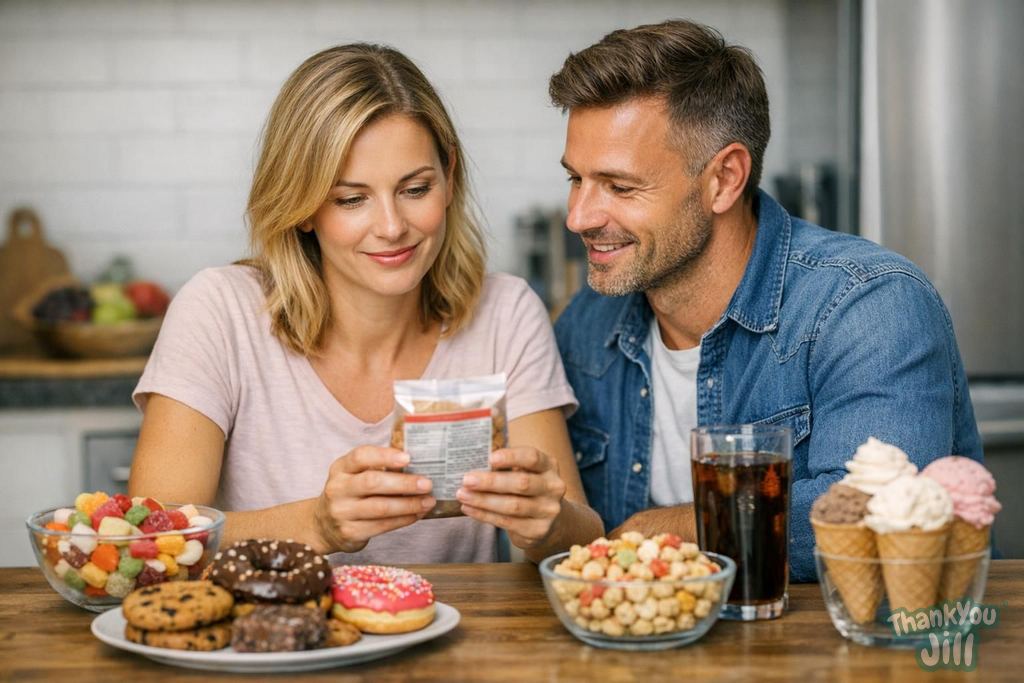
The WHO recommends limiting free sugars to less than 10% of your daily calorie intake, ideally under 5%. For an average adult, that means less than 25-50 grams per day. Most Italians consume 80-100 grams daily. But not because they're heavy-handed with the sugar bowl—it's because sugar is hidden almost everywhere in the food industry, often in products you'd never associate with sweetness.
The 60 Names Sugar Hides Under on Labels
The food industry uses dozens of different names for sugar in ingredient lists. The most common: sucrose, fructose, glucose, dextrose, maltose, lactose, glucose syrup, fructose syrup, high-fructose corn syrup (HFCS), agave syrup, maple syrup, cane sugar, invert sugar, muscovado sugar, powdered honey, fruit juice concentrate, date juice concentrate, apple juice concentrate, maltodextrins, barley malt, malt extract, caramel, treacle. There are also less obvious names: sorbitol, xylitol, maltitol (sugar alcohols with fewer calories but still sweetening effects).
The practical rule: any word ending in "-ose" or "-itol," any "syrup of" something, any "juice concentrate"—it's sugar in disguise.
The Most Deceptive Sugar-Loaded Products
Ketchup: about 25g of sugar per 100g. A restaurant serving (30-40g) already delivers 7-10g of sugar. Sweeter than many jams. Barbecue sauce: 30-40g of sugar per 100g. Industrial white bread: 3-5g of sugar per 100g, sometimes more. Even industrial "whole wheat" bread can contain glucose syrup. Commercial granola: 15-25g of sugar per 100g. Often marketed with fruit and grain imagery as a "healthy" choice. Fruit yogurt: 12-20g of sugar per 100g, most of it added. Plain Greek yogurt has 4-5g (natural lactose). 100% fruit juice: 10-12g per 100ml—all natural fructose but without fiber, with metabolic effects similar to soda. Bottled salad dressing: 3-8g of sugar per 100g of a product that tastes savory. Children's breakfast cereals: 25-40g of sugar per 100g. Often the most heavily advertised as "energy for your day."
Fructose and Your Liver: The Metabolic Concern
Free fructose (not bound to the fiber in whole fruit) is metabolized almost entirely by your liver, which converts it to fat. Chronic high consumption of free fructose (high-fructose corn syrup, agave syrup, fruit juices) is linked to non-alcoholic fatty liver disease, elevated triglycerides, and insulin resistance. This doesn't apply to whole fruit (fiber + fructose, slow absorption) but to products with added or concentrated fructose.
Using Food Labels to Unmask Hidden Sugar
The nutrition facts table lists "sugars" as a subcategory of carbohydrates. Since 2016, European labels must distinguish "sugars" (total) but not yet "added sugars" (unlike the US, where this has been mandatory since 2020). To figure out how much sugar was added, you need to cross-reference two pieces of information: the "sugars" value on the label and the ingredient list (checking for added sugar forms).
Guideline thresholds for "sugars" per 100g that signal excess: beverages above 5g, dairy products above 8g (beyond natural lactose), cereals and snacks above 15g, sauces and dressings above 10g.

The sugar you don't see is more dangerous than the sugar you stir into your coffee. Not because it's chemically different—but because you consume it without knowing, without choosing, without control. Reading labels is your only defense against this hidden sweetness.
The 3-Day Tracking Exercise
For three consecutive days, write down everything you eat and add up the sugar from the labels. Don't include whole fruit (the sugar in fruit with fiber works differently). Do include: cereals, yogurt, bread, sauces, juices, snacks, sweets, and beverages. Your final total will show your actual sugar intake. For most people, the number is eye-opening. Seeing it written down is the most powerful motivator for change.
Quick, Low-Cost Swaps
Replace ketchup with fresh tomato blended with salt and basil. Replace fruit yogurt with plain Greek yogurt plus fresh cut fruit. Replace sugary breakfast cereals with oats (1g sugar per 100g) plus fruit. Replace fruit juice with water and whole fruit. Replace store-bought sauces with simple homemade versions. Each single swap cuts your daily sugar intake by 10-20g without giving up anything essential.
How to Scan an Ingredient List for Sugar in 10 Seconds
Quick rule: scan the ingredient list for words ending in "-ose," "syrup," "concentrate," "honey," or "extract." If you find more than one in the first five ingredients, the product has a lot of added sugar in different forms. If you find just one toward the end of the list (small amount), it's less concerning. Position in the list tells you relative quantity: the higher up, the more there is.
"Sugar-Free" Products Often Aren't the Answer
Products labeled "sugar-free" often contain artificial sweeteners or sugar alcohols that keep your palate accustomed to sweetness. The most effective long-term strategy isn't to swap sugar for something else—it's to gradually lower your baseline for what tastes normally sweet. Less sweetness overall in your diet, not just a different type of sweet.
Frequently Asked Questions
What are the most common hidden sugar names to look for on food labels?
The most common names include sucrose, fructose, glucose, dextrose, maltose, glucose syrup, high-fructose corn syrup, agave syrup, invert sugar, and fruit juice concentrates. Any word ending in "-ose" or "-itol" signals hidden sugar.
How can I tell if a product contains added sugars by reading the label?
Cross-reference the nutrition facts panel, which lists total sugars, with the ingredient list. If added sugar names appear in the first few ingredients, the product contains a significant amount. Position in the list indicates relative quantity.
What unsuspecting foods are often loaded with hidden sugars?
Sauces like ketchup and barbecue sauce, store-bought sandwich bread, commercial granola, fruit yogurt, 100% fruit juice, salad dressings, and children's breakfast cereals often contain hidden sugars, even though they don't taste particularly sweet.
Why is excessive free fructose consumption concerning for metabolic health?
Free fructose is metabolized by the liver and can convert to fat, raising the risk of non-alcoholic fatty liver disease, elevated triglycerides, and insulin resistance. This risk applies to products with added or concentrated fructose, not whole fruit.


Latest News




Comments
No comments yet. Be the first!
Leave a comment