


 Italiano
 Français
 Deutsch
 Español
 Português
 Svenska
 Suomi
Suomi
Anemia
Dietary Iron and Optimal Absorption
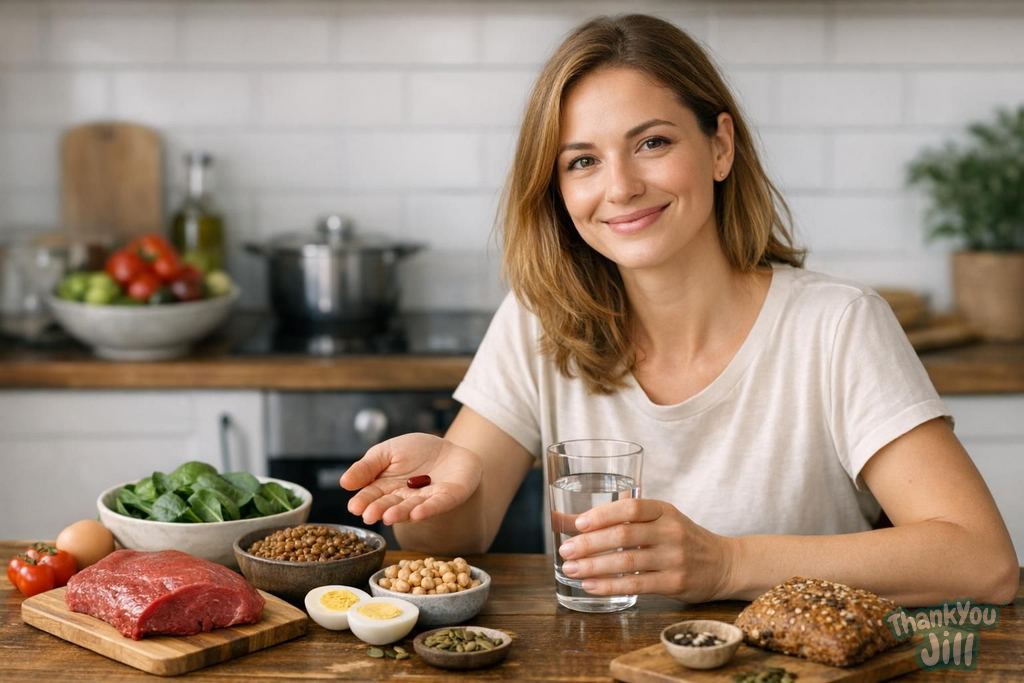
Iron-deficiency anemia affects approximately 2 billion people worldwide, making it the most common nutritional deficiency on the planet and the leading cause of anemia (roughly 50% of all cases). In Italy, it primarily affects women of childbearing age (due to menstrual losses), rapidly growing children, unplanned vegetarians and vegans, and elderly people with monotonous diets. It's not always about eating too little iron—often it's about absorbing too little.
Heme and non-heme iron: the fundamental difference
Dietary iron exists in two forms with very different bioavailability. Heme iron: found in red meat, poultry, fish, and shellfish. It's the iron incorporated into animal hemoglobin and myoglobin. It's absorbed with an efficiency of 15-35%, practically independent of other foods in the meal. It's the most bioavailable iron that exists.
Non-heme iron: found in plant foods (spinach, lentils, beans, tofu, whole grains), eggs (low bioavailability iron), and dairy products (almost no iron). It's absorbed with highly variable efficiency: from 2% to 20%, strongly influenced by other foods present in the meal. This variability in non-heme iron absorption is the key to understanding why many people with anemia don't solve the problem by simply eating more spinach.
The enemies of iron absorption
Phytates (whole grains, legumes): they chelate non-heme iron, reducing its absorption by 85% under certain conditions. The solution: soaking, sprouting, and fermentation significantly reduce phytates. Tannins (tea, coffee, red wine): they reduce non-heme iron absorption by 40-70% if consumed during or immediately after a meal. Don't drink tea or coffee in the two hours around main meals if you're trying to treat anemia. Large amounts of calcium: high doses of calcium (milk, cheese) in the same meal reduce the absorption of both heme and non-heme iron. Separating dairy from iron-rich meals is helpful for those with deficiency. Oxalates (spinach, chard): oxalates chelate the non-heme iron in spinach, making its absorption very low despite the high nominal content. The famous "iron in spinach" from Popeye is a legend based on a decimal transcription error from 1890 data: spinach has lots of iron on paper, but very little is actually absorbable.
The allies of iron absorption
Vitamin C: the most effective enhancer of non-heme iron absorption. In the presence of vitamin C, ferric iron (Fe3+, non-absorbable) is reduced to ferrous iron (Fe2+, absorbable). The increase in absorption can be 3-6 times. A squeeze of lemon on lentils, a kiwi after bean soup, raw peppers in a chickpea salad: these simple pairings multiply the iron actually absorbed. Meat in the meal (the "meat factor"): the presence of meat in the same meal increases the absorption of non-heme iron from other foods through a mechanism not yet fully understood. Organic acids (vinegar, lemon juice, citric acid from citrus): they lower the meal's pH, facilitating iron solubilization.
Reference values: when it's true anemia
Iron-deficiency anemia is diagnosed with: hemoglobin below 12 g/dl in women, below 13 g/dl in men; low ferritin (below 12-20 ng/ml: iron reserves); low serum iron; reduced transferrin saturation. Low ferritin with normal hemoglobin is "iron store depletion" without yet true anemia: it should be treated preventively before it becomes full-blown anemia. Iron supplementation with ferrous iron (ferrous sulfate, ferrous gluconate, ferrous bisglycinate) requires medical prescription or at least prior medical evaluation: excess iron is oxidizing and potentially harmful.

The iron in spinach is almost a myth. The iron that really matters comes from lentils with lemon, lean meat with peppers, chickpeas with vinegar. Vitamin C is the key that unlocks the absorption of plant-based iron. Combining is everything.
Food combinations that maximize iron
Lentils + lemon juice or apple cider vinegar: always pair an acidic source with lentils. Spinach + raw red peppers: the vitamin C in peppers increases iron absorption from spinach. Rice with beans + tomato sauce: the lycopene and citric acid in tomatoes improve iron absorption from beans. Chicken liver with arugula: double source, heme iron plus vitamin C from arugula. These combinations don't require calculations: just learn to systematically place a vitamin C source next to every plant-based iron source.
How to manage tea and coffee if you have anemia
Tea and coffee contain tannins that reduce iron absorption by 40-70% if consumed during meals. If you're treating anemia: move tea and coffee to 1-2 hours after main meals, not during. Don't eliminate coffee (for many it's an irreplaceable pleasure): postponing it is enough to make a significant difference in absorption. Green tea has fewer tannins than black tea: if you love tea, prefer green, especially away from meals.
When supplementation is necessary
If ferritin is below 20 ng/ml or you have confirmed anemia: diet alone rarely suffices to quickly rebuild reserves. Iron supplements (ferrous sulfate, ferrous bisglycinate) have proven effectiveness. Ferrous bisglycinate has fewer gastrointestinal side effects than ferrous sulfate and better bioavailability. Take it on an empty stomach to maximize absorption (but if it causes nausea, take it with a small snack). Always with vitamin C: even for supplements, lemon juice or orange increase absorption by 30-50%.
Ferritin monitoring: an essential test
Ferritin is the iron storage protein: measuring it in blood is the most sensitive way to detect iron depletion before it manifests as anemia. Include it in your annual blood test, especially if you're a woman of childbearing age, vegetarian or vegan, intense athlete, or elderly. A ferritin value above 30 ng/ml guarantees adequate iron reserves. Between 12 and 30 ng/ml: low reserves but not yet anemia, useful to intervene with diet. Below 12 ng/ml: severe depletion, supplementation necessary.
Frequently Asked Questions
What is the difference between heme and non-heme iron and how does it affect absorption?
Heme iron, found in meat and fish, has efficient absorption of 15-35% and is little influenced by other foods. Non-heme iron, found in plants and grains, has variable absorption from 2% to 20%, strongly influenced by other components of the meal.
How can I increase non-heme iron absorption in my diet?
To improve non-heme iron absorption, always pair a vitamin C source (such as lemon or peppers) with plant-based iron-rich foods. Avoid tea and coffee during meals and reduce phytates through soaking or fermentation of legumes and grains.
What happens if I consume tea or coffee during meals while trying to treat anemia?
Tea and coffee contain tannins that can reduce non-heme iron absorption by 40% to 70% if consumed during or immediately after meals. It's recommended to postpone them by 1-2 hours after meals to avoid compromising iron absorption.
When is iron supplementation necessary and how can I improve its effectiveness?
Supplementation is necessary if ferritin is below 20 ng/ml or in case of confirmed anemia. Ferrous bisglycinate is preferable for fewer side effects. Take it on an empty stomach with vitamin C to increase absorption by 30-50%.

Latest News



Comments
No comments yet. Be the first!
Leave a comment