


 Italiano
 Français
 Deutsch
 Español
 Português
 Svenska
 Suomi
Suomi
First Foods for Baby
Balanced recipes month by month
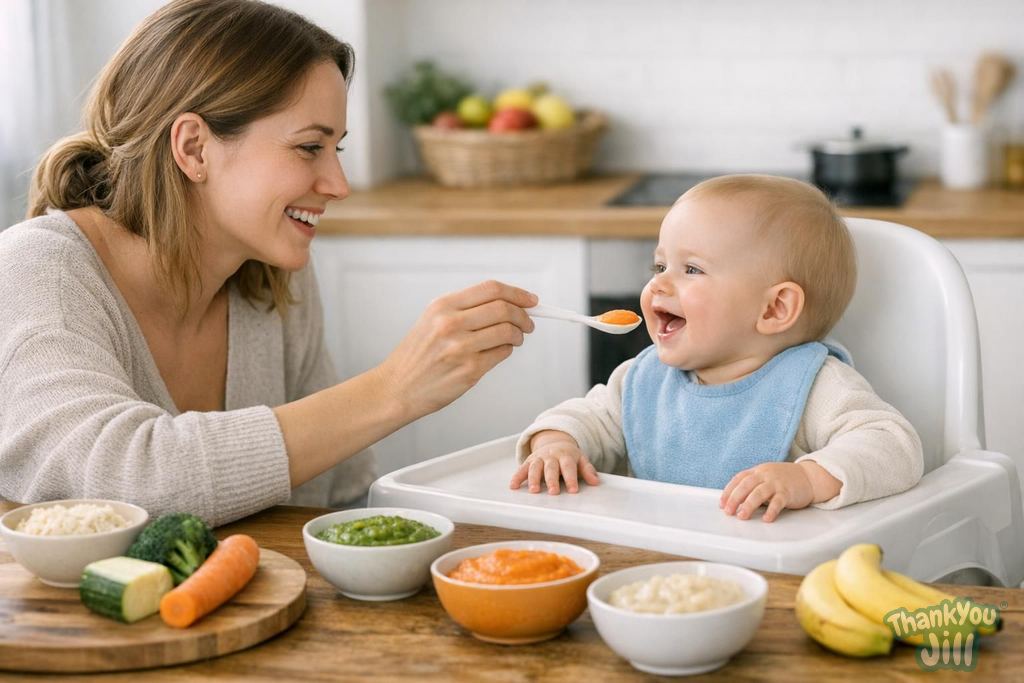
Cooking for a baby starting solids requires just a few fresh ingredients, simple cooking methods (steaming, boiling), and no fancy seasonings. The golden rule for every month stays the same: no salt, no sugar, no honey, maximum variety of natural flavors. A baby exposed to many different tastes in early childhood shows less food neophobia (fear of new foods) during the preschool years: every exposure counts, even when the food isn't eaten.
6 months: first purées
Zucchini and potato purée: steam one medium zucchini and half a small potato, blend with a hand blender while adding a few tablespoons of breast milk or formula. Contains vitamin C, potassium, and starch. Red lentil and carrot purée: hulled red lentils (cook in 15 minutes without soaking) and carrots cooked together, then blended. Rich in iron, beta-carotene, and fiber. Add a few drops of lemon juice to boost iron absorption. Broccoli cream: steam for 10 minutes, then blend. Vitamin C, sulforaphane, calcium. Accept the grimaces: broccoli is bitter and new. Offer it again 10-15 times before deciding he doesn't like it.
7 months: proteins take center stage
Chicken and vegetable cream: boiled chicken breast, shredded and blended with carrots and potatoes. First source of heme iron: essential at this stage. Cod and zucchini purée: boiled cod (protein, DHA, iodine), blended with zucchini. Cereal cream: fine oat flakes cooked in breast milk or formula. Good source of complex carbohydrates and beta-glucans. Pea purée: blanch and blend, remove the skin if the texture is too lumpy for your baby.
8 months: thicker textures and new flavors
At 8 months, your baby starts managing small lumps: stop blending to a perfect smoothness. Ground meat patties (for baby-led weaning or to encourage chewing): ground beef mixed with a teaspoon of fine oats, formed into small balls and steamed. Soft, easy to grab, rich in heme iron. Salt-free chickpea hummus: cooked chickpeas blended with extra virgin olive oil and lemon juice. White bean and rosemary purée: cooked white beans blended with a sprig of rosemary (remove before blending) and extra virgin olive oil.
9-12 months: soft pieces and family meals
Your baby starts pinching with thumb and forefinger. Small pieces become manageable: banana chunks, slices of ripe peach, mozzarella cubes, short pasta cooked very soft in simple sauce. By 11-12 months, your baby is almost ready to eat (adapted) what the family eats. Necessary adjustments: no added salt to baby's portion, soft consistencies, small pieces easily mashed, no spicy seasonings. Family-friendly recipes: vegetable soup without salt, simple pasta with meat sauce, vegetable omelet made in a non-stick pan without salt.
Safe cooking methods for baby food
Steaming: best for preserving nutrients (especially heat-sensitive vitamin C) and achieving soft textures. Ideal for vegetables and fish. Boiling: practical for legumes, meat, and grains. No frying: avoid fried foods in the first year. Never microwave baby food: it creates dangerous hot spots. Warm using a water bath or low heat on the stove, always stirring, and check the temperature on your wrist before serving.

First foods don't need to be a complicated culinary adventure: they should be genuine, varied, and free of salt and sugar. Every new flavor your baby encounters in the first months opens the door to a rich and curious relationship with food that will last a lifetime. Early variety is the greatest food gift you can give him.
How to freeze baby food and save time
Cook in large batches and freeze in ice cube trays: each cube holds about 15-20 ml of purée. Label with contents and date: purées keep for up to 3 months in the freezer. Thaw in the refrigerator the night before or quickly in a water bath. Never refreeze food that's already been thawed. This system cuts daily prep time to almost nothing and ensures you always have variety on hand.
Introducing herbs and aromatics
Non-spicy herbs can be introduced from the start of solids to get your baby used to complex flavors. Safe from the beginning: basil, parsley, thyme, oregano, rosemary (remove sprigs before blending), turmeric in small amounts, sweet cinnamon, natural vanilla. Avoid: chili pepper, black pepper in large amounts, mustard. Early exposure to different herbs reduces food neophobia and naturally expands your baby's palate.
Weekly menu for your 8-9 month old
Monday: chicken and carrot cream. Tuesday: red lentil purée with a squeeze of lemon. Wednesday: cod and sweet potato cream. Thursday: beef patties with zucchini purée. Friday: soft vegetable omelet. Saturday: chickpea hummus with soft bread pieces. Sunday: oat cream with mashed fresh fruit. This plan covers iron (Monday, Thursday), omega-3s (Wednesday), plant-based proteins (Tuesday, Saturday), and grains (Friday, Sunday) with complete nutrient rotation.
Frequently Asked Questions
How can I vary first foods to reduce food neophobia in babies?
To reduce neophobia, it's important to offer your baby a variety of natural flavors from the first months, even if he doesn't always eat them right away. Reoffering new foods multiple times (10-15 times) helps him get used to them and develop a positive relationship with food.
What cooking methods best preserve nutrients in first foods?
Steaming is best for maintaining heat-sensitive vitamins like vitamin C and achieving soft textures, ideal for vegetables and fish. Boiling works well for legumes, meat, and grains. Avoid frying and microwaving for safety and food quality.
When and how should I introduce proteins in baby food?
Introduce proteins around 7 months with foods like boiled chicken, cod, and grains. Choose sources rich in heme iron and DHA, blending or mincing to match your baby's chewing abilities.
How do I freeze and store baby food to save time without losing quality?
Cook in large batches and freeze in ice cube trays, with each cube holding 15-20 ml. Store for up to 3 months, thawing in the refrigerator or water bath. Never refreeze thawed food to maintain safety and nutrients.

Latest News




Comments
No comments yet. Be the first!
Leave a comment