


 Italiano
 Français
 Deutsch
 Español
 Português
 Svenska
 Suomi
Suomi
The True Environmental Impact of Food
From Farm to Plate
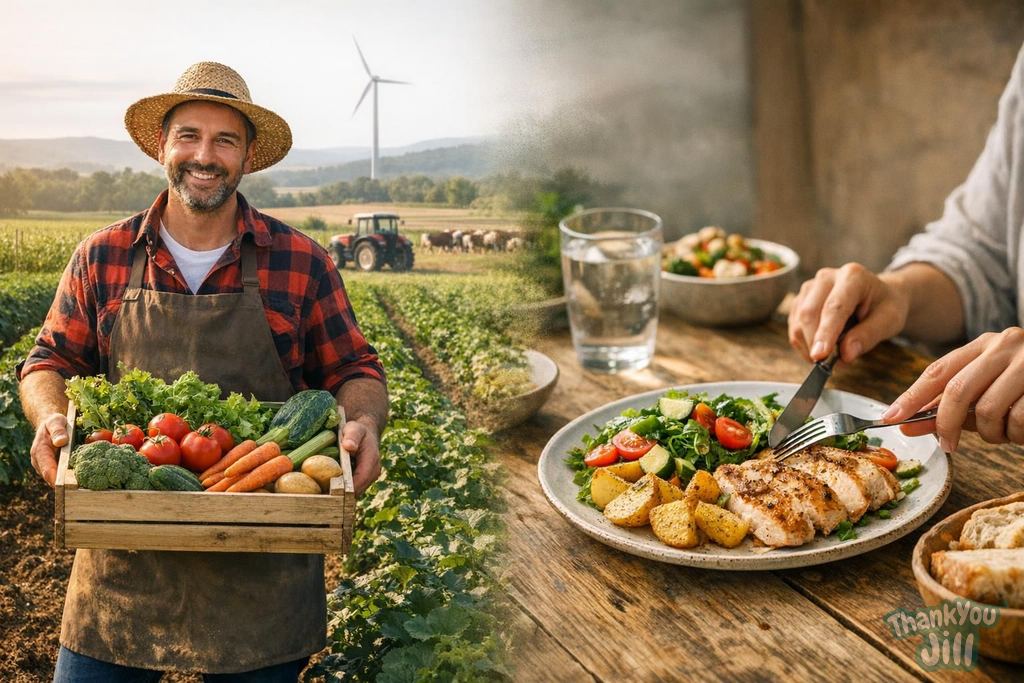
When we think about the environmental impact of food, we tend to focus on CO2 emissions. But the sustainability of our food system is multidimensional: it encompasses land use (deforestation, conversion of natural habitats), water consumption, pollution of surface and groundwater, biodiversity loss, soil depletion, pesticide and synthetic fertilizer pollution, and fossil fuel consumption. Poore and Nemecek (2018) analyzed all these dimensions across 40 food categories, revealing that our dietary choices have environmental consequences that extend far beyond global warming.
Land Use: The Biggest Problem
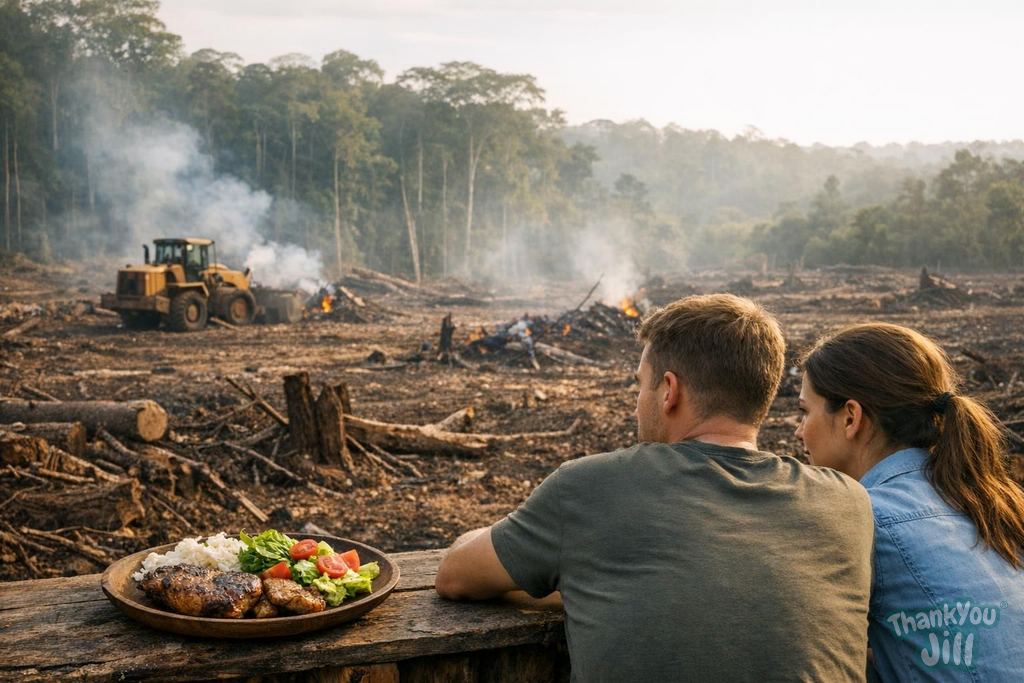
The food system occupies 50% of all habitable land on the planet (excluding ice sheets and deserts). Of this land: 77% is used for livestock farming (direct grazing or feed crops), yet it provides only 18% of global calories and 37% of protein. This massive imbalance is the primary driver of deforestation: 87% of global deforestation is directly or indirectly linked to agricultural expansion, and 70% of that is tied to livestock farming. Soy grown in the Amazon (to feed pigs and chickens in Europe) is one of the main drivers of global deforestation. Paradoxically, this deforested soy feeds the animals later consumed as "local" European meat.
Water Pollution: Nitrates, Phosphates, and Dead Zones
Intensive agriculture is the leading source of freshwater and coastal pollution globally. The main mechanisms: nitrogen fertilizer runoff (contaminates groundwater, causes eutrophication of rivers and lakes), phosphorus from organic and chemical fertilizers (same effects as nitrogen), ammonia from intensive livestock operations (air pollution and acid rain), pesticide and herbicide residues (groundwater and aquatic ecosystem contamination). Marine "dead zones" (areas where dissolved oxygen is too low to support aquatic life) are created by excess nutrients flowing from agriculture through rivers. There are over 400 worldwide, including in the Gulf of Mexico and the Mediterranean.
Biodiversity Loss: The Sixth Mass Extinction
Biologists speak of a sixth mass extinction underway: the current species extinction rate is 1,000-10,000 times higher than the natural background rate. The food system is responsible for 70% of this biodiversity loss through: deforestation (habitat destruction), conversion of natural ecosystems to monocultures, pesticide use (killing pollinating insects and natural pest predators), water pollution, overfishing, and destruction of marine ecosystems. Biodiversity loss isn't just an aesthetic or moral issue—it's a direct threat to the resilience of the food system itself, which depends on genetic and biological diversity to adapt to climate change and new pathogens.
Food Life Cycle: Where Impacts Concentrate
Life cycle analysis of food shows where environmental impacts concentrate. For animal-based foods: the production phase (livestock farming, animal feed) accounts for 70-90% of total environmental impact. Transportation contributes only 5-10%. The implication: for animal products, buying local doesn't significantly reduce environmental impact; reducing the quantity consumed does. For plant-based foods: the production phase accounts for 60-80%, with refrigeration and packaging relevant for some categories. Long-distance transport has significant impact only for perishables transported by air (certain exotic fruits).

The food system doesn't just destroy the climate—it destroys land, water, and biodiversity. Every hamburger carries with it a piece of felled Amazon rainforest, a drained aquifer, one fewer species. These are the hidden externalities priced into that €3 steak on sale. Cheap food doesn't exist: someone, somewhere, pays the price you don't see.
Planetary Boundaries and Diet: Where We Stand
The concept of "planetary boundaries" (Rockström et al., 2009, updated 2023) identifies the biophysical limits within which humanity can safely operate. The food system has already exceeded safe limits for: nitrogen and phosphorus flows (fertilizers), land-use change (deforestation), and biodiversity loss. We're approaching limits for: climate change (greenhouse gas emissions) and freshwater consumption. This means the current food system isn't sustainable even if all energy became renewable tomorrow. The transition toward diets with fewer animal products and more plant-based foods is necessary not just for climate but for all planetary boundaries simultaneously.
How to Assess Your Overall Food Impact
The Eco-Score (adopted by supermarkets in France and Belgium) evaluates the overall environmental impact of foods on an A-E scale, considering GHG emissions, land use, biodiversity, water resource use, and pollution. It's not yet systematically available in Italy. As a practical proxy: animal-based foods (especially beef and dairy) almost always have much higher impact than plant-based equivalents across all environmental dimensions. Reducing the frequency and quantity of animal foods is the single choice with the greatest positive impact on all environmental indicators simultaneously.
Organic Agriculture and Environmental Impact: A Complicated Story
Organic farming reduces pesticide and synthetic fertilizer pollution, increases soil biodiversity, and improves animal welfare. But it has yields averaging 20-25% lower than conventional agriculture: producing the same amount of food requires more land. The net balance depends on what you measure: for biodiversity and pollution, organic wins; for land use (with its deforestation implications), organic has the advantage only if yields are sufficiently high. The most honest answer: organic is generally better for the environment in plant cultivation; for animal production, the question is more complex and depends heavily on the specific system.
Frequently Asked Questions
What is the main environmental impact of intensive livestock farming on global deforestation?
Intensive livestock farming is responsible for 70% of global deforestation, primarily due to the expansion of pastures and feed crops like soy, which destroy natural habitats, especially in tropical forests like the Amazon.
How does intensive agriculture affect water pollution?
Intensive agriculture causes water pollution through nitrogen and phosphate runoff from fertilizers, ammonia from livestock operations, and pesticide residues, leading to eutrophication, groundwater contamination, and the formation of marine dead zones.
Why is reducing consumption of animal-based foods more effective than choosing local products for decreasing environmental impact?
For animal products, 70-90% of environmental impact comes from production (livestock farming and feed), while transportation accounts for only 5-10%. Therefore, reducing consumption has a much greater effect than choosing local products.
How does organic agriculture affect land use and biodiversity compared to conventional farming?
Organic agriculture reduces pollution and increases soil biodiversity, but has yields 20-25% lower, requiring more land for the same production. It's generally better for biodiversity and pollution, but its impact on land use depends on specific yields.

Latest News



Comments
No comments yet. Be the first!
Leave a comment