


 Italiano
 Français
 Deutsch
 Español
 Português
 Svenska
 Suomi
Suomi
Cheese and Dairy Products: How Much Do They Really Pollute?
Understanding the environmental impact
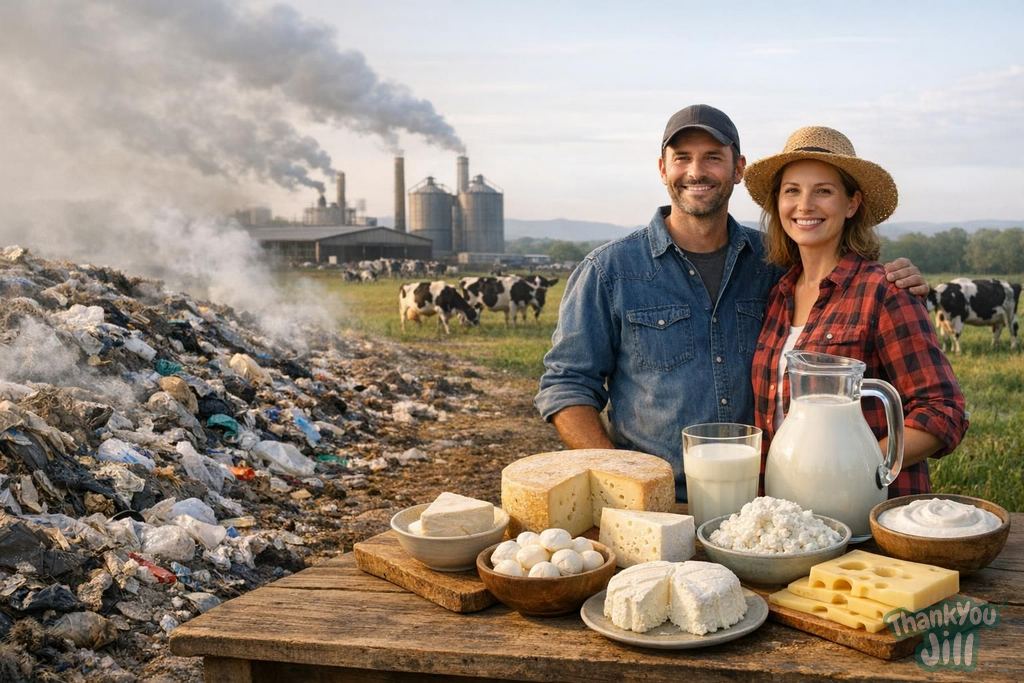
Dairy products are the category of animal-origin foods with the second-highest environmental impact by consumption volume, after beef. Cheese in particular ranks among food products with the highest carbon footprint outside of meat-based foods: producing 1 kg of Parmesan requires approximately 15 liters of milk and generates roughly 9–12 kg of CO2 equivalent per kg of product. Yet dairy is fundamental to the Italian and Mediterranean diet for calcium, protein, and vitamin D. As with many other foods, the answer isn't elimination but awareness and moderation.
The environmental impact of dairy products: the data
Carbon footprint per kg of product: cow's milk: 2.8–3.2 kg CO2eq per liter. Butter: 9 kg CO2eq per kg (very high because it requires large quantities of milk, with whey as a byproduct). Hard cheese (Parmesan, cheddar): 9–12 kg CO2eq per kg. Soft cheese (mozzarella, ricotta): 5–7 kg CO2eq per kg. Yogurt: 2.2 kg CO2eq per kg. Skim milk powder: 4.5 kg CO2eq per kg. For comparison: tofu: 2 kg CO2eq per kg. Oat milk: 0.9 kg CO2eq per liter. Soy milk: 1 kg CO2eq per liter. Plant-based milk has a carbon footprint 3–4 times lower than cow's milk and uses roughly 10 times less water and land.
Why aged cheese has such a high impact
Aged cheese (Parmesan, Pecorino, Grana) has a much higher impact than mozzarella or yogurt for two reasons: concentration (it takes 10–15 liters of milk to make 1 kg of Parmesan versus 1.5–2 liters for 1 kg of mozzarella), and aging (the process requires energy to maintain cellars at controlled temperature for months or years). However, Parmesan is also nutritionally very concentrated: it has nearly three times more calcium and protein than mozzarella by weight. Used as a condiment (a sprinkle on pasta instead of a slice), Parmesan delivers nutrients in minimal quantity with proportionally contained environmental impact.
Differences between production systems: pasture versus intensive
The variability in the environmental footprint of dairy products is enormous depending on the production system. Intensive farming in plains (like the Po Valley): imported feed (soy), concentrated production of livestock effluent (nitrates, methane), owned land used for silage corn. Semi-extensive Alpine or Apennine farming: local pasture grass, better soil quality, lower dependence on imported feed, milk with improved nutritional profile (more omega-3 from grazing). Milk from cheeses with protected designation of origin (Parmigiano Reggiano PDO, Pecorino di Fossa, Asiago) often comes from supply chains with higher standards for animal welfare and land management, though not necessarily lower carbon impact.
Plant-based dairy alternatives: an honest comparison
Plant-based dairy alternatives (oat milk, soy milk, almond milk, rice milk) all have a lower environmental footprint than cow's milk across carbon, land, and water dimensions. But they're not all equal: oat milk: the most sustainable for emissions and water use, an excellent alternative for cooking. Soy milk: very low footprint, but soy is associated with deforestation (though soy for direct human consumption is a tiny fraction of total soy: the real issue is soy for animal feed). Almond milk: extremely high water use in California (an area under water stress); less problematic if from European almonds (Spain, Puglia). Rice milk: high carbon footprint due to methane from rice paddies and high water use. From a nutritional standpoint: no plant-based milk replicates the full spectrum of calcium, protein, and vitamin B12 found in cow's milk without fortification. Always choose versions fortified with calcium and vitamin D.

Don't abandon Parmesan: downsize it from a main ingredient to a condiment. Mozzarella twice a week instead of five times. Butter replaced with extra virgin olive oil. Cow's milk alternated with oat milk. Not perfectionism: direction. Italian cooking has centuries of tradition in using dairy with wisdom and restraint. That's where we return.
How to reduce the impact of dairy without sacrificing taste
Use Parmesan as a condiment (1–2 tablespoons grated on pasta) rather than as a main ingredient: maximum flavor and calcium with minimal impact. Substitute half the milk in cooking with oat milk: practically indistinguishable in risotto, béchamel, or pancakes. Cut butter to the bone: use extra virgin olive oil for cooking instead of butter (doesn't sacrifice flavor, reduces impact, and improves your lipid profile). Ricotta instead of industrial spreadable cheese: less processed, same palatability, few ingredients, less packaging. Greek yogurt instead of sour cream: same culinary use, more protein, fewer saturated fats, lower environmental impact.
Homemade oat milk
Oat milk is the most versatile plant-based milk substitute and the simplest to make at home. Recipe: blend 100g of rolled oats + 1 liter of cold water for 30–60 seconds (no longer: it thickens). Strain through a clean kitchen towel or cloth. Store in the fridge for 3–4 days. Cost: roughly €0.15 per liter (packaged oat milk costs €1.50–3.00 per liter). Environmental footprint: nearly zero kg CO2 per liter. It doesn't contain added calcium like packaged versions: if you use it as your primary milk substitute, make sure you have other sources of calcium in your diet.
Local and artisanal cheese: a choice for quality and sustainability
Artisanal cheese produced by local farms (mountain cheesemakers, agricultural cooperatives with short supply chains) often has a lower environmental impact than industrial cheese because of: shorter supply chain (less transport), more careful animal welfare management (less stress = fewer antibiotics, better yields), use of local pastures that sequester more carbon than imported feed, support for local rural economies. It often costs more per kg: but because it's nutritionally more concentrated and flavorful, you use less of it. Buying directly from producers (farmers' markets, community-supported agriculture groups, CSAs) is one of the most concrete ways to support this system.
Frequently Asked Questions
What's the difference in environmental impact between aged and fresh cheeses?
Aged cheeses like Parmesan require 10–15 liters of milk per kg and consume energy during aging, generating 9–12 kg of CO2eq per kg. Fresh cheeses like mozzarella use less milk (1.5–2 liters) and have a lower impact, around 5–7 kg of CO2eq per kg.
How do I choose dairy products with lower environmental impact without sacrificing taste?
Reduce consumption of aged cheeses to condiments, substitute half the cow's milk with oat milk in cooking, use extra virgin olive oil instead of butter, and prefer Greek yogurt or ricotta over more processed products to maintain flavor while reducing impact.
How much does the farming system affect the environmental footprint of dairy?
Intensive farming uses imported feed and produces more emissions and pollution, while semi-extensive pasture farming improves soil quality, reduces imported feed, and produces milk with better nutritional profiles, lowering overall environmental impact.
What are the environmental and nutritional advantages of plant-based milk over cow's milk?
Plant-based milk has a carbon footprint 3–4 times lower, uses less water and land, but doesn't fully replicate the calcium, protein, and vitamin B12 of cow's milk without fortification. Oat and soy milk are the most sustainable alternatives, with attention to sourcing.
Latest News




Comments
No comments yet. Be the first!
Leave a comment