


 Italiano
 Français
 Deutsch
 Español
 Português
 Svenska
 Suomi
Suomi
Meat vs. Plants
Environmental Impact Comparison
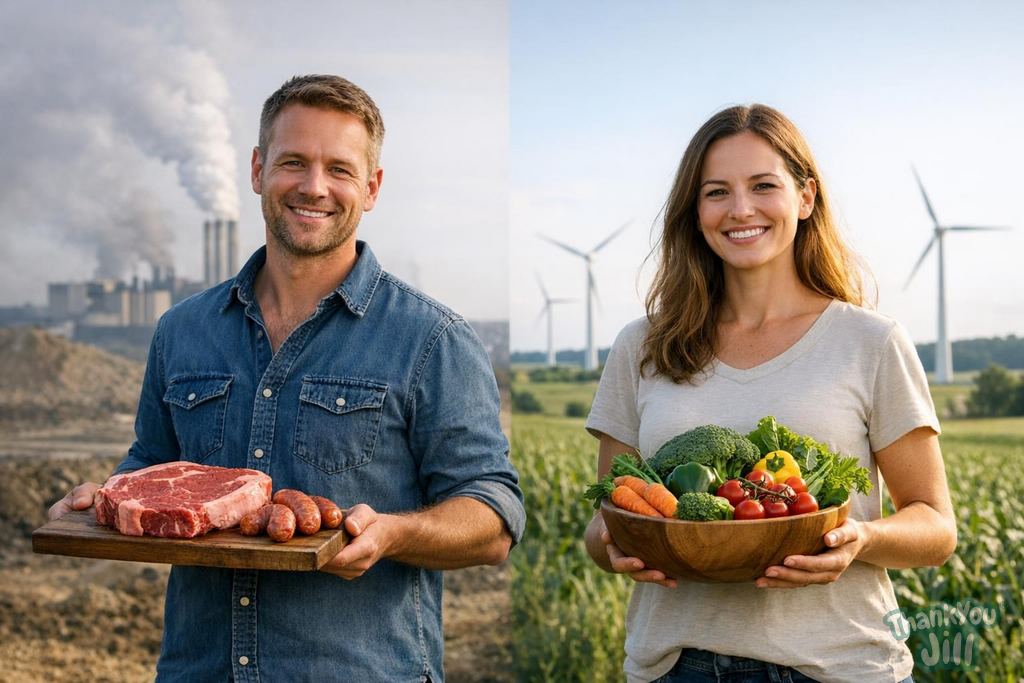
The comparison between the environmental impact of meat and plant-based foods has become one of the most polarizing topics in the food debate: on one side, those who argue that everyone should become vegan to save the planet, on the other, those who claim that "pasture-raised livestock can sequester carbon" and that meat is "natural." The scientific reality is more nuanced than either extreme position, but the direction of the evidence is clear and unequivocal: the production of animal-based foods has a systematically and significantly higher environmental impact than plant-based equivalents across nearly all measured dimensions.
The Numbers: Emissions per kg of Protein
Comparing foods by "kg of product" can be misleading because protein content varies enormously. Comparing by "100g of protein" is fairer. Emissions of kgCO2eq per 100g of protein (Poore and Nemecek, 2018): beef (global average): 49.9 kg CO2eq. Lamb and goat: 19.9. Pork: 7.6. Poultry: 5.9. Eggs: 4.2. Farmed fish (average): 3.5. Crustaceans (farmed shrimp): 18 (very high due to feed-intensive practices). Tofu: 3.5. Legumes: 0.9. Nuts: 2.4. The transition from 100g of protein from beef to 100g of protein from legumes reduces emissions by 98%. The transition from beef to poultry reduces emissions by 88%. The transition from beef to fish (average) reduces emissions by 93%.
Carbon Sequestered by Pastures: The Regenerative Livestock Myth
A frequent argument in defense of meat is that pasture-raised livestock can sequester carbon in the soil and therefore have a low or even negative net carbon footprint. The most comprehensive scientific analysis on this topic (Garnett et al., 2017, Grazed and Confused?) concluded: the carbon sequestration potential of pasture-raised livestock (estimated at 0.6 Gt CO2 per year globally) is orders of magnitude lower than the total emissions of the animal sector (7.1 Gt CO2eq per year according to the FAO). It's not a solution to the problem: it's a marginal benefit that doesn't change the overall assessment. Extensive pasture-raised livestock still has an enormously higher environmental impact than plant-based agriculture, even if lower than intensive livestock farming.
The Nuances the Debate Often Ignores
Not all meat is equal: the difference between a Brazilian beef operation on deforested pastures and a small herd of cattle grazing in the Apennines on permanent meadows unsuitable for agriculture is enormous. Not all plants are equal: farmed shrimp in some Asian regions have a carbon footprint close to that of lamb. Not all food systems are comparable: traditional nomadic pastoralism systems in Africa and Central Asia convert non-arable land into animal protein with no viable plant alternative. Not all transitions are equal: switching from beef to soy, avocado, and almonds can reduce carbon emissions but increase water stress in some regions. The message that emerges is: drastically reduce beef and dairy (the most impactful), evaluate poultry and fish selectively, and eat plenty of legumes, whole grains, vegetables, and fruit.
The Hidden Environmental "Cost": Unpriced Externalities
If food prices reflected their true environmental cost (including externalities like deforestation, water pollution, biodiversity loss, and contribution to climate change), beef would cost approximately €10-14 per 100g instead of €2-4, according to academic estimates. Vegetables and legumes would be relatively cheaper than they are today. This price distortion results from agricultural subsidies historically oriented toward intensive livestock farming and the failure to price environmental externalities. European CAP (Common Agricultural Policy) policies are slowly beginning to reorient toward sustainability, but changes are gradual.

You don't need to become vegan to make a difference. What you need to do is switch from beef to lentils three times a week, from beef to chicken another time, and save beef for special occasions. These three substitutions reduce your food's environmental impact more than any other daily action. Direction matters more than perfection.
The Sustainable Food Pyramid: A Practical Model
The Planetary Health Diet (published in The Lancet in 2019 by the EAT-Lancet commission) is the dietary model that combines human health and planetary sustainability. Its recommendations for an adult consuming 2,500 kcal per day: whole grains 232g, vegetables 300g, fruit 200g, dairy 250g, legumes 75g, nuts and seeds 50g, fish and seafood 28g, eggs 13g (about 1 per week), white meat 29g, red meat 14g (about one burger per week), sugary drinks and sweets at a minimum. This model is not veganism: it's a redistribution of consumption frequency toward a diet with much less red meat, more legumes, more fruit and vegetables. It's compatible with the traditional Mediterranean diet and with Italian food culture.
How to Communicate the Impact of Meat Without Guilt
Guilt is not a good motivator for long-term dietary change. What works better: break change into small concrete steps ("one meat-free dinner per week" instead of "you must become vegetarian"), emphasize positive benefits (legumes = cheaper + healthier + less impact), present meat reduction as a modern and conscious choice rather than a sacrifice, showcase the variety and deliciousness of plant-forward Italian cuisine (Italian regional tradition is incredibly rich in traditional dishes based on legumes, grains, and vegetables).
The Role of Public Policy: What the State Can Do
Individual choices matter, but the system changes primarily through public policy. The most effective levers for reducing the environmental impact of the food system: reorienting agricultural subsidies away from intensive livestock farming toward sustainable plant-based agriculture, taxing the environmental externalities of animal production, mandatory sustainability standards in public food procurement (school cafeterias, hospitals, public offices), mandatory labeling of the environmental footprint of foods, stricter regulations on traceability and deforestation. As citizens: we support these policies by voting and participating in public debate.
Frequently Asked Questions
What is the difference in CO2 emissions between beef protein and legume protein?
Beef protein emits approximately 50 kg of CO2eq per 100g, while legume protein emits only 0.9 kg CO2eq, a 98% reduction when switching from beef to legumes.
How does pasture-raised livestock affect carbon sequestration and overall environmental impact?
Pasture-raised livestock sequesters a marginal amount of carbon (0.6 Gt CO2/year) compared to total emissions from the animal sector (7.1 Gt CO2eq/year), so it doesn't offset the high environmental impact of meat production.
When is it worthwhile to reduce meat consumption to have a significant environmental impact?
Drastically reducing beef and dairy consumption, replacing them with legumes, poultry, and fish selectively, is the most effective strategy to reduce your food's environmental footprint without having to become vegan.
How can public policy help reduce the environmental impact of meat production?
The most effective policies include reorienting agricultural subsidies toward sustainable plant-based agriculture, taxing the environmental externalities of meat, imposing sustainability standards in public food services, and mandating environmental footprint labeling on foods.


Latest News




Comments
No comments yet. Be the first!
Leave a comment