


 Italiano
 Français
 Deutsch
 Español
 Português
 Svenska
 Suomi
Suomi
Avocado, Quinoa, Soy
The Dark Side of Superfoods
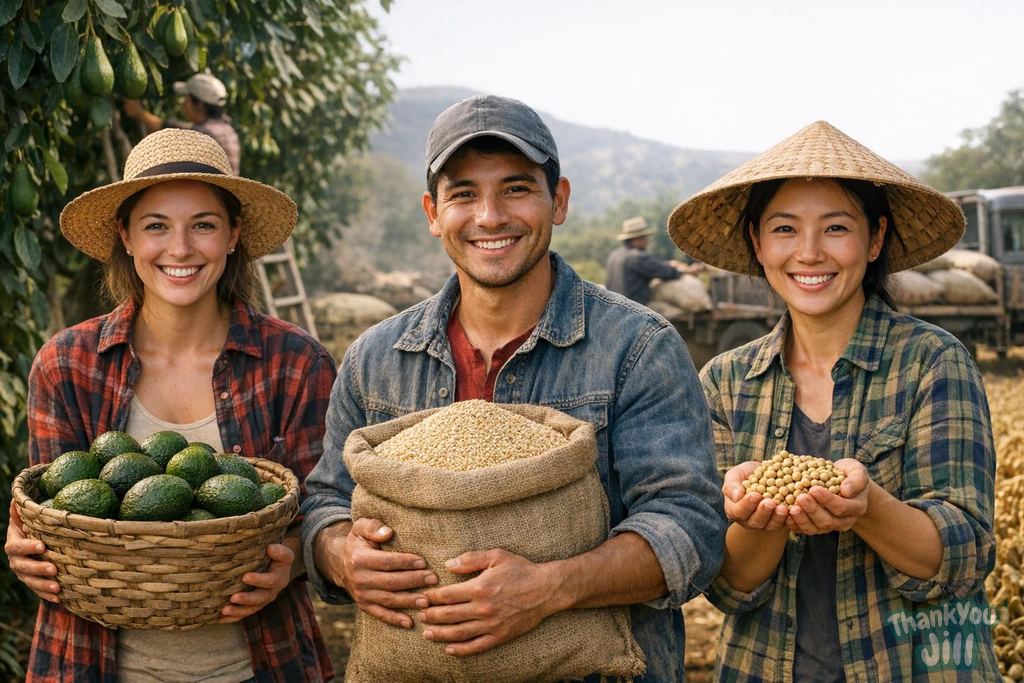
The global popularity of superfoods has transformed entire agricultural systems in developing countries, with environmental and social consequences often overlooked in the health marketing that promotes them. This isn't about demonizing these foods (many are genuinely nutritious) or leaving well-intentioned consumers in the dark—it's about understanding the full context of their production so you can make more informed choices and support more responsible commercial solutions.
Avocado: The Fruit of Climate Change and Water Crisis
Avocado has become the symbol of the global hipster brunch, but its production carries significant environmental and social consequences. Water stress: avocado requires roughly 2,000 liters of water per kilogram of product (compare that to 200 liters for tomatoes, 180 liters for zucchini). In Chile, avocado cultivation in the Petorca region has led to the depletion of local rivers and aquifers, cutting off rural communities from access to drinking water. Deforestation in Mexico: the state of Michoacán (responsible for 40% of global production) has seen significant expansion of avocado plantations at the expense of pine and oak forests, with documented involvement of organized crime (narcos) in plantation management. The "avocado cartel" is a real phenomenon that taints the commercial supply chain. As a consumer: prioritize avocados from Fairtrade-certified producers or European production (Spain, Portugal, Sicily: growing local production with lower transport impact and often better local water conditions).
Quinoa: The Paradox of the Inca Grain
Quinoa became the trendiest grain of the last 20 years after FAO researchers promoted its nutritional properties (complete protein, gluten-free). Global demand exploded: between 2006 and 2013, the price of quinoa in Bolivia and Peru tripled. The paradoxical effect: Andean communities that had cultivated and consumed quinoa as a staple food for millennia stopped eating it because it became too expensive for them, preferring to sell their entire harvest for export and buy imported rice and pasta with the proceeds. A "nutritional tax" paid by indigenous communities to satisfy the demand of wealthy consumers in rich countries. The problem has partially eased with expanded cultivation, but it remains an emblematic case of how global food trends impact local communities.
Soy: The Superfood with a Two-Sided Environmental Footprint
Soy is among the most nutrient-dense plant-based foods (complete protein, isoflavones, fiber) and simultaneously one of the primary drivers of Amazon deforestation. But this contradiction resolves when you understand that 75% of the world's soy production is animal feed (not human food). The soy that ends up in tofu, soy milk, tempeh, and edamame represents roughly 6–7% of global soy production. From an environmental perspective: consuming soy as a direct food source is far more efficient and less impactful than consuming it "transformed" through animal farming. Tofu and soy milk aren't the environmental problem with soy—they're the solution compared to meat produced with soy.
California Almonds: Sustainability Under Water Stress
California almonds (which account for 80% of global production) require roughly 16 liters of water per individual almond (about 3,800 liters per kilogram of shelled almonds). Central California, where production is concentrated, is a region under permanent water stress: rivers running dry, aquifers declining. On the other hand, almonds are among the foods with the best nutritional profile relative to environmental impact (high in vitamin E, calcium, protein, monounsaturated fatty acids). As with avocado: European almonds (Puglia, Sicily, Spain) have a much lower water footprint due to different climate characteristics and are preferable from a water sustainability standpoint.

The superfood that ends up in an Instagram smoothie is born in a field where someone else lives with the consequences we don't see. It's not the well-intentioned consumer's fault—it's the system that hides these connections. Being informed, diversifying, choosing local when possible, preferring certifications: small actions that shift demand toward better solutions.
How to Enjoy Superfoods More Consciously
Avocado: choose Spanish or Italian avocado (Sicily, Calabria, Sardinia: growing production) over Mexican or Chilean. Buy only when in season (October–March for Mediterranean varieties). Quinoa: purchase from Fairtrade-certified Bolivian or Peruvian cooperatives or with documented fair trade: this ensures the premium price reaches producing communities. Soy: tofu and edamame from European soy (increasingly planted in Italy and France) or non-GMO certified is the most sustainable choice. Almonds: prefer Puglian or Sicilian almonds: often pricier but with a much lower water footprint and greater freshness.
Italy's Forgotten Superfoods: Just as Nutritious, Zero Shipping Problems
Italy has its own local superfoods that don't require 10,000 kilometers of transport and don't impoverish distant communities: Italian hemp (omega-3, complete proteins, ecological cultivation with zero pesticides), Piedmont hazelnuts (vitamin E, oleic acid, no intensive irrigation needed), Trentino-Alto Adige blueberries (anthocyanins, vitamin C, grow wild), Apennine chestnuts (carbohydrates, minerals, antioxidant tannins), Italian lupine (complete plant protein, nitrogen-fixing cultivation), arugula and wild chicory (nitrates, lutein, polyphenols). These foods don't have the marketing buzz of exotic superfoods, but they have excellent nutritional profiles and a millennia-long history in the Mediterranean diet.
How to Choose the Right Certifications for Superfoods
For exotic products you can't replace with local equivalents: Fairtrade: guarantees a minimum price to producers and a premium for social investments in communities. Rainforest Alliance: focused on ecosystem protection and worker welfare. European organic (EU leaf logo): guarantees absence of synthetic chemical pesticides but doesn't necessarily ensure fair trade or water sustainability. Fair for Life (IMO): similar to Fairtrade with additional social criteria. None of these certifications is perfect, but their presence indicates a verifiable commitment to sustainability beyond mere marketing.
Frequently Asked Questions
What are the main environmental consequences of avocado cultivation globally?
Avocado cultivation requires significant water, causing water stress in regions like Chile, and contributes to deforestation in Mexico, where plantations have replaced natural forests, with social impacts also linked to organized crime.
How do you choose quinoa in a way that supports local producing communities?
It's advisable to buy quinoa from Fairtrade-certified cooperatives or with documented fair trade, to ensure that proceeds reach Andean indigenous communities directly, preventing the high price from penalizing their traditional consumption.
Why is consuming soy as a direct food more sustainable than its use as animal feed?
About 75% of global soy is destined for animal feed, driving deforestation. Consuming soy directly (tofu, soy milk) reduces environmental impact because it avoids the resource loss linked to meat production derived from soy.
When is it worth preferring European almonds over Californian ones from an environmental standpoint?
European almonds, grown in regions with less water stress like Puglia and Sicily, have a much lower water footprint compared to Californian almonds, produced in areas with severe water scarcity, making the European choice more sustainable.
Latest News



Comments
No comments yet. Be the first!
Leave a comment