


 Italiano
 Français
 Deutsch
 Español
 Português
 Svenska
 Suomi
Suomi
Intensive Farming
Emissions and Pollution
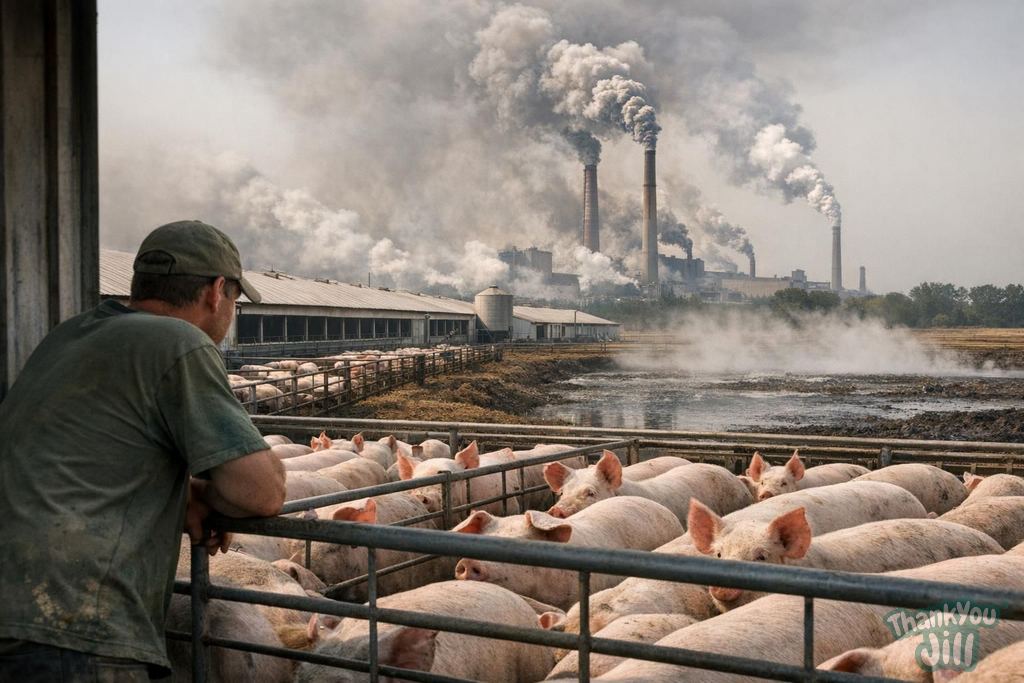
The livestock sector is responsible for 14.5% of global greenhouse gas emissions, according to the FAO (Tackling Climate Change Through Livestock report, 2013). This figure exceeds the entire global transportation sector (14.3%). Methane produced by enteric fermentation in cattle, nitrous oxide (N2O) from livestock effluent, and CO2 from deforestation for pasture and feed are the three main sources. But the impact of intensive farming extends far beyond greenhouse gas emissions: it includes water pollution, enormous land and water consumption, biodiversity loss, massive antibiotic use, and compromised animal welfare.
How emissions are distributed across livestock species
Not all farmed animals contribute equally to emissions. Cattle (dairy and beef): responsible for 65% of total livestock sector emissions. Methane from enteric fermentation (the "rumination" process) in cattle is the primary source—each cow produces roughly 100–120 kg of methane annually. Pigs: about 9% of sector emissions, mainly from manure and feed production. Poultry: about 8% of sector emissions; emissions per kilogram of protein produced are far lower than for cattle. Small ruminants (sheep and goats): about 6% of sector emissions. Aquaculture: varies enormously by species and system (nearly zero for mussels, high for intensively farmed tropical shrimp). Switching from beef to poultry reduces livestock sector emissions far more significantly than transitioning to "more sustainable" beef production systems.
Water pollution: effluent and nitrates
Intensive farms produce enormous quantities of livestock effluent (manure and slurry): a single intensive operation with 1,000 cattle produces effluent equivalent to that of a city of 20,000–30,000 people—but without the mandatory treatment that urban wastewater undergoes. When this effluent is spread on fields beyond the soil's absorption capacity, or when it runs off into surface waters, it causes: eutrophication of rivers and lakes (algal blooms that consume all oxygen, killing aquatic life), groundwater contamination with nitrates (in Italy, many areas of the Po Valley have nitrate concentrations in groundwater exceeding legal limits due to livestock density), and soil acidification from ammonia deposition. The Po Valley is Europe's region with the highest livestock density and among the highest PM2.5 air pollution levels, partly attributable to ammonia emissions from farming.
Antibiotics in intensive farming: a ticking time bomb
73% of antibiotics used globally are consumed in animal farming. In the EU, their use as growth promoters has been banned since 2006, but preventive use (not for sick animals, but to prevent disease in overcrowded conditions) remains widespread. The problem: bacteria exposed continuously to low antibiotic doses develop genetic resistance. These resistance genes spread into the environment (soil, water, air) and reach human pathogens. The WHO has listed antimicrobial resistance (AMR) among the ten greatest global public health threats. The connection to intensive farming is documented: farm workers and nearby communities have higher rates of colonization by resistant bacteria.
Animal welfare in intensive farming
Intensive farming maximizes production by minimizing space and time. Typical conditions include: hens in cages with 450 cm² per bird (less than an A4 sheet) until 2012 in the EU (conventional cages now banned, but "enriched cages" allow only 750 cm²), pigs in sheds with no outdoor access at densities of 30–40 kg of animal per m², calves in individual boxes in early weeks, and dairy cattle in permanent indoor housing. Animal welfare isn't just an ethical issue—it's a public health matter. Animals under chronic stress have compromised immune systems, require more antibiotics, and produce meat with inferior nutritional profiles (less omega-3, less vitamin D) compared to pasture-raised animals.

Intensive farming produces 14.5% of global emissions—more than every car, plane, and ship in the world combined. It's not a farmer's problem; it's a structural problem of a system demanding meat at three euros a kilogram. The real price is paid by the climate, groundwater, and antibiotics that no longer work. And we'll all pay it.
How to recognize more ethical meat when shopping
Animal welfare labels in Italy and Europe: EU organic (mandatory pasture or outdoor access, reduced animal density, preventive antibiotics banned), Label Rouge (France: higher welfare standards than conventional), RSPCA Assured (UK), Neuland (Germany). For Italian meat: PDO and PGI often (though not always) indicate native breeds and traditional methods with more space. Pasture-raised or grass-fed: the term isn't regulated in Italy but is indicative. Reduce your total meat consumption and invest in quality: this is the strategy that cuts both environmental impact and contribution to compromised animal welfare.
Alternatives to intensive farming: what already exists
Extensive and semi-extensive farming: lower density, pasture access, shorter supply chains. Produces less per hectare but with far lower environmental impact per animal. Organic and biodynamic farming: higher animal welfare standards, preventive antibiotics banned, organic feed. Alternative proteins: insects (15–20 times fewer emissions than cattle per kilogram of protein), cultivated meat (still in commercial development but potentially transformative), precision fermentation (engineered yeasts producing specific proteins like casein without cows). The change coming to the protein sector over the next 20–30 years could be more radical than any previous food revolution.
EU animal welfare regulations: what's changing
The European Union has launched a review of farm animal welfare standards (Farm to Fork Strategy and revision of the Animal Welfare Directive) that aims for 2023–2027: gradual elimination of cages for hens (conventional cages already banned, enriched cages now too), improved conditions for pigs and cattle, mandatory labeling of farming method on all animal products. These changes result from years of pressure by consumers and animal protection organizations. Your consumption and purchasing choices have been part of this pressure.
Frequently Asked Questions
What is the impact of greenhouse gas emissions from intensive farming compared to the transportation sector?
Intensive farming produces 14.5% of global greenhouse gas emissions, exceeding the transportation sector, which accounts for 14.3%. Methane from enteric fermentation in cattle is the primary source of these emissions in the livestock sector.
How does antibiotic use in intensive farming affect public health?
73% of global antibiotics are used in farming, often preventively. This promotes the development of resistant bacteria that spread into the environment and can infect humans, representing a serious public health threat according to the WHO.
How do intensive farms cause water pollution?
Intensive farms produce large quantities of livestock effluent that, when spread excessively or running off into waterways, causes eutrophication, nitrate contamination of groundwater, and soil acidification, damaging aquatic ecosystems and drinking water quality.
How can you recognize products from more ethical farms?
Look for labels like EU organic, Label Rouge, RSPCA Assured, or Neuland, which guarantee higher animal welfare standards, pasture access, and preventive antibiotic bans. Reducing total meat consumption and choosing quality helps support more sustainable farming.
Latest News




Comments
No comments yet. Be the first!
Leave a comment