


 Italiano
 Français
 Deutsch
 Español
 Português
 Svenska
 Suomi
Suomi
Balcony Garden
What to Grow and How
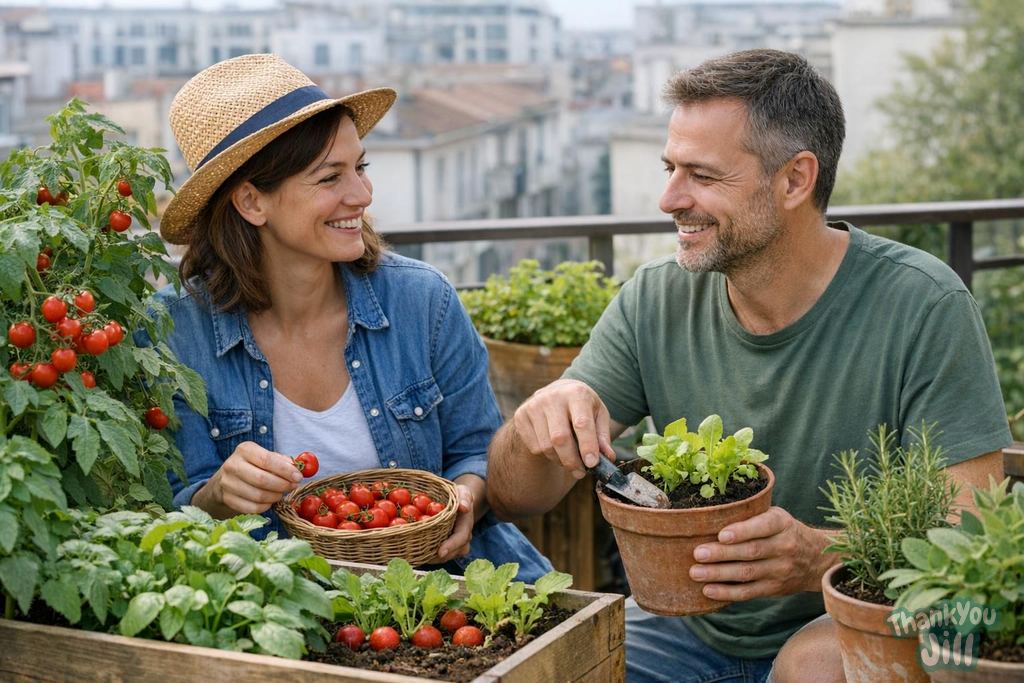
Millions of Italians have a balcony or terrace they use for hanging laundry and keeping a few ornamental plants. That same space, with modest investment and a bit of seasonal attention, can become a productive garden supplying fresh herbs year-round, salads in spring and fall, cherry tomatoes in summer. You don't need to be an expert: just the right information and the courage to start.
Exposure is everything: understanding your balcony
Before deciding what to grow, analyze your balcony's sun exposure. South or Southwest with full sun (6+ hours of direct sunlight): you can grow almost anything, including tomatoes, peppers, eggplants, and green beans. These "Mediterranean" crops need heat and light. East (morning sun, afternoon shade): ideal for salads, spinach, cabbage, and shade-tolerant herbs (parsley, chives, chervil). Plants won't suffer from summer afternoon heat. West (morning shade, afternoon sun): similar to East, with crops preferring moderate sun. North or shaded all day: challenging for vegetables, but herbs like mint, parsley, and watercress tolerate shade. Cutting lettuces like red leaf lettuce grow with just 3-4 hours of sun. Don't try growing tomatoes on a north-facing balcony—it's a losing battle.
Containers: the choice that makes the difference
Container size determines growing success. General rule: more soil = more roots = more production. Annual herbs (basil, parsley): 1-3 liter pots. Perennial herbs (rosemary, thyme, sage): 5-10 liter pots (roots need space to develop). Salads and lettuces: boxes 20-30 cm deep (10-20 liter volume). Cherry tomatoes: at least 20-30 liter pots (tomatoes have deep, extensive root systems). Peppers and eggplants: 15-20 liters. Dwarf green beans: 10-15 liters (climbing varieties: 20 liters with support). Zucchini: at least 40-50 liters (or directly in large troughs). Material: terracotta is attractive but heavy and dries quickly; plastic is lightweight and retains moisture; grow bags (fabric sacks) are economical, lightweight, and promote root aeration (excellent for tomatoes and potatoes).
Potting soil for your balcony: don't use garden soil
Garden soil (or soil collected from a park) isn't suitable for containers: it compacts quickly, drains poorly, and may contain pathogens or contaminants. For balcony containers: mix quality universal potting soil (60%) + mature compost (30%) + perlite or coarse sand (10%) to improve drainage. Add a layer of gravel or terracotta shards at the bottom of the pot before filling with soil: it improves drainage. Container soil depletes of nutrients in 1-2 years: each spring, remove old soil (use it in a garden bed or as mulch) and replace with fresh potting soil, or add a layer of compost on the surface without completely emptying the pot.
Watering your balcony garden: the main challenge
Containers dry out much faster than ground soil: in summer heat and wind, a small pot may need daily watering or even twice daily. Strategies to reduce watering frequency: choose large containers (more soil = more water reserve), mulch the soil surface with straw or fine bark, use saucers with water (water rises through capillary action and is absorbed by roots), install a drip irrigation system with timer (automates watering during vacations and hot periods). How to know when to water: stick your finger into the soil up to the first knuckle—if it's dry, water. If still moist, wait. Better to water less frequently but deeply (thorough watering that saturates the entire soil volume) than often and lightly (surface wetting only).
The most productive crops per square meter of balcony
If you have only 2 m² of sunny balcony, these crops offer the best production-to-space ratio: basil (one 3-liter pot produces enough basil for a family all summer and for making pesto), cherry tomatoes (one large 25-liter pot produces 3-5 kg of cherry tomatoes from July to October), chives (perennial, grows without care, provides year-round in mild climates), strawberries (can be grown in vertical pocket planters: 20 plants in 0.5 m² of vertical space), dwarf green beans (excellent yield for space, frequent harvesting stimulates more production), cutting lettuce (harvest leaf by leaf, always available March to November with staggered plantings).

That sunny balcony you have isn't a place where geraniums wait for summer: it's already a garden waiting to be recognized. One large pot, the right soil, regular water, a bit of sun—that's all you need for your first homegrown tomato in July. That tomato tastes like nothing you'll find at the supermarket.
The seasonal calendar for your balcony garden
February-March (warm indoors on a windowsill): sow basil, tomatoes, peppers in small seed trays with seed-starting mix. April (on the balcony, covered at night if still cold): transplant first salads, spinach, radishes. May (after last frost): transplant tomatoes, peppers, eggplants outdoors. Sow green beans directly in pots. June-July: peak season. Daily watering in summer. Continuous harvesting to stimulate production. August-September: sow fall lettuces, spinach, radishes for fall harvest. October-November: harvest last tomatoes before cold, sow garlic and onions for spring, cover perennial herbs with frost cloth.
How to avoid the five most common balcony garden mistakes
1. Pots too small: the number one problem. A tomato in a 5-liter pot will never produce like one in a 25-liter pot. 2. Poor soil: invest in quality potting soil enriched with compost. 3. Irregular watering: tomatoes hate alternating drought and heavy watering (causes blossom-end rot). Water regularly and consistently. 4. Too much sun for the wrong plants: salads and spinach burn in full summer afternoon sun. Shade or position wisely. 5. Sowing everything at once: staggered sowings every 3-4 weeks ensure continuous production instead of everything at once then nothing.
Vertical gardening: triple your balcony space
Your balcony walls and railings are often-overlooked vertical growing space. Practical solutions: fabric pocket planters hung on railings: ideal for strawberries, herbs, salads. Felt versions are economical and fit 20-30 plants in 1 m² of vertical space. Recycled vertical pallets: a pallet stood upright, with holes filled with soil, is free vertical structure for herbs and small plants. Cascading balcony planters: available at garden centers, they use railing height for 3-4 tiers of growing. Climbing plants on netting: green beans, cucumbers, climbing peas climb vertical netting producing fruit across the entire surface.
Frequently Asked Questions
How do I choose the right container for growing tomatoes on a balcony?
Growing tomatoes on a balcony requires a pot of at least 20-30 liters, because roots are deep and need space. Larger containers retain moisture better and promote abundant production.
What's the ideal balcony exposure for growing peppers and eggplants?
South or Southwest exposure with at least 6 hours of direct sun is ideal for peppers and eggplants, since these Mediterranean crops need heat and light to thrive.
How do I know when it's time to water potted plants on my balcony?
To know when to water, stick your finger into the soil up to the first knuckle—if it's dry, it's time to water. Better to water less often but abundantly to saturate the entire soil volume.
When is vertical gardening worth using on a balcony, and which crops work best?
Vertical gardening is worthwhile when horizontal space is limited. It's ideal for growing strawberries, herbs, and salads in fabric pockets or cascading planters, using walls and railings to triple your growing surface.
Latest News


Comments
No comments yet. Be the first!
Leave a comment