


 Italiano
 Français
 Deutsch
 Español
 Português
 Svenska
 Suomi
Suomi
The Chestnut Tree
The bread tree that fed Italy for centuries
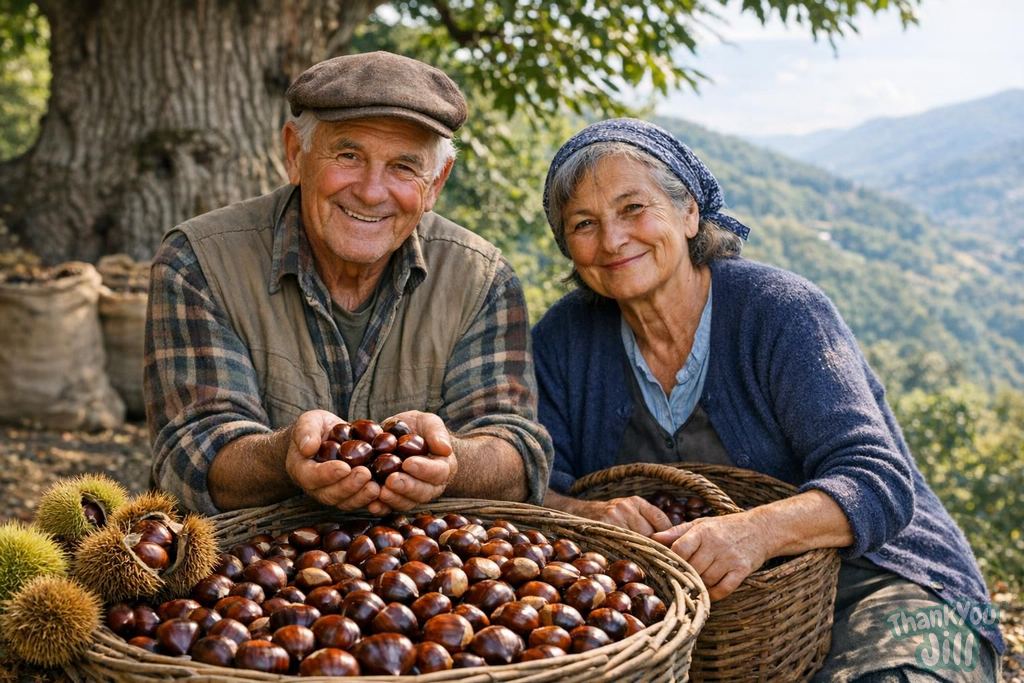
There is an Italy that doesn't appear in history books, but survives in the scent of November when chestnuts roast over braziers in mountain town squares. It is the Italy of the chestnut tree — a poor, hardworking, and generous Italy that endured for centuries thanks to a tree that gave almost everything: flour, wood, leaves for livestock, summer shade, winter fuel.
The bread tree: a thousand-year friendship
The chestnut tree (Castanea sativa) is not native to Italy, but has lived here so long it has become an integral part of the Apennine landscape. The Romans called it arbor panis — the bread tree — and promoted its cultivation throughout the empire. In Apennine regions where wheat didn't grow well, the chestnut became the true subsistence crop. Chestnut flour (sweet flour, as it's still called in Tuscany) fed generations of mountain dwellers: it was used to make polenta, fritters, bread, necci, and castagnaccio. In Calabria, Campania, Liguria, on Mount Amiata and the Apuan Alps, the survival of rural communities was literally tied to the fortunes of the chestnut harvest. A poor chestnut year meant real hunger.
A generous tree down to its roots
Nothing from the chestnut tree goes to waste. The fruits (chestnuts, technically seeds inside a spiky burr) are rich in starches, sugars, vitamin C, potassium, and fiber. They are naturally gluten-free, making them valuable today for those with celiac disease. Chestnut wood is hard, resistant, and rich in natural tannins that make it rot-resistant — perfect for poles, railroad ties, beams, barrels, and vats. The bark and leaves contain tannins used for tanning hides. The male flowers (the long yellow catkins of spring) produce abundant nectar for bees: chestnut honey is one of Italy's most distinctive honeys — dark, bitter, with an intense aroma. Dead wood in chestnut forests hosts stag beetles, woodpeckers, dormice, and dozens of fungal species, including prized chanterelles and porcini mushrooms.
Chestnut blight: a twentieth-century tragedy
In 1938, a pathogenic fungus from North America (Cryphonectria parasitica) accidentally arrived in Europe and devastated Italian chestnut forests within decades. Chestnut blight — a disease that produces reddish ulcerations on the bark and kills branches — destroyed entire forests. Many farmers abandoned their chestnut groves, accelerating the depopulation of the mountains. Today the situation has improved thanks to the introduction of hypovirulent strains of the fungus (a form of biological control) that has reduced mortality, but Italian chestnut forests still need care and attention. Some ancient varieties — such as Marrone di Marradi (Emilia), Marrone di Castel del Rio, and Marrone della Valle di Susa — are Slow Food presidia and deserve protection and promotion.
The chestnut tree today: a heritage to rediscover
In recent years, there has been a rediscovery of the chestnut tree. Chestnut festivals, specialty products, and chestnut groves reclaimed by young farmers. Organic chestnut flour has returned to the shelves of specialty shops. Mountain communities that have maintained traditional chestnut groves are today custodians of a landscape, food, and cultural heritage of immeasurable value.

The chestnut tree needs no fertilizers or special attention. It only needs someone to plant it, respect it, and let it do what it has done for two thousand years: nourish those around it.
Chestnuts: how to harvest, store, and use them in the kitchen
If you're lucky enough to live near a chestnut grove, here's what you need to know to enjoy it to the fullest.
- When to harvest: harvesting takes place between September and November, depending on altitude and variety. Chestnuts fall naturally when ripe: don't shake the branches, wait for them to fall on their own or use a stick to help open burrs.
- How to recognize a good chestnut: it should be hard, shiny, and heavy. If it sinks in water, it's healthy; if it floats, it's empty or damaged — discard it.
- How to store them: soak them in cold water for 8-9 days (changing the water daily). Then dry them and store in a cool, well-ventilated place. Alternatively, blanch and freeze them: they keep perfectly for months.
- Properly roasted chestnuts: score the shell with a crosswise cut, place them in a perforated pan and cook over high heat for 15-20 minutes, shaking often. The secret is to let them rest for 5 minutes wrapped in a damp cloth: they peel better and become even softer.
- Chestnut flour: look for organic flour from certified sources. Use it to make castagnaccio (with rosemary, pine nuts, and raisins), necci (Tuscan crêpes), or to enrich bread and pastry doughs. It has a sweet, intense flavor unlike any other flour.
- Visit a chestnut festival: in October and November, every Apennine village has its own festival. They are authentic events tied to the territory, where you can eat chestnuts in every possible form. Bring the children: it's food and cultural education in the most beautiful sense of the term.
If you can, plant a chestnut tree. It grows well between 300 and 1,000 meters elevation, preferring acidic and well-drained soils. In twenty years it will start producing. In fifty years it will already be a magnificent tree. Your longest gift to future generations.
Frequently Asked Questions
What are the signs to tell if a chestnut is good to harvest?
A good chestnut is hard, shiny, and heavy. If it sinks in water it's healthy, while if it floats it's empty or damaged and should be discarded. It's important to wait for them to fall naturally or help open burrs without shaking the branches.
How do you properly store chestnuts to keep them fresh for a long time?
To store chestnuts, soak them in cold water for 8-9 days, changing the water daily. Then dry them and store in a cool, well-ventilated place. Alternatively, blanch and freeze them, so they keep perfect for months.
When is it worth planting a chestnut tree and what conditions does it prefer to grow well?
The chestnut tree grows well between 300 and 1,000 meters elevation, preferring acidic and well-drained soils. It's worth planting if you have space, because in 20 years it starts producing and in 50 becomes a magnificent tree, a long-term investment for future generations.
What is the impact of chestnut blight and how has it been controlled?
Chestnut blight, caused by the fungus Cryphonectria parasitica, devastated European chestnut forests in the twentieth century. Today it is controlled thanks to hypovirulent strains of the fungus, a form of biological control that has reduced mortality, but chestnut forests still require care and attention.


Latest News



Comments
No comments yet. Be the first!
Leave a comment