

 English
 Italiano
 Français
 Deutsch
 Español
 Português
 Svenska
 Suomi
Suomi
Learning to Identify Trees with Children
Games, outings, and hands-on activities for families in nature
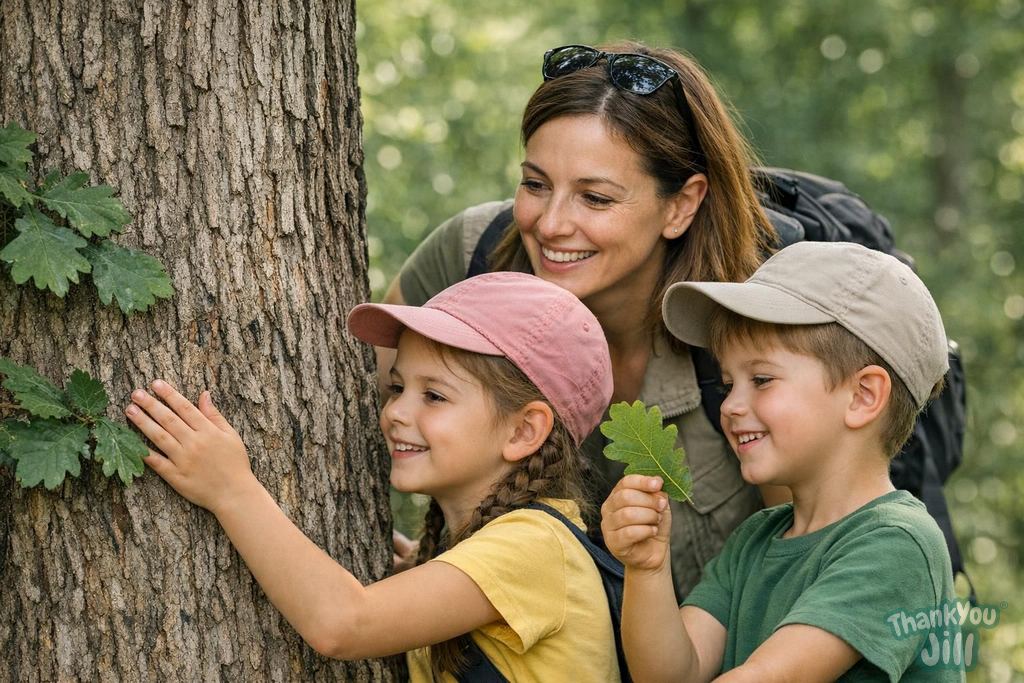
Children learn best when they touch, smell, collect, and draw. Tree botany taught from books becomes abstract and boring. The same botany taught on an afternoon in the park, with hands in the soil and acorns in their pockets, becomes an adventure that stays with them for years. You don't need to be an expert: all you need is curiosity. And fortunately, children already have plenty of that.
Why teach children to identify trees
It's not just about botanical knowledge. Identifying trees builds in children a sense of belonging to their territory: a child who knows the name of the beech tree in the neighborhood park has a connection to that place that someone who doesn't know it cannot have. It builds attention to detail: distinguishing one type of oak from another requires careful observation, comparison, and hypothesis testing — valuable cognitive skills. It builds respect for nature: it's hard to cut down or damage a tree you've learned to know as a living being with a history and a name. And it builds emotional memory: the child who learns the name of the chestnut tree from their grandfather will remember it for life, along with their grandfather. Tree botany is one of the most powerful vehicles for passing down knowledge about the land across generations.
Games for younger children (ages 3-6)
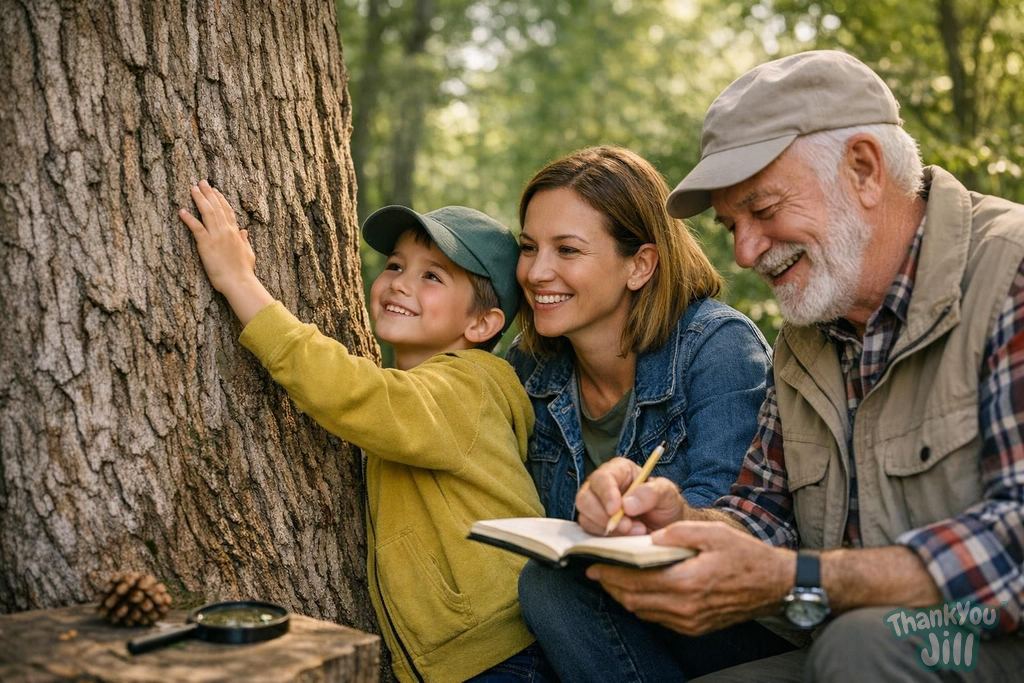
The mystery bag: put several forest objects in a cloth bag (an acorn, a pinecone, a leaf, a piece of bark, a chestnut). The child puts their hand in without looking and must describe what they feel (smooth, rough, round, spiky) and then pull out the object. Natural collage: bring home leaves from 5-6 different species and glue them onto cardstock. Write the name of each tree under its corresponding leaf. Hang it in their room as a learning poster. The forest quiz: walk through a park and ask "what color are the leaves on that tree? Are they pointed or rounded? Are there fruits on the ground?" Guided observation questions are the best tool for training attention without making it boring. The tree hug game: ask children to hug a tree. Then ask: is it smooth or rough? Is it cold or warm? How many people would it take to wrap their arms around it completely? This activity (also suggested by forest bathing programs) creates physical and emotional contact with the tree that children remember for years.
Activities for children ages 7-12
The tree book: each child keeps a notebook where they record trees they encounter — name, drawing of the leaf, photograph of the bark, date and location. It's a modern, personal, portable herbarium. The seasonal fruit hunt: in autumn, challenge children to find 10 different fruits or seeds (acorn, beechnut, samara, chestnut burr, pine cone, rowan berry, hawthorn berry...) in an hour of walking. Who finds the most? Dendrodrologist for a day: bring a measuring tape and measure the circumference of 5 different trees. Calculate the approximate age of each tree using the formula: circumference in cm ÷ 2.5 = approximate age in years. The child who measures a beech tree with a 120 cm circumference and discovers it's about 48 years old begins to understand the time scale of trees.

A child who knows the name of the beech tree in the park, who remembers where the chestnuts grow in grandfather's forest, who can recognize birch bark — that child has something that can never be taken away: a living connection with the natural world.
Ideas for practical outings with children of all ages
- The five-tree walk: choose 5 common trees in the park near your home. Every week or month, visit the same 5 trees and observe what has changed. Do they flower in March? Do leaves emerge in April? Do they change color in October? This longitudinal observation project is the best way to help children understand the cycle of seasons through trees.
- Bark rubbing: place a white sheet of paper against a tree's bark and rub it with a crayon or charcoal. The texture of the bark emerges like a graphic relief. Each tree produces a different rubbing. Collect the rubbings in an album: beech (smooth and almost textureless), oak (deeply incised), birch (with horizontal stripes from lenticels), pine (scaly). It's art and botany combined.
- The young naturalist's kit: for a meaningful birthday gift, put together: a 5x magnifying glass, a moisture-resistant notebook, colored pencils, a guide to Italian trees for children (excellent illustrated guides exist). It costs less than 20 euros and lasts throughout childhood.
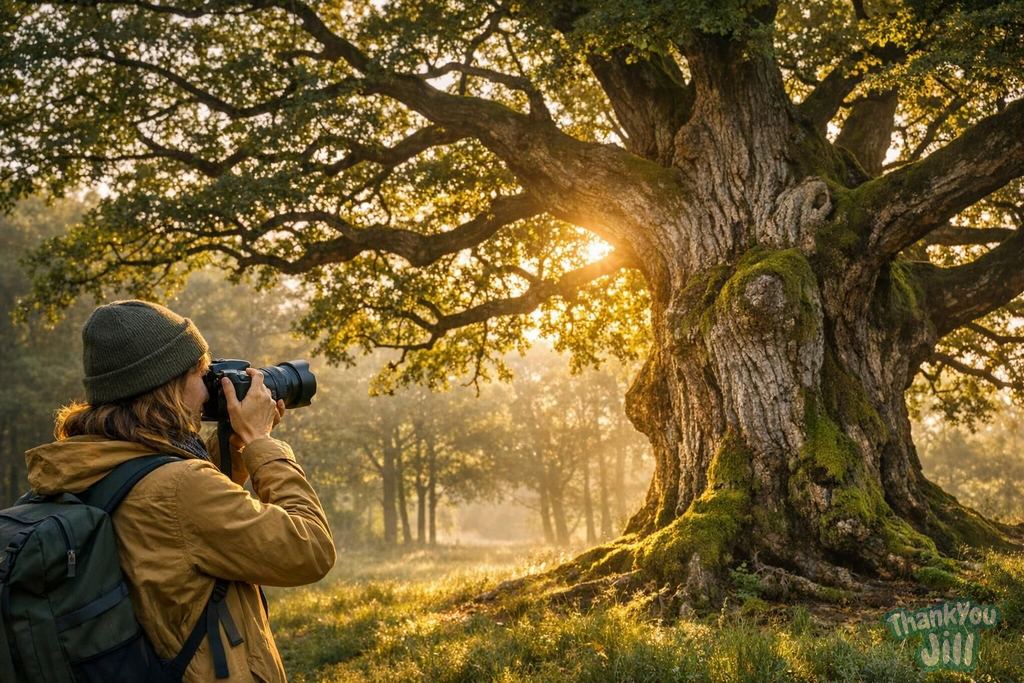
- The seasonal photography project: task children with photographing the same tree every month for an entire year. At year's end, print the 12 photographs in chronological order and glue them onto cardstock. The result is extraordinary: seeing the entire annual cycle of a single tree in 12 images.
- Visits to educational forests: many Italian National Parks and Nature Reserves offer guided visits for school groups and families with naturalist guides. Gran Sasso National Park, Casentinesi Forests Park, and Ticino Park have specific programs for children. Check the park's website for the "environmental education" section.
- Grandparents and grandchildren in the forest: one of the most beautiful contexts for passing on knowledge of trees is the intergenerational one. Grandparents who lived in the countryside or mountains often know the trees of their territory in a practical, concrete way — they know when to harvest, how to use them, what history they have. Creating opportunities for mixed outings with grandparents and grandchildren in the forest is one of the most valuable educational investments a family can make.
You don't need a distant forest. An urban park with 20 different trees is already an extraordinary laboratory. What you need is a curious adult beside a child. The rest follows naturally.
Frequently Asked Questions
How can I teach children to identify trees in a practical and fun way?
Use sensory games like the mystery bag or forest quiz, which stimulate tactile and visual observation. Activities like natural collage or tree hugging create emotional connection and facilitate experiential learning.
Which activities are best suited for children ages 7-12 to learn about trees?
For this age group, activities like the tree book for personalized records, seasonal fruit hunts, measuring tree circumference to estimate age, and deeper observations of seasonal cycles are helpful.
Why is it important for children to learn to identify trees in their environment?
Identifying trees develops a sense of belonging to their territory, improves attention to detail, fosters respect for nature, and creates lasting emotional memory, strengthening the emotional bond with the natural environment.
How can I organize practical outings to teach children to observe trees throughout the year?
Organize periodic walks to observe the same trees and their seasonal changes, use techniques like bark rubbing and monthly photography projects to document the annual cycle, making learning continuous and engaging.
Latest News
Comments
No comments yet. Be the first!
Leave a comment