


 Italiano
 Français
 Deutsch
 Español
 Português
 Svenska
 Suomi
Suomi
Spring
The extraordinary awakening of trees explained to children
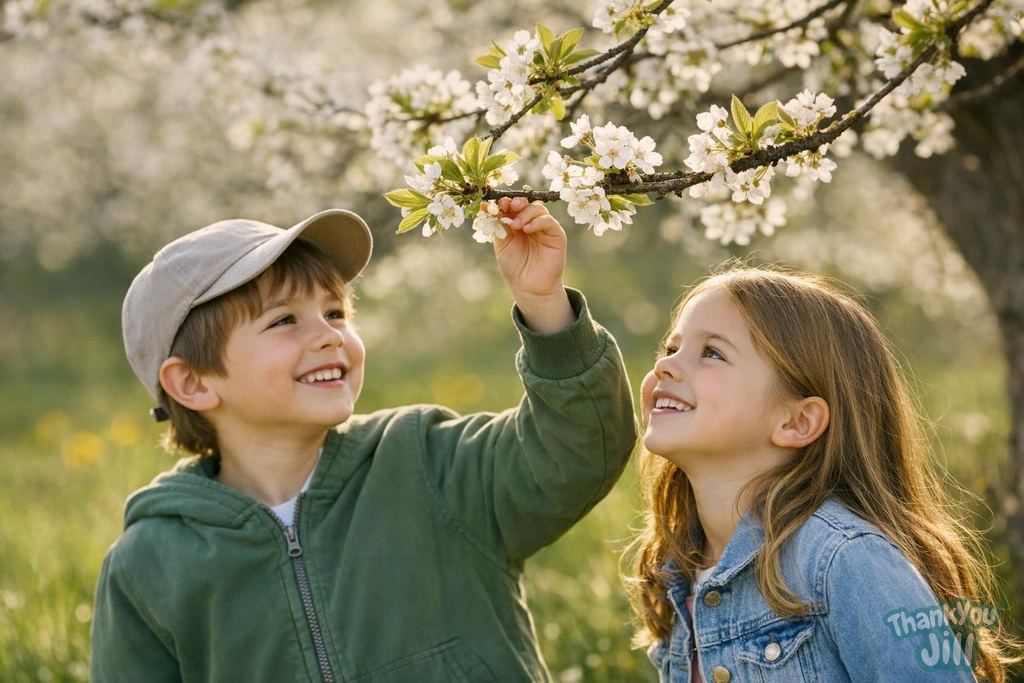
Something extraordinary happens in March. You feel it before you see it: a certain quality to the air, a different scent, a light that becomes warm again. Then one day you look up and notice that the branches, which were black and bare, now have something green and tender on them that wasn't there yesterday. It's the awakening of the trees. And it's not a metaphor: it's one of the most precise and fascinating biological phenomena that exists.
What really happens inside a tree in February and March
Deciduous trees (those that lose their leaves in winter) don't actually sleep like hibernating animals. Their metabolism slows down dramatically, but it doesn't stop. During winter, reserves of sugars (starch) accumulated in the wood and roots are maintained as an energy reserve for spring awakening. When the number of daylight hours exceeds a certain threshold (each species has its own: for many it's around 10–11 hours of daylight per day) and nighttime temperatures stop dropping below freezing for weeks on end, the tree receives a hormonal signal that triggers awakening. Photoreceptors in the buds (mainly phytochromes) measure day length with precision down to the minute. This light signal, combined with temperature, triggers the production of plant hormones (especially gibberellins) that stimulate cell division in the buds. The protective scales of the buds open and tiny leaf primordia begin to emerge—miniature leaves rolled up like letters in an envelope, already fully formed since the previous summer. The spring sap then rises from the roots to the branches, carrying water and minerals that cause these pre-formed leaves to swell and unfold in just hours or a few days.
Who wakes up first: the race of spring
Not all trees wake up at the same time. There's a precise hierarchy that repeats itself every year. February: the hazel flowers first—the long yellow male catkins appear when snow could still fall, pollinated by wind on rare dry days. Willow flowers (the soft, fluffy yellow catkins) follow within days. March: wild cherries burst into white, along with blackthorn (they flower before their leaves, on spiny branches). Elms flower almost invisibly, with tiny reddish flowers. The pink peach trees of southern countryside. April: leaves emerge on nearly all broadleaf trees. Beech—among the latest bloomers—waits until late April to open its tender, translucent yellow-green leaves. May: the black locust flowers (and it produces one of Italy's most prized honeys), then the linden in June closes the season of the most fragrant blooms.
The phenomenon of spring sap
In March–April, in certain species (especially birch, sugar maple, and walnut), spring sap rises with such pressure that if you make a small cut in the trunk, it flows out on its own. This sap is rich in sugars, minerals, and amino acids. Birch water collected in spring is a traditional beverage throughout Northern Europe and the American Appalachians—sweet, slightly tart, with purifying and refreshing properties. In Canada and the northern United States, the sap of the sugar maple (Acer saccharum) is collected in late winter to produce maple syrup—one of the most well-known examples of food production directly from tree sap.

Every bud that emerges in April was already there since August of the previous year, rolled up in its bud, waiting. Trees don't improvise spring: they prepare for it months in advance. There's something deeply comforting about this patience.
How to experience spring with your children: practical activities
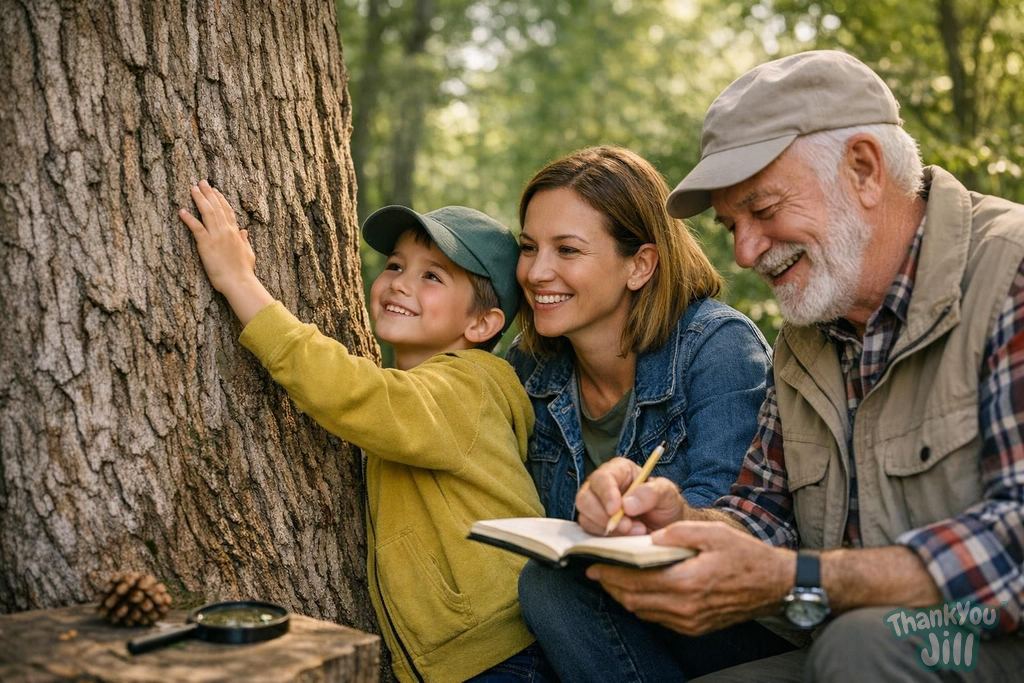
- Observe the first forest flowers: Take children on a walk in late February or early March to search for the first signs of spring. Hazel catkins (the yellow dangling "curls"), white blackthorn flowers, reddish elm buds. Photograph them and create a record of this year's "firsts."
- The forced branch vase: In late February, cut a small branch of cherry or forsythia (already with swollen buds) and place it in a vase with room-temperature water indoors. Within 1–2 weeks it will flower ahead of the trees outside. It's the most magical way to see up close how awakening works: warmth triggers the spring signal early.
- The class phenology calendar: Have children keep a phenology calendar: each day they note whether they've seen the first buds, first flowers, first leaves of specific species. By year's end, they'll have documented their region's spring with real scientific data (phenology is a real science, used to monitor climate change).
- Collect fallen bud scales: In spring, under lindens and horse chestnuts, the scales from opened buds fall to the ground. Collect them and show children how the tiny leaves were rolled up inside. Examining an opened bud reveals the pre-formed leaf in miniature—one of nature's most beautiful biological tricks.
- Taste birch sap: If you live near a wild birch (with the owner's permission), in March–April you can drill a small hole 30–40 cm from the ground, insert a small tube, and collect a few glasses of sap. It has a delicate, slightly sweet taste. Tasting it with children is an unforgettable experience of connection with the tree's life.
- Explain why spring arrives a little earlier each year: Climate change is causing Italian trees to flower 1–2 weeks earlier than they did in the 1970s. Historical phenology records prove it. This fact—explained simply—is one of the best ways to help children understand climate change concretely.
Spring in the trees doesn't wait for you to be ready. It arrives every year at the same time, punctual as a train. If you learn to watch it, you'll notice that the two weeks in April when beeches unfurl their first yellow-green leaves are among the most beautiful moments of the entire year. You just have to look up.
Frequently Asked Questions
How do trees know when it's time to wake up in spring?
Trees perceive day length through photoreceptors in their buds and monitor nighttime temperatures. When daylight hours exceed a specific threshold and frosts cease, a hormonal signal activates bud growth and sap rise.
What's the difference between tree awakening and animal hibernation?
Trees don't enter true hibernation; their metabolism slows but doesn't stop. They conserve sugar reserves during winter to fuel spring awakening, while hibernating animals drastically reduce their vital functions.
When is the best time to collect spring sap, and which species are most suitable?
Spring sap is collected in March–April, especially from birch, sugar maple, and walnut. During this period, sap rises with enough pressure to flow from a small hole in the trunk and is rich in sugars and minerals.
How can you observe tree awakening with children in a practical way?
You can take walks to photograph the first flowers and buds, force branches in a vase to anticipate flowering, keep a phenology calendar to note changes, and collect fallen buds to show the pre-formed leaves inside.
Latest News
Comments
No comments yet. Be the first!
Leave a comment