


 Italiano
 Français
 Deutsch
 Español
 Português
 Svenska
 Suomi
Suomi
The Bat
Nocturnal guardian of trees and irreplaceable ally of the ecosystem
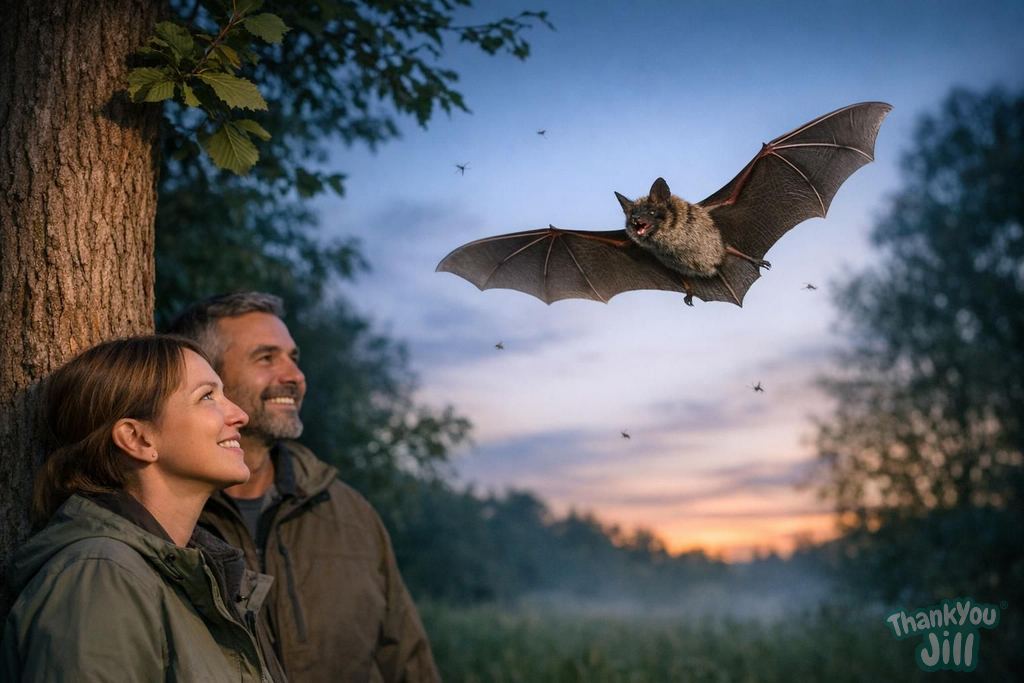
Few animals are more misunderstood than the bat. In Italian popular culture, it's associated with vampires, disease, and darkness. In biological reality, it's a prodigious insect-eater, an important pollinator in tropical zones, and one of the most effective allies that agriculture and forests have. Every night, while we sleep, the bats in our forests and cities work. And they do it magnificently.
Italian bats: 35 different species
Italy is home to 35 species of bats (Chiroptera) — the most diverse group of mammals in our fauna after rodents. From the tiny common pipistrelle (Pipistrellus pipistrellus: 3-8 grams, wingspan 19-25 cm) to the large greater horseshoe bat (Rhinolophus ferrumequinum: up to 35 grams, wingspan 35-40 cm). Some species are tied to buildings and wall cavities (common pipistrelle, brown long-eared bat). Others are strictly forest-dwelling and depend on tree cavities: the Leisler's noctule (Nyctalus leisleri), the common noctule (Nyctalus noctula), the Nathusius's pipistrelle (Pipistrellus nathusii), the common serotine (Eptesicus serotinus). Forest species use cracks in the bark of old trees, woodpecker cavities, and natural cavities as daytime roosts, as maternity sites (where females give birth and raise young), and as winter hibernation sites.
Echolocation: an extraordinary biological sonar
Insectivorous bats (the majority of Italian species) hunt using echolocation: they emit ultrasounds (20,000-100,000 Hz, beyond the hearing limit of humans which stops at around 20,000 Hz) through their mouth or nose, and listen to the echo reflected by obstacles and prey. The system is so precise that it allows the capture of insects in flight in complete darkness, the ability to distinguish different insect species by wing texture, and the detection of a 1 mm diameter wire at 1 meter distance. The ultrasonic detector (bat detector) is a tool that translates bat ultrasounds into sounds audible to humans: each species has a characteristic ultrasound pattern, allowing acoustic identification. Detectors are available from tens of euros to professional models costing hundreds of euros, and free smartphone apps (such as Echo Meter Touch) that turn your phone into a bat detector.
How much they eat: agriculture's ally
A common pipistrelle (the most common species) consumes every night 1,500-3,000 insects — mainly mosquitoes, midges, moths, and small beetles. A colony of 200 common pipistrelles consumes on a summer night approximately half a million insects. Over an entire summer, the same colony eliminates tens of millions of insects, many of which are agricultural crop pests or disease vectors. Economic studies estimate that bats provide an ecosystem service (biological insect control) valued at billions of euros per year just for the U.S. agricultural sector. In Italy, bats living in Italian vineyards and orchards are natural allies of organic farming — they reduce the need for insecticides to control nocturnal crop pests.
Why bats are protected
All 35 species of Italian bats are protected by law (DPR 357/1997, implementation of the Habitats Directive). It is illegal to capture them, kill them, disturb them during rest and hibernation, and destroy their roost sites. Italian populations are in decline due to: reduction of old trees with cavities (forest roost sites), renovation of historic buildings that eliminate roosts in attics, pesticide use that reduces insect availability, light pollution that alters hunting patterns. Mortality from secondary poisoning (ingestion of insects treated with insecticides) is particularly severe for insectivorous species like the bat.

Every night the bat eats 3,000 insects and asks for nothing in return. It doesn't know it's protecting you from the tiger mosquito. It doesn't know it's helping your vineyard. It simply does what it evolved to do over 50 million years. The least we can do is not poison its insects and not destroy its trees.
How to encourage bats in your garden and neighborhood
- Install bat boxes: bat boxes are similar to bird nesting boxes but with the entrance at the bottom (bats enter from below and hang from the ceiling inside). Internal dimensions vary by species: for the common pipistrelle (the most common), boxes with internal dimensions of 15×25 cm, thickness 3-5 cm, and lower opening of 1.5-2 cm width are needed. The internal surface must be rough (raw wood or scored) to allow gripping. Position them 3-5 meters high on a wall or trunk exposed to morning sun (southeast or east orientation). Solar heat warms the box and attracts pregnant females.
- Don't use nighttime insecticides: anti-insect sprays used in gardens on summer evenings eliminate the insects that make up bat prey. Use physical window screens and turn on a fan: moving air discourages mosquitoes much more effectively than sprays.
- Plant flowers that attract nocturnal moths: nocturnal moths (which feed on fragrant flowers at night) are one of the main prey of bats. Plants that attract moths: night-blooming jasmine, flowering tobacco, white campion, mignonette, verbena. A garden with these plants automatically becomes a good hunting area for local bats.
- Watch the sunset hunt: bats begin hunting a few minutes after sunset. Sit outside while the sky is still light and observe: bats fly in a characteristic way (fast, acrobatic, with sudden direction changes — completely different from bird flight). On a good summer evening, you can see 5-20 bats in flight in the same field of view.
- Use a bat detector with children: bat detectors transform ultrasounds into audible clicks and whistles. For children, it's a unique sensory experience: hearing the sonar of an animal flying in the darkness, in real time. Free apps like "Echo Meter Touch" turn your smartphone into a basic detector (lower quality than dedicated models, but sufficient for an educational activity).
- Don't be afraid of contact: bats don't get tangled in hair (that's a completely unfounded myth), they don't attack people, and they don't drink blood (the three vampire species live only in Latin America). The only real precaution is not to touch a bat found on the ground during the day with bare hands: it could be sick and bite in self-defense. Use gloves and call your local wildlife rescue center.
The bat is one of those animals that doesn't need to be romantically loved to be respected: you just need to understand what they do every night for us and for the forest. 3,000 insects per night, per bat, for every night of summer. Multiply that by all the colonies in Italian forests and parks. The number you get is the best answer to the question: why protect bats?
Frequently Asked Questions
How does echolocation work in bats to catch insects at night?
Bats emit ultrasounds beyond the human hearing threshold and listen to the echo reflected by obstacles and prey. This biological sonar allows them to locate and capture insects in flight even in complete darkness with extreme precision.
How much impact does insect consumption by bats have on agriculture?
A colony of bats can consume millions of crop pest insects during the summer, reducing the need for insecticides. This ecosystem service has an estimated economic value of billions of euros in the United States alone, demonstrating their crucial role in biological pest control.
How can I encourage the presence of bats in my garden or neighborhood?
To attract bats, install bat boxes 3-5 meters high with a rough surface, avoid using nighttime insecticides, plant flowers that attract nocturnal moths, and observe their hunting at sunset. These measures create an ideal environment for local bats.
Why is it important to protect bats and what threats do they face?
Bats are protected because they play a fundamental role in the ecosystem as insectivores and pollinators. They are threatened by loss of natural roosts, pesticide use, light pollution, and mortality from secondary poisoning, which cause population decline.
Latest News




Comments
No comments yet. Be the first!
Leave a comment