


 Italiano
 Français
 Deutsch
 Español
 Português
 Svenska
 Suomi
Suomi
The Hazel Dormouse
Europe's tiniest sleeper: fragile, protected, and magnificent

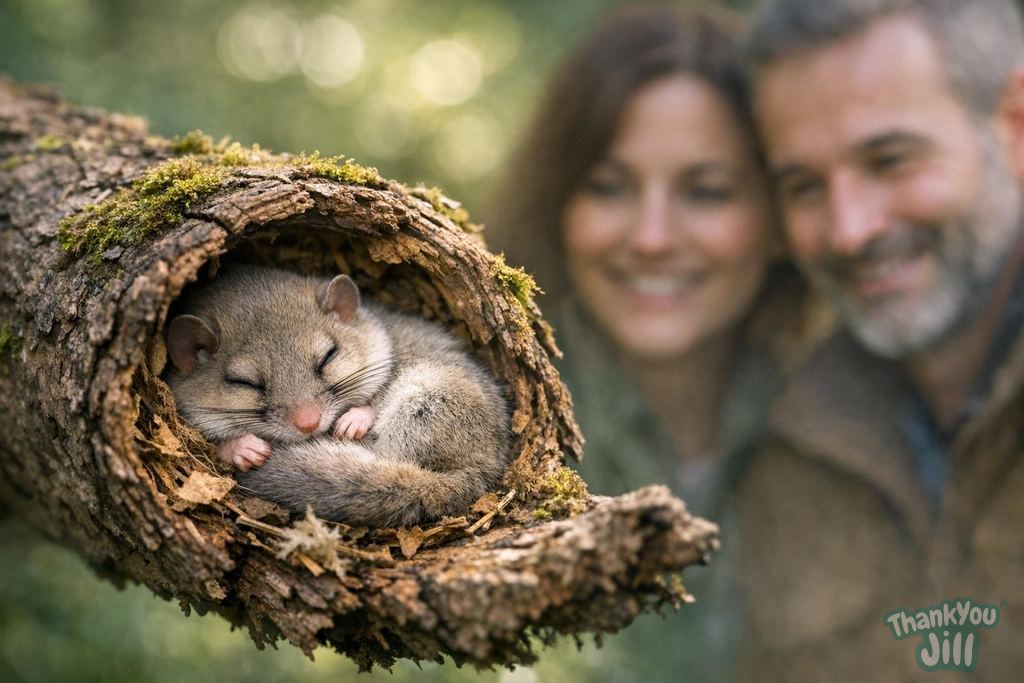
There's an animal in Italian forests that few have ever seen, yet almost everyone would love to encounter: golden orange, large black eyes, a thick tail, and minuscule — just 15-30 grams, lighter than a 2-euro coin. It's called the hazel dormouse, and it spends its life among shrub branches with a grace and agility that seem incompatible with its size.
Meet the Hazel Dormouse
The hazel dormouse (Muscardinus avellanarius) is the smallest of Europe's dormice and one of the tiniest mammals in the Italian forest. Its coat is brilliant russet-orange on the back, cream-white on the belly — a coloring so distinctive it's nearly impossible to confuse with any other species. The tail is thick and nearly as long as the body. The front paws are prehensile with long fingers and curved claws that allow it to grip thin branches like a tiny primate. It prefers to inhabit areas of brambles, hazelnuts, hawthorn, and understory shrubs — it rarely climbs tall trees like the fat dormouse, but favors the shrub layer between 0.5 and 3 meters above ground. It's found throughout most of Italy but is everywhere rare and difficult to observe due to its nocturnal habits and preference for dense, tangled vegetation.
The Nest: A Small Masterpiece of Natural Architecture
The hazel dormouse's nest is one of the most beautiful structures nature produces at this scale. It's a perfect sphere woven from leaves, fibrous bark, dry grass, and moss, about the size of a large tennis ball — roughly 8-10 cm in diameter. The interior is lined with the softest materials (plant fibers, animal wool, feathers). It has no permanent visible entrance: the dormouse opens and closes the entrance each time it enters or exits, weaving the leaves together and leaving the surface seemingly uniform. This closure protects it from both predators and temperature fluctuations. The nest is positioned in dense vegetation 0.5-2 meters above ground, often inside a bramble or hazel bush, nearly invisible to anyone who doesn't know what to look for. A single dormouse may use several nests during the active season, changing them every few days. The winter hibernation nest is built lower, often at ground level or below it (in moss, among leaves), where temperature is more stable.
The Hazel Dormouse's Hibernation: Even Longer Than the Fat Dormouse's
The hazel dormouse enters hibernation even before the fat dormouse — as early as September in colder areas — and wakes later, sometimes not until May. Hibernation can last up to 8 months, making it the mammal with the longest hibernation relative to the year among European species. During hibernation, its vital functions reduce just like the fat dormouse: body temperature nearly matching the environment, breathing almost absent, heartbeat extremely rare. It wakes briefly every 2-3 weeks for short periods but quickly returns to hibernation.
Why the Hazel Dormouse Is Protected
The hazel dormouse is listed in the Habitats Directive 92/43/EEC (Annex IV) as an animal species of community interest requiring strict protection — meaning it's illegal to capture it, keep it in captivity, deliberately disturb its habitat, or destroy breeding and wintering sites. The reasons for protection: the European population is declining due to destruction of shrubby woodlands, intensive forest management that eliminates the understory, and isolation of populations in fragmented forest remnants. The hazel dormouse is particularly vulnerable to isolation because it doesn't move easily across open terrain — it always prefers to stay within dense vegetation. Construction of infrastructure that cuts through forest corridors (roads, railways, buildings) can separate populations that were once connected, leading to local extinction through reduced genetic diversity.

The hazel dormouse weighs less than thirty grams, builds a perfect spherical home among brambles, and sleeps eight months a year. It's nearly impossible to see. But knowing it's there — that in that dense hazel thicket in the forest there's a tiny orange ball with black eyes breathing once every five minutes — changes something about the way you sit in that forest.
How to Protect the Hazel Dormouse in Your Garden and Territory
- Don't remove shrub vegetation: Brambles, hazelnuts, hawthorn, blackthorn, dogwood — the spiny, tangled shrubs that many consider "weeds to be pulled out" are the hazel dormouse's primary habitat. Leaving a strip of unmanaged shrub vegetation along the edges of your garden, field, or forest is the most helpful thing you can do for this species.
- Install dormouse nest boxes: Specialized nest boxes for hazel dormice exist, with the entrance hole facing downward (the dormouse enters from the bottom of the box, which should be fixed to a shrub or trunk 1-1.5 meters above ground). You can find them in birdwatching shops or build them easily. Interior dimensions: 10×10×10 cm, lower hole 3.5 cm.
- Report sightings to iNaturalist: Every hazel dormouse sighting (even a photograph of the characteristic spherical nest) is scientifically valuable for mapping the species' distribution. Photograph the nest (without touching it), upload the photo to iNaturalist with location data, and contribute to monitoring the species in Italy.
- Recognize the nest: The perfect sphere of woven leaves among brambles or hazels, about the size of a tennis ball, with no visible entrance — it's almost certainly a hazel dormouse nest. Don't open it: the dormouse won't nest if disturbed. Photograph it from outside and report it.
- With children — build a nest like the hazel dormouse: Challenge children to build a small sphere from dry leaves, grass, and flexible twigs, weaving the materials as the dormouse would. Explain that the dormouse builds this structure with its mouth and front paws, without hands or tools, in just a few hours. Attempting to imitate it with your hands — much harder than it seems — immediately shows how extraordinary this building ability is.
- Visit protected areas with shrubby forests: Casentinesi Forests National Park, Ticino Park, Euganean Hills Park, and many regional nature reserves have hazel dormouse populations. Park naturalists often know the best sites for spotting them.
The hazel dormouse is so small and so shy that most people will never see one in their lifetime. But knowing it exists, that it builds a perfect spherical home among branches, that it sleeps eight months with its heart nearly still — this alone is enough to change how you look at a hazel forest. Every sphere of leaves is a doorway into a tiny and magnificent life.
Frequently Asked Questions
What is the function of the hazel dormouse's spherical nest and how is it built?
The hazel dormouse's nest is a perfect sphere woven from leaves, moss, and plant fibers, with an entrance that opens and closes each time. It serves to protect it from predators and temperature fluctuations, and is positioned in dense vegetation at low height.
How do you distinguish the hazel dormouse from other small European mammals?
The hazel dormouse has a brilliant russet-orange coat on the back, cream-white on the belly, large black eyes, and a thick tail nearly as long as its body. It weighs less than 30 grams and is the smallest of Europe's dormice, with prehensile front paws.
Why is the hazel dormouse a protected species and what threats does it face?
It's protected because its population is declining due to understory destruction, intensive forest management, and population isolation caused by infrastructure that interrupts forest corridors, reducing genetic diversity and increasing the risk of local extinction.
How can you help the hazel dormouse survive in your territory?
By leaving shrub vegetation like brambles and hazels intact, installing specialized nest boxes 1-1.5 meters high with a lower entrance hole, reporting sightings and nests without disturbing them, and visiting protected areas with shrubby forests to support conservation.
Latest News



Comments
No comments yet. Be the first!
Leave a comment