

 English
 Italiano
 Français
 Deutsch
 Español
 Português
 Svenska
 Suomi
Suomi
The Spider on the Branches
Silent engineer and extraordinary hunter among the leaves of trees
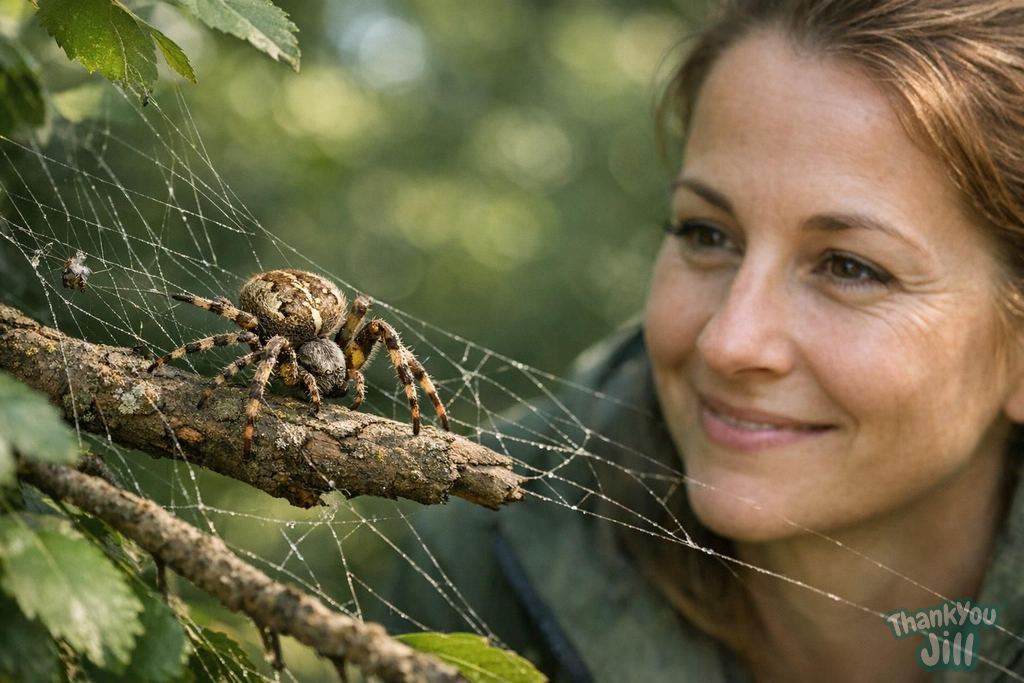
Early morning, forest soaked in dew. Every branch is decorated with spider webs illuminated by the oblique light of the sun — spheres, funnels, horizontal tents, single threads with drops that shine like diamond necklaces. Spiders work at night, and morning is their temporary art gallery. But behind the beauty lies a highly efficient hunt that contributes to the balance of the forest in a way that almost no one notices.
How many spiders live in a tree?
The density of spiders in forest ecosystems is surprising. Studies in European temperate forests have recorded up to 200-400 spiders per square meter on the ground and up to 50-100 per square meter in the tree canopy. An adult beech tree with 1,000 m² of leaf surface (a considerable area) can host 50,000-100,000 spiders on leaves, branches, and bark — most of them microscopic or tiny, invisible to the naked eye. The role of these spiders in the forest ecosystem is fundamental: it is estimated that spiders worldwide kill between 400 and 800 million tons of insects every year — a quantity that exceeds the mass of all human beings on the planet. They are the most efficient insect predators on Earth.
The main Italian tree-dwelling species
Some spider species are particularly associated with Italian trees. Argiope bruennichi (wasp spider): large, beautiful, with a yellow and black striped abdomen. It is not typically arboreal but lives at the forest margins and in meadows with tall vegetation. Its vertical web with the stabilimentum (a thick zigzag silk ribbon in the center) is unmistakable. Zygiella x-notata: the classic orb-weaver spider that lives on trees and building walls, with a characteristic "slice" missing from the web (a sector without rays, where the spider holds the signal thread to sense vibrations from prey). Tetragnatha spp.: elongated spiders that typically live along rivers, with long legs that make them look like twigs. They build horizontal webs over water. Misumena vatia (flower crab spider): tiny white spider that camouflages itself on white and yellow flowers of blooming shrubs, changing color to match the plant. It doesn't make a web but grabs insects that land on the flower. Larinioides cornutus: large orb-weaver spider that typically lives on trunks in damp areas. Clubiona spp.: small nocturnal hunting spiders that hide during the day in a silk sac under the bark or among rolled leaves, and hunt without a web at night.
Silk: a biological material without equal
Spider silk is one of the most extraordinary biological materials that nature has produced. Gram for gram, it is stronger than steel (tensile strength of about 1.3 GPa vs 0.4-0.7 GPa of construction steel) and much more elastic — it can stretch up to 40% before breaking, compared to 2-3% for steel. It is produced by specialized silk glands in the spider's abdomen. Each spider can produce different types of silk with different properties: the silk of the web frame (resistant and inelastic), the silk of the capture spirals (elastic and sticky), the silk of the egg cocoon (soft and insulating), the silk of the anchor threads (elastic and resistant). Researchers have been trying for decades to artificially replicate spider silk for technological applications (biological kevlar, artificial tendons, aerospace materials) but the molecular complexity of natural silk has so far resisted industrial reproduction.
Webs as traps and as signals
Spider webs are highly optimized functional structures. The classic orb web — circular with concentric spirals and radial rays — is the geometry that maximizes capture surface with the minimum amount of silk. Each impact of an insect on the web produces vibrations that are transmitted along the rays to the waiting spider: the spider distinguishes the frequency and amplitude of the vibrations to understand whether it is prey, a male of the same species courting, or an inanimate object. Some species "decorate" their webs with bands of white silk (the stabilimenta) that can serve various purposes: visual signals for birds that might destroy the web, UV reflection to attract pollinating insects, or structural stabilization.

The spider builds its home every night and destroys it every morning to recycle the silk. It works in darkness, with a material stronger than steel produced in its abdomen, and creates something perfectly functional and accidentally beautiful. It doesn't know it's beautiful. It works, and that's enough.
How to observe forest spiders without fear: a practical guide
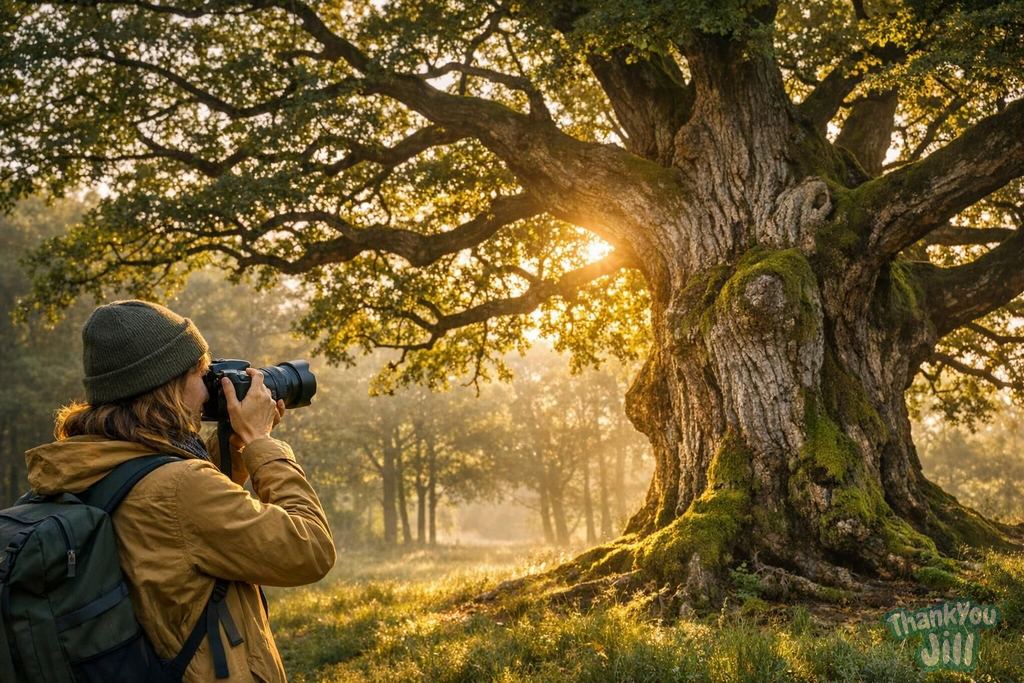
- Early morning is the best time: webs are always more visible in the morning, when dew makes them shine. Walk slowly through the forest with the sun at your back and observe the webs against the light: you'll see shapes and structures that on a dry day are almost invisible. Photographing them in morning light is one of the most accessible and most rewarding photography exercises in Italian nature.
- Don't destroy webs without reason: building a web takes the spider hours of work and significant reserves of energy and silk. Systematically destroying webs damages the insect-eaters of the forest and garden. Obviously pass under or around them, but don't destroy them deliberately.
- Learn to identify webs by type: vertical orb web (Araneus, Zygiella) — the classic "spider web"; funnel web (Tegenaria, Agelena) — a dense silk funnel with the spider lying in wait at the bottom; horizontal tent web (Linyphia) — a flat platform suspended with irregular threads above; three-dimensional irregular web (Steatoda, Latrodectus) — chaotic, in the dark corner of a beam or rock. Each type of web reveals the builder species even without seeing the spider.
- Observe with a magnifying glass: small spiders (less than 5 mm) that inhabit tree bark are only visible with a 5-10x magnifying lens. Bring a lens on your next forest walk and examine the rough bark of an old oak tree at about 30 cm from your eyes. You'll see worlds that you normally ignore: mites, springtails, tiny beetles, spiders hunting in the crevices between bark scales.
- With children — the web experiment: help children photograph a complete orb web early in the morning. Then measure the diameter (usually 20-40 cm). Explain that the silk that built that web is stronger than steel at the same cross-section, weighs less than 1 milligram but can stop a bee in flight. Scale and material comparisons always capture children's attention better than any abstract explanation.
- Photograph males searching for females: in August-September, males of many orb-weaver spider species abandon their territory and go searching for females around the forest. They are often seen walking quickly on the forest floor or along branches. It's the period when you encounter the most spiders in motion — there's no danger, just don't pick them up with bare hands if you're not certain of the species.
Spiders have been part of the Italian forest for 400 million years — long before the trees themselves. They are builders, hunters, regulators. Every morning, when dew illuminates their webs among the branches, they are offering you a free demonstration of biological engineering that has no equal. The only thing asked is to stop for a second and look at it.
Frequently Asked Questions
How many spiders can live in a single tree and what role do they play in the ecosystem?
An adult tree can host tens of thousands of spiders, often invisible to the naked eye. These spiders are fundamental predators that help control insect populations, contributing to the balance of the forest ecosystem.
What are the unique characteristics of spider silk and why is it difficult to replicate artificially?
Spider silk is stronger than steel and very elastic, with different types for specific functions. Its molecular complexity makes industrial reproduction difficult despite decades of research.
How to recognize different types of spider webs in trees and what do they indicate?
Webs vary in shape: vertical orbs, funnels, horizontal tents, or three-dimensional irregular webs. Each type is associated with specific species and reveals the spider's hunting method and habitat even without seeing it.
What is the best time to observe and photograph spider webs without damaging them?
Early morning, when dew makes the webs visible and shiny. It's important to walk slowly and not destroy the webs, since their construction requires a lot of energy from spiders.
Latest News

Comments
No comments yet. Be the first!
Leave a comment