

 English
 Italiano
 Français
 Deutsch
 Español
 Português
 Svenska
 Suomi
Suomi
Invasive Alien Species
Black locust, tree of heaven, ragweed: the unwanted guests in Italian forests

Every year, unwanted intruders arrive in Italian forests—species that don't belong to that landscape. They don't come from the other side of the Apennines; they come from America, Asia, Australia. These are invasive alien species: plants introduced by humans (deliberately or accidentally) that, finding favorable conditions and an absence of natural predators, spread at a pace native species cannot match. And they transform the forest in ways that can last for centuries.
Black locust: Italy's most widespread colonizer
The black locust (Robinia pseudoacacia), introduced to Europe from North America in the 17th century as an ornamental and honey plant, is today one of the most widespread tree species in Italy—present in nearly every region with densities that in many areas exceed native species. Its invasive capacity relies on multiple mechanisms: extremely rapid growth (up to 2 m per year), abundant production of root suckers (each specimen generates dozens of new individuals from its roots), tolerance for poor soils, drought, pollution, and human disturbance. Black locust fixes atmospheric nitrogen through its roots (like legumes)—an enormous advantage in poor soils where native species struggle to grow. This ability to enrich soil with nitrogen modifies soil chemistry in ways that further favor black locust itself while disadvantaging many native species. Black locust forests are nearly monocultures where understory plant diversity is far reduced compared to native oak or ash forests. From an economic and cultural perspective, however, black locust has undeniable value: it produces one of Italy's most prized honeys (acacia honey), its wood is extremely hard and durable, and its fragrant flowers are edible (battered and fried, infused in beverages). The debate over black locust management—containment versus acceptance—remains open within Italy's forest science community.
Tree of heaven: the paradise tree that won't leave
The tree of heaven (Ailanthus altissima), introduced from China to Europe in the 18th century, is perhaps the most difficult invasive tree species to control in temperate countries worldwide. It grows on any substrate—walls, asphalt, polluted soils, railways—at an impressive speed. It produces allelopathic compounds that inhibit germination and growth of surrounding plants. Its root system can destroy pavements, foundations, and pipes. When cut down, it regrows vigorously from the stump and roots—with a tenacity that has earned tree of heaven the reputation of being "impossible to kill." In Italian cities (Rome, Milan, Naples) it colonizes walls, abandoned land, disused railways, and riverbanks with a speed and density that concerns urban green space managers. In forest areas affected by disturbances (fires, logging), it can form dense stands that prevent native forest recovery. Controlling tree of heaven requires repeated interventions over years—single cuts are counterproductive because they trigger even more vigorous sprouting.
Late-flowering cherry: the problem of northern Italian forests
The late-flowering cherry (Prunus serotina), introduced as an ornamental plant and for game, has become one of the most serious problems in northern Italy's and central Europe's forestry. It is particularly aggressive in oak and pine forests where it creates a dense shrub layer that prevents natural regeneration of native species. The Netherlands, Belgium, and Poland have been Europe's hardest-hit countries, with entire forests transformed into late-flowering cherry monocultures within just a few decades. In Italy the problem is concentrated mainly in Piedmont, Lombardy, and Veneto. Its eradication is very difficult because of its extremely abundant seed production (the black berries are eagerly eaten by birds that disperse them over long distances).
How to recognize Italy's main invasive species
Beyond black locust, tree of heaven, and late-flowering cherry, other significant invasive tree or shrub species in Italy include: butterfly bush (Buddleja davidii), giant goldenrod (in riparian zones), ragweed (Ambrosia artemisiifolia, not a tree but allergenic and invasive), and false indigo (Amorpha fruticosa) in wetland areas. The INNS Italy portal (run by CNAPPC) maintains an updated list of exotic invasive species in Italy with identification guides and distribution maps.

Black locust produces excellent honey and invades native forests. Tree of heaven survives on asphalt and chokes out its neighbors. They're not evil—they're doing exactly what they evolved to do. The problem is us: we brought them out of their context. Nature doesn't make mistakes. We do, when we ignore the consequences.
How to recognize and manage invasive species in your area
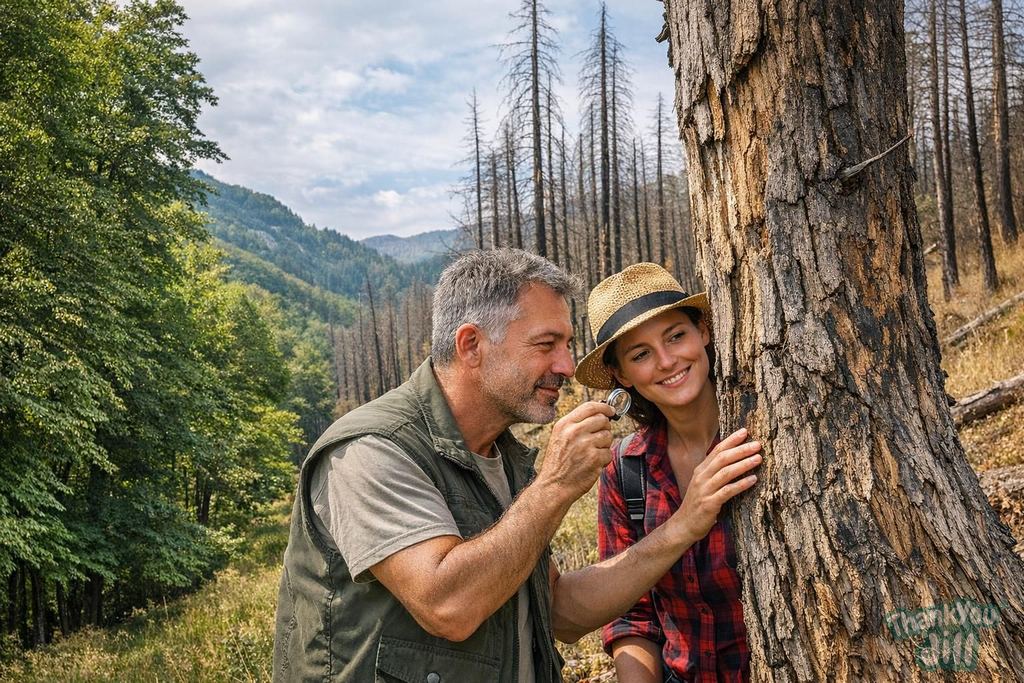
- Learn to recognize black locust: compound pinnate leaves (similar to ash but with rounder leaflets), spines in pairs at the base of young leaves, highly fragrant white flowers in drooping clusters in May, brown pods that remain on the tree throughout summer and fall. The bark of mature specimens is deeply furrowed and nearly black.
- Recognize tree of heaven: enormous compound leaves (up to 90 cm), with leaflets that have a small gland at the base—rubbing them releases an unpleasant odor. The trunk of young specimens is smooth and gray. The fruits are samaras (winged seeds) similar to ash fruits but larger and more reddish.
- Don't plant invasive species in your garden: the list of invasive species to avoid planting in private gardens includes butterfly bush, black locust (even ornamental varieties), tree of heaven, and invasive bamboo (Phyllostachys). Consult your regional environmental ministry portal or local resources to learn which species to avoid in your area.
- Participate in control projects: some local organizations organize cutting and control days for invasive species in parks and nature reserves. It's concrete volunteer work that immediately benefits local biodiversity.
- Report new invasions: if you notice stands of invasive species in areas where they weren't previously present (especially in nature reserves or protected areas), report them to the area manager or your municipality through the INNS Italy portal or the iNaturalist app (tag "invasive species").
Invasive species are one of the planet's most serious biodiversity problems—second only to direct habitat loss. In Italy, black locust and tree of heaven are now permanent parts of the landscape, and it's unrealistic to think we can eliminate them completely. But understanding their history, recognizing them, and making conscious choices when planting or managing green spaces—that's already a significant contribution to defending Italian forest biodiversity.
Frequently Asked Questions
What characteristics make black locust such a widespread invasive species in forests?
Black locust grows very rapidly, produces numerous root suckers, tolerates poor soils and drought, and fixes atmospheric nitrogen while modifying soil chemistry to its advantage, reducing understory biodiversity and creating near-monocultures.
Why is tree of heaven considered difficult to control in urban and forest areas?
Tree of heaven grows on any substrate, produces compounds that inhibit other plants, has roots that damage structures, and regrows vigorously after cutting, making repeated and targeted interventions necessary for its control.
How do you recognize late-flowering cherry and what problems does it cause in forests?
Late-flowering cherry has black berries widely dispersed by birds and forms a dense shrub layer that prevents native species regeneration, transforming forests into monocultures that are difficult to eradicate.
What concrete actions can be taken to manage invasive species in your area?
It's important to learn to recognize them, avoid planting them in your garden, participate in local control projects, and report new invasions through dedicated portals to help protect biodiversity.

Latest News




Comments
No comments yet. Be the first!
Leave a comment