

 English
 Italiano
 Français
 Deutsch
 Español
 Português
 Svenska
 Suomi
Suomi
Climate Change and Italian Trees
Which species are already struggling and how our forests are transforming
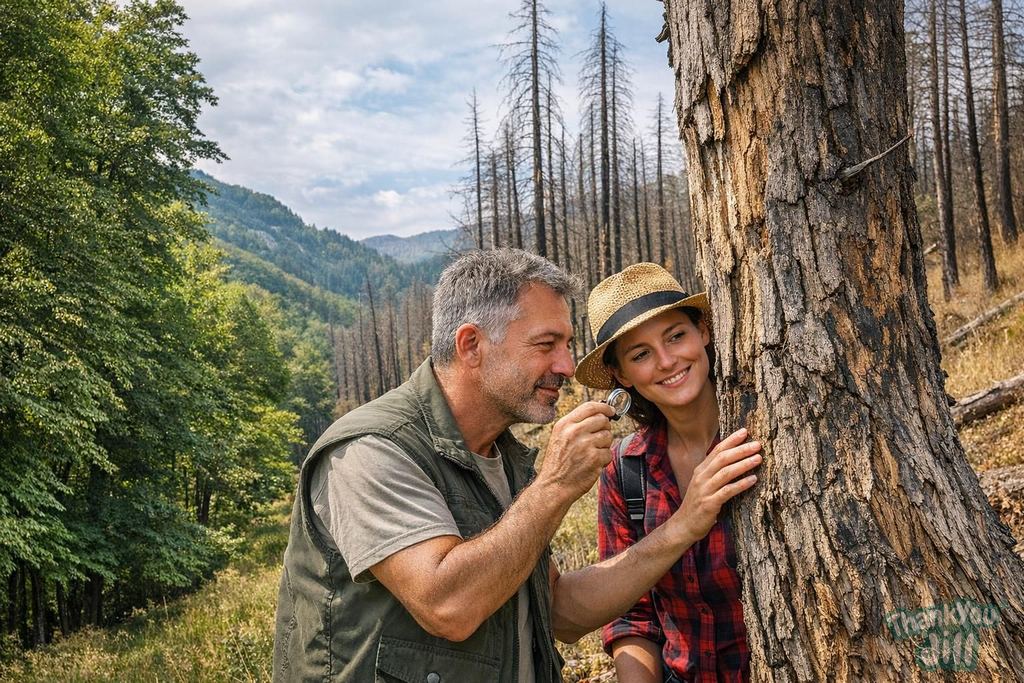
Italy's forests are changing. Not in a way you'd notice from one year to the next — but when you compare photographs of the same locations taken in the 1970s with those taken today, and compare historical phenological observation data with current data, significant transformations emerge. Some species are moving upslope. Others are moving downslope. Some are advancing northward. Others are retreating. It's an ongoing reshuffling that will have enormous consequences in the coming decades.
Beech in trouble: the emblematic Apennine species under threat
Beech (Fagus sylvatica) is the iconic species of Italy's mountain forests — the dominant species in Apennine and Alpine beech forests between 700 and 1,800 meters elevation. And it's probably the Italian forest species most vulnerable to climate warming. Beech thrives in cool, humid conditions. Increasingly intense summer droughts and higher summer temperatures are stressing beech forests at lower elevations (700-900 m), where conditions are approaching the limits of the species' tolerance. Studies conducted on Italian beech forests document: increased mortality in lower-elevation specimens during intense summer droughts; reduced growth increments in recent decades in southern Apennine beech forests; earlier autumn defoliation (leaves fall sooner) in dry seasons; upslope shift of the lower beech forest boundary by 10-30 meters per decade in the southernmost zones. Beech forests in Pollino, Sila, and the Madonie Mountains (Sicily) are particularly vulnerable.
Olive trees advancing northward and upslope
While beech struggles, some Mediterranean species are taking advantage of the warming. The olive tree (Olea europaea) is expanding its range northward and to higher elevations in well-documented ways. In Liguria, olive groves that were at risk of winter frost until the 1980s now produce regularly even in previously marginal zones. In Tuscany, olive cultivation is shifting toward the Mugello region and colder hillsides. In Piedmont, some areas of the Cuneo province have seen their first experimental olive plantings in recent years. Moving upslope, wild olives (Olea europaea subsp. oleaster) are increasingly found at elevations that were too cold for the species 50 years ago. The olive tree is an excellent indicator of the northward and upslope advance of the Mediterranean climate zone.
Historic coastal pine forests under pressure
Italy's historic coastal pine forests (stone pine Pinus pinea, maritime pine Pinus pinaster) — a legacy of Roman and medieval reforestation — are showing signs of accelerated decline. Summer droughts, attacks by forest pathogens (the pine nematode from Asia, the fungus Diplodia sapinea), and asphalt temperatures in urbanized coastal zones are causing significant mortality in many historic pine forests. The Ravenna Pine Forest, the Castel Fusano Pine Forest (Rome), the Arenzano Pine Forest (Genoa) — all show decline phenomena that have accelerated in the last decade.
Predictive models: Italy's forests in 2070-2100
Projections from climate and biogeographic models for Italy's forests in 2070-2100 (with temperature increase scenarios of 2-4°C) show significant transformations: southern Apennine beech forests risk disappearing (climate conditions will become unsuitable for the species); thermophilic oaks (sessile oak, holm oak) extend their range northward and to higher elevations; Mediterranean species (wild olive, carob, myrtle) advance in central-southern regions and the islands; alpine vegetation shifts upslope, compressing the range of high-altitude species; alpine species at the upper limit (high-altitude pines, green alders) risk losing habitat. These projections aren't certainties — models have significant error margins — but the direction is clear and already partly visible in forest monitoring data from recent decades.

Beech doesn't know the climate is changing. It only knows that summers are hotter and drier than its roots can handle. In a hundred years, our grandchildren will find forests different from the ones we know. Not necessarily worse overall — but different. Our task is to slow the change enough to give ecosystems time to adapt.
How to monitor and adapt to climate change in local forests
- Participate in phenological monitoring: keep a record of flowering dates, leaf emergence, and autumn coloration of trees in your reference forest. After 5-10 years of data, you'll have personal documentation of local climate change — data that, shared on platforms like iNaturalist or Ornitho, contributes to national scientific monitoring.
- Plant species adapted to future climate: if you plant trees in the coming years, consider species that will adapt better to the warmer, drier climate predicted: sessile oak (more drought-resistant than pedunculate oak), holm oak, ash-leaved maple, field maple, hornbeam, wild cherry. Avoid planting species dependent on summer humidity (beech, silver fir) in low-elevation zones and plains.
- Visit the beech forests of Pollino and Gargano: Pollino National Park (Calabria-Basilicata) hosts some of Europe's southernmost beech forests — already in marginal conditions for the species. Visiting them is an experience of great beauty and a visual lesson on beech forests that risk disappearing in the coming decades.
- Support forest monitoring research: CNR-IRET (Institute for Research on Terrestrial Ecosystems), CREA, and Italian forestry universities conduct continuous monitoring of Italy's forests. Some organizations accept contributions to support field research. AISF (Italian Association of Forestry and Forests) organizes public events on the topic.
- With children — photographic comparison: find historical photographs (from 30-50 years ago) of a nearby forest or mountain. Then take a photograph from the same vantage point today. Compare the two shots: has the forest line changed? Are there different trees? Less snow? Visual comparison makes climate change immediately tangible — much more so than any global average temperature graph.
The Italian forests our grandchildren will know will be different from those we know today. Some species we now consider "normal" to our landscapes will be much rarer; others that now seem marginal will be more widespread. We can't stop this change completely — but we can slow it by reducing emissions, protecting existing forests, and planting the right species in the right places. Every tree planted today is a concrete contribution to the resilience of tomorrow's forests.
Frequently Asked Questions
What are the signs that beech is struggling due to climate change?
Beech shows increased mortality at low elevations during summer droughts, reduced growth, earlier autumn defoliation, and upslope shift of the lower beech forest boundary by 10-30 meters per decade, especially in southern zones.
How is the olive tree's range changing due to global warming?
The olive tree is expanding its range northward and to higher elevations, with regular cultivation in previously marginal zones and experiments in colder areas, indicating an advance of the Mediterranean climate zone.
Which tree species should be planted today to adapt to a warmer, drier future climate?
It's advisable to plant drought-resistant species such as sessile oak, holm oak, ash-leaved maple, field maple, hornbeam, and wild cherry, avoiding species dependent on summer humidity like beech and silver fir in low-elevation zones.
What's happening to historic coastal pine forests due to climate change, and what are the main causes of their decline?
Historic coastal pine forests are suffering accelerated decline due to summer droughts, attacks by pathogens like the pine nematode and the fungus Diplodia sapinea, and increased asphalt temperatures in urbanized zones, causing significant mortality.
Latest News


Comments
No comments yet. Be the first!
Leave a comment