


 Italiano
 Français
 Deutsch
 Español
 Português
 Svenska
 Suomi
Suomi
A Tree's First Three Years of Life
How to Help a Newly Planted Tree Survive the Critical Years
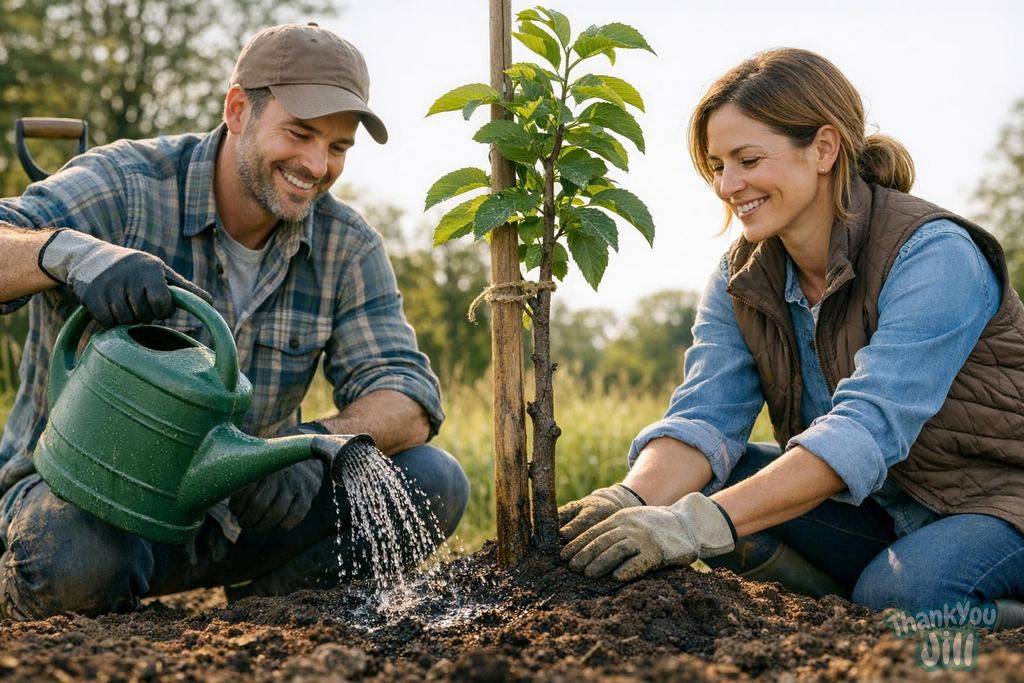
It's estimated that in Italy, roughly 60-70% of trees planted in public and private reforestation projects die within their first three years of life. Not from disease, not from pests, not from climate: from neglect. Someone planted them with enthusiasm, took photos, celebrated. Then forgot to come back with water the next dry week. A tree's first three years of life are when our help truly makes the difference between life and death.
Why the first three years are critical
During transplanting, roots are inevitably damaged — part of the root system is cut when the plant is extracted from the nursery, and more is damaged during the transplanting process itself. A newly planted tree has a reduced root system compared to what's needed to support the canopy under normal conditions. It takes 2-3 years for roots to fully regenerate, explore the surrounding soil, and reach the depth where water is available even in summer without irrigation. During these three years, any prolonged summer drought can be fatal: the tree doesn't have enough water reserves in its shallow roots to survive more than 2-3 weeks without rain or irrigation. The number one cause of death for trees in planting programs is lack of irrigation during the first or second year's summer drought. It's not a difficult technical problem to solve — but it requires consistency and commitment even when the initial enthusiasm has faded.
Signs of water stress: learn to read them
A tree suffering from lack of water shows clear signals that allow you to intervene in time. Leaves that curl or droop in the afternoon: a normal reaction to heat, not necessarily alarming if the leaves straighten out the next morning. Leaves that remain curled even in the morning: significant water deficit, irrigate immediately. Leaves that turn yellow at the edges or center: advanced water stress, urgent intervention needed. Leaves that brown and remain on the tree: necrosis, possible permanent damage to affected branches. Premature leaf drop in August-September: the tree's emergency response to reduce transpiring surface — it often recovers the following year if cared for. Branches that break easily: wood dried out from prolonged water deficit — damage can be permanent. Read these signals together with weather conditions: after 15-20 days without significant rain in summer, any young tree needs irrigation.
The correct irrigation program
Correct irrigation for young trees isn't frequent and shallow — it's deep and infrequent. Watering daily with small amounts encourages roots to stay near the surface where they find moisture — a counterproductive strategy that makes the tree more vulnerable to intense droughts. Watering every 7-10 days with 20-30 liters (enough to wet the soil to 40-50 cm depth) instead encourages roots to grow deeper, where soil stays moist longer. The best system to guarantee correct irrigation without forgetting: install a watering bag (a perforated plastic pouch that fills with water and releases it slowly over 4-8 hours) around the trunk. Fill it every 7-10 days and free yourself from needing to water manually every few days. They cost 5-10 euros and can make the difference between life and death in those first summers.
Protection from competing weeds
Weeds growing around the young tree's trunk are one of the least visible but most effective enemies. They don't just compete for water (in summer, weeds at the base of a young tree can consume the same amount of water as the tree itself), they also compete for nutrients and, in shaded areas, reduce available light for active shallow roots. The solution is mulching — a layer of shredded bark, compost, or straw 8-10 cm thick in a circle around the canopy — which almost completely eliminates weeds without needing herbicides. Mulch should be renewed each year (it gradually decomposes, enriching the soil). It's the most effective intervention relative to how simple it is to do.

Seventy percent of trees planted die within their first three years. Not by chance: by neglect. The enthusiasm of planting lasts a day. The care required lasts three years. But those three years of constant attention are the difference between a tree that grows for a hundred years and one that becomes a dried twig in the grass. Every bucket of water is worth it.
Annual checklist for newly planted young trees
- March-April (late winter): Check that the stake isn't cutting into the bark — loosen ties if necessary. Renew the mulch layer around the trunk. Check for signs of rodent damage on the trunk (mice and rabbits gnaw bark in winter — install a plastic mesh protective tube if needed).
- May-June (early summer): Begin regular irrigation. Monitor leaves for signs of water stress. Remove any competing weeds emerging from the mulch.
- July-August (peak summer): Most critical period. Irrigate every 7-10 days with 20-30 liters. If you'll be away for more than 10 days, install a watering bag or ask someone to irrigate in your absence. Never leave a young tree without irrigation for more than 2-3 weeks in summer.
- September-October (late summer): Gradually reduce irrigation as autumn rains return. Don't irrigate after mid-October in northern Italy. Check whether the stake is still needed for a second year.
- November (winter): The tree is dormant — irrigation not needed. Record annual growth (measure height and trunk circumference) to monitor progress. After the third year, if the tree has grown normally and the root system is established, you can gradually reduce summer irrigation until you eliminate it (depends on species and local climate).
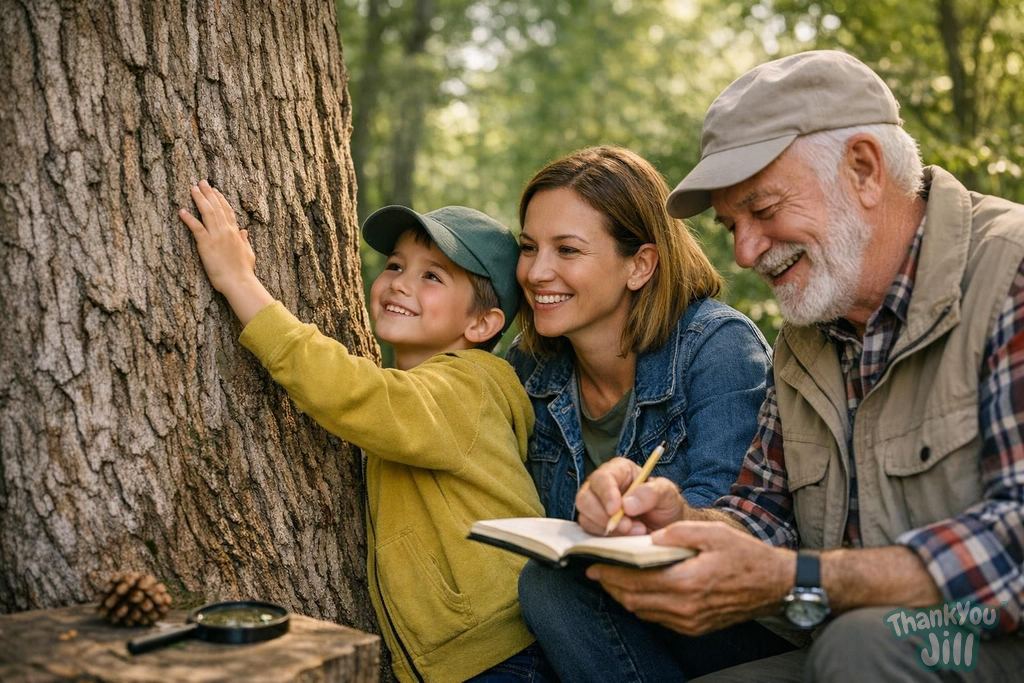
- With children — the tree diary: Keep an illustrated diary with children (with monthly photos, height and diameter measurements, observations about wildlife visiting the tree). After 3 years, the diary is already a natural history and emotional document of great value. Showing it to the grown tree is one of the most beautiful educational moments a family can experience.
A tree's first three years of life are its most vulnerable and most important. With just a few hours of work each year — irrigation, mulching, monitoring — you can bring a tree past the critical threshold and watch it become independent. After three years of good care, your tree won't need you anymore. It will be your turn to need it — for shade, for beauty, for everything an adult tree knows how to give without you asking.
Frequently Asked Questions
What are the main signs of water stress in a young tree and how should you respond?
Signs include leaves curled even in the morning, yellowing at the edges, browned leaves, and early leaf drop. Respond by irrigating immediately with deep watering to prevent permanent branch damage and promote tree recovery.
How should irrigation be done correctly for a tree in its first three years?
Irrigation should be deep and infrequent, every 7-10 days with 20-30 liters of water to wet the soil to 40-50 cm depth. This encourages roots to grow deeper, increasing resistance to summer drought.
Why is mulching around a young tree important and how should it be managed?
Mulching eliminates weeds that compete for water and nutrients, protects roots, and maintains soil moisture. Apply an 8-10 cm layer and renew it each year to maintain effectiveness and enrich the soil.
When is it worth using a watering bag and what benefits does it offer for young tree care?
A watering bag is especially useful during summer, filled every 7-10 days. It releases water slowly over 4-8 hours, ensuring deep, consistent irrigation without frequent manual intervention, reducing the risk of neglect.
Latest News
Comments
No comments yet. Be the first!
Leave a comment