


 Italiano
 Français
 Deutsch
 Español
 Português
 Svenska
 Suomi
Suomi
Quality Sleep
Effective Evening Routines
Sleep is the most important biological function for physical and mental health: it's when your brain consolidates memories, eliminates toxins (glymphatic system), repairs tissues, regulates hormones, and strengthens your immune system. Matthew Walker, sleep neuroscientist at UC Berkeley, summarizes the evidence in his book "Why We Sleep" (2017): chronic sleep deprivation (less than 7 hours) increases the risk of Alzheimer's (beta-amyloid accumulation), cancer (reduced NK cells), cardiovascular disease, type 2 diabetes, obesity, and depression.
Sleep architecture: phases and their importance
Sleep alternates in 90-minute cycles between NREM and REM sleep. Deep NREM sleep (slow waves, stage N3): predominates in the first half of the night. Essential for physical repair, procedural memory consolidation, growth hormone release, and brain cleansing through the glymphatic system (which removes beta-amyloid associated with Alzheimer's). REM sleep: predominates in the second half of the night. Essential for emotional regulation, experience processing, creativity, and episodic memory consolidation. This explains why cutting your last hours of sleep is particularly costly: you lose REM sleep. And why alcohol reduces sleep quality: it blocks REM sleep, producing non-restorative sleep even if you sleep the right number of hours.
Circadian rhythm and light: the master regulator
Your circadian rhythm is a roughly 24-hour biological cycle that regulates nearly all body functions. The primary synchronizer is light, especially blue-green light (460-480 nm). Morning light: exposure to bright light within 30-60 minutes of waking synchronizes your circadian rhythm, advancing your morning cortisol peak and, consequently, your evening melatonin peak that induces sleep. 10-20 minutes of direct sunlight exposure in the morning is one of the most effective interventions for improving evening sleep quality. Artificial light in the evening: screens emit blue light that suppresses melatonin, delaying sleep onset. 2 hours of exposure to a bright screen delays melatonin release by 90-120 minutes.
Body temperature and caffeine: the two most underestimated factors
Temperature: your body lowers core temperature by about 1-1.5°C when falling asleep. The optimal temperature for sleep is 18-19°C. A warm shower or bath 1-2 hours before bed paradoxically lowers core body temperature (blood is brought to the surface to dissipate heat), accelerating sleep onset. Caffeine: caffeine has a half-life of 5-7 hours. A coffee at 3 PM still leaves 50% of the caffeine in your system at 8-10 PM. This residual caffeine reduces deep NREM sleep by 20-30% even if you fall asleep normally: you sleep the right number of hours but with lower quality. Walker's recommendation: no caffeine after 1-2 PM for slow metabolizers.
Morning sunlight: the most underrated gesture for sleep
Andrew Huberman (Stanford) has popularized the importance of morning sunlight. The protocol: within 30-60 minutes of waking, expose yourself to direct sunlight for 10-20 minutes (without sunglasses, not through glass). It doesn't need to be sunny: even diffuse light from a cloudy sky produces 5-10 times more photons than artificial indoor light. A 10-15 minute walk after breakfast produces: circadian rhythm synchronization, increased morning cortisol (energy and focus), improved mood (serotonin synthesis), and programming better evening sleep onset 14-16 hours later. It costs literally nothing.

Not sleeping enough? You're in good company: 35% of Italians are in the same situation. Morning sunlight, complete darkness in the evening, 18°C in your bedroom, no caffeine after 2 PM: four simple gestures that cost nothing and build the sleep your brain and body deserve.
The optimal evening routine: the 90 minutes before sleep
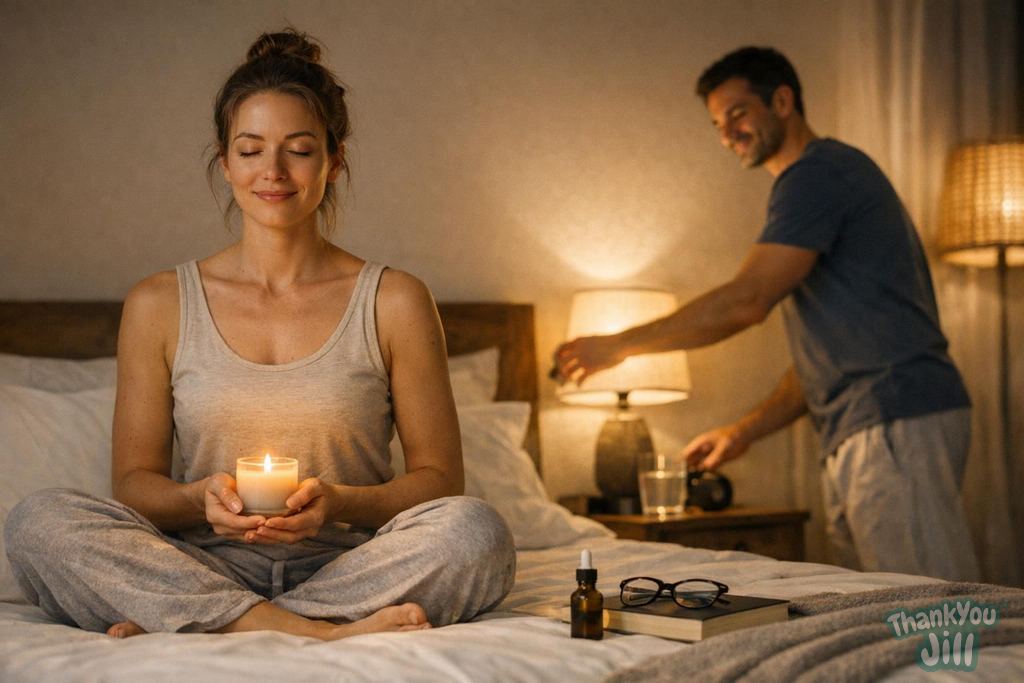
Based on sleep research, the most effective evening routine in the 90 minutes before bed: 90 minutes before, dim the lights in your home (warm-light lamps instead of bright white LEDs), start reducing cognitive stimulation (no work emails, no stressful news). 60 minutes before, take a warm shower or bath (accelerates sleep onset), read a physical book or practice a relaxing non-screen activity, write in a gratitude journal or make tomorrow's to-do list (clear your mental disk). 30 minutes before, turn off all screens, completely darken your bedroom (every photon of light can reduce melatonin), put your phone in another room or at least out of bed in airplane mode. In bed: bedroom temperature 18-19°C, 4-7-8 breathing technique if you have trouble falling asleep, don't watch the clock (increases sleep performance anxiety).
Managing sleep debt: myths and reality
Myths: "I can make up for it by sleeping a lot on weekends" (weekend sleep recovery restores some functions but doesn't fully compensate for the deficit accumulated during the week, especially for cognitive and metabolic effects). "You get used to sleeping little" (you adapt subjectively: you feel less sleepy, but objective measurements of cognitive performance remain compromised). Reality: consistency in sleep timing (same time every day, even on weekends) is one of the most effective interventions for improving sleep quality. Variability between weekdays and weekends produces "social jet lag," with metabolic consequences similar to night shift work.
When sleep problems require medical evaluation
Not all sleep problems are solved by evening routines. Signs requiring medical evaluation: loud snoring with sleep apneas (breathing pauses during sleep: obstructive sleep apnea syndrome is very common and greatly underestimated, with serious cardiovascular and cognitive consequences), chronic insomnia lasting more than 3 months despite good sleep hygiene (CBT-I, cognitive-behavioral therapy for insomnia, is the first-line evidence-based treatment, superior to medications long-term), excessive daytime sleepiness unexplained by sleep deficit. Your primary care doctor is the first point of contact: they can prescribe a polysomnography (sleep study) if they suspect apneas or other primary sleep disorders.
Frequently Asked Questions
How does morning sunlight exposure affect sleep quality?
Exposing yourself to direct sunlight for 10-20 minutes within 30-60 minutes of waking helps synchronize your circadian rhythm, advancing evening melatonin release and improving sleep onset and nighttime sleep quality.
What is the most effective evening routine to improve sleep in the 90 minutes before bed?
The ideal routine involves dimming lights and reducing cognitive stimulation 90 minutes before, taking a warm shower 60 minutes before, turning off screens and darkening your room 30 minutes before, while maintaining bedroom temperature at 18-19°C to promote sleep onset.
Why is avoiding caffeine after 1-2 PM important for sleep quality?
Caffeine has a half-life of 5-7 hours and can reduce deep NREM sleep by 20-30%, even if you fall asleep normally. Avoiding caffeine after 1-2 PM helps preserve the quality of deep sleep essential for physical and mental recovery.
When should you see a doctor about sleep problems?
It's advisable to consult a doctor in case of loud snoring with sleep apneas, chronic insomnia lasting more than 3 months despite good sleep habits, or unexplained excessive daytime sleepiness. Your doctor can prescribe tests like polysomnography for accurate diagnosis.


Latest News




Comments
No comments yet. Be the first!
Leave a comment