


 Italiano
 Français
 Deutsch
 Español
 Português
 Svenska
 Suomi
Suomi
Homemade Detergents
Effective Recipes
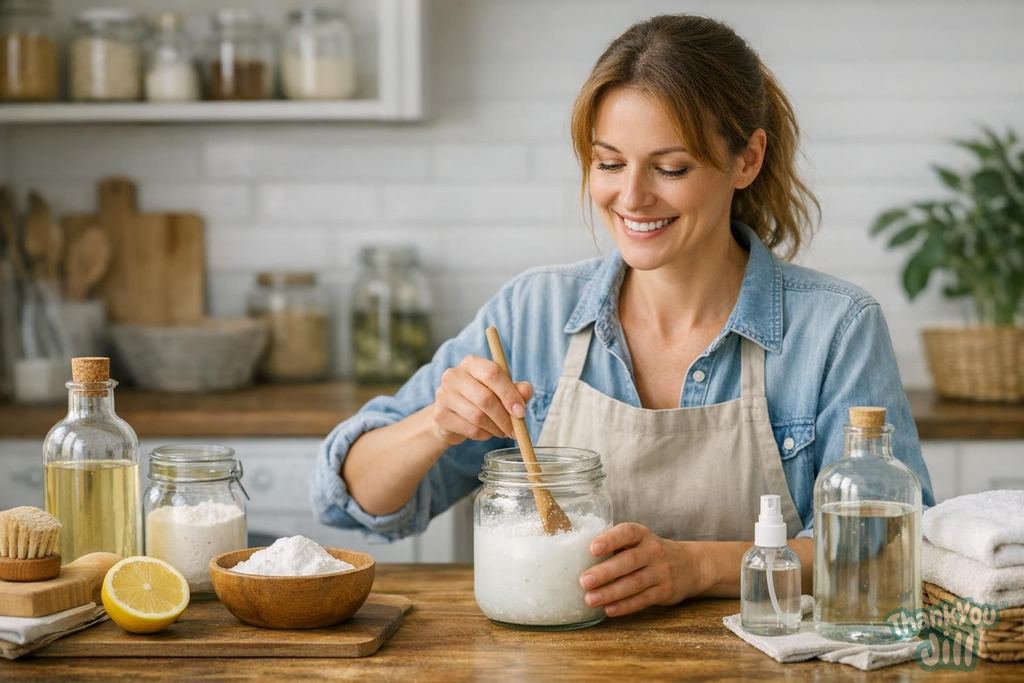
The detergent and household products market is dominated by a few major brands (Procter and Gamble, Unilever, Henkel) that sell products containing mainly water (70-90%), surfactants, fragrances, and preservatives in plastic bottles with enormous profit margins. Making detergents at home is simple, economical, and produces equal or superior results for most household uses. The apparent complexity comes from marketing that has convinced consumers they need dozens of specialized products when really just a few versatile active ingredients will do.
Dishwashing Recipes
Homemade dishwasher powder: an effective recipe. Ingredients: 200 g baking soda + 200 g citric acid + 50 g coarse sea salt + 5 g cornstarch. Mix and store in an airtight glass jar. Use 1-2 tablespoons per cycle. Add white vinegar in the rinse aid compartment (instead of commercial rinse aid). Note: this detergent is not suitable for dishwashers in areas with very hard water (>30°F hardness): increase the salt dose or use a water softener. Liquid hand dishwashing soap: dissolve 50 g grated Marseille soap in 500 ml hot water. Add 1 tablespoon vegetable glycerin (for skin-conditioning properties) and 10 drops lemon essential oil. Store in a dispenser or bottle. Lasts 3-4 weeks. Sanitizing dishwasher tablet: 200 g citric acid + 50 g sodium percarbonate + water as needed to compact. Form tablets by pressing into ice cube trays. Let dry for 24-48 hours. One tablet per cycle instead of commercial detergent.
Laundry and Fabric Care Recipes
Powder laundry detergent: the basic and most effective recipe. Ingredients: 100 g Marseille soap flakes (grate a bar) + 100 g baking soda + 100 g sodium percarbonate + 50 g citric acid powder. Mix well. Dosage: 30-40 g per standard load (2-3 tablespoons), 40-50 g for heavily soiled loads. Store in a glass jar. Keeps indefinitely if kept dry. Natural fabric softener: 200 ml white vinegar in the fabric softener compartment. No residual odor on laundry. Adds efficiency by completely washing away detergent residue that stiffens fabrics. Natural iron water: 200 ml distilled water + 10 drops lavender essential oil. Pour into the iron's steam reservoir. Natural starch for collars and cuffs: 2 tablespoons cornstarch dissolved in 500 ml cold water. Bring to a boil, stirring until slightly thickened. Let cool. Apply to fabrics before ironing. Removes wrinkles and lightly starches fabrics like commercial starch spray.
Kitchen Recipes
Kitchen degreaser (stovetop, hood, exterior oven): 100 ml liquid Marseille soap + 400 ml water + 50 ml denatured alcohol (degreasing agent) + 10 drops tea tree essential oil. In a spray bottle. Effective on fresh grease. For old burnt-on grease: apply a baking soda and soap paste and let sit for 30 minutes. Refrigerator cleaner: pure white vinegar applied with a cloth. Cleans, disinfects, and deodorizes. For persistent odors: rub half a lemon on the interior walls. Leave an open jar of baking soda to absorb future odors. Stainless steel polish (kitchen countertop, appliances): olive oil applied with a soft cloth and then buffed. Removes fingerprints and leaves a thin protective film. Sink and faucet cleaner (limescale-free): paste of citric acid + water. Apply, let sit 10 minutes, scrub, and rinse.

Homemade laundry detergent with Marseille soap, baking soda, and percarbonate costs about €0.10 per wash versus €0.30-0.70 for commercial equivalents. Over 200 washes per year: savings of €40-120. Zero plastic bottles. Zero allergenic synthetic fragrances. Zero biocidal preservatives. And it works just as well. The only difficulty is getting started.
Bath and Personal Care Recipes
Exfoliating body scrub: 100 g brown sugar + 50 ml melted coconut oil + 10 drops orange or lavender essential oil. Store in a glass jar. Use 1-2 times a week in the shower to exfoliate skin. Solid homemade shampoo (advanced): 100 g sodium cocoyl isethionate (SCI, natural coconut surfactant, available online) + 2 tablespoons argan or jojoba oil + rosemary or peppermint essential oil. Melt solid oils in a double boiler, incorporate the SCI, pour into silicone molds, let solidify for 24 hours. Lasts 3-4 months. Eliminates the shampoo bottle. Simple hair conditioner: 1 tablespoon argan or coconut oil applied to wet hair tips after shampooing. Let sit 5 minutes, rinse. Alternative: diluted apple cider vinegar (1 tablespoon in 1 cup water) rinsed through hair after shampooing. Adds shine and manageability. Natural toothpaste: paste of baking soda + coconut oil + peppermint essential oil. Gentle abrasive, natural antibacterial. Contains no fluoride: if you choose to use it as your only toothpaste, consider supplementing with fluoride mouthwash for cavity prevention.
How to Organize Your "Clean Pantry" of Natural Detergents
To always have basic ingredients on hand: make a quarterly purchase of: citric acid (1 kg: €4-5), baking soda (1 kg: €1-2), sodium percarbonate (1 kg: €3-4), Marseille soap (500 g flakes: €3-4), liquid Marseille soap (500 ml: €3-5), vegetable glycerin (250 ml: €3-4), white vinegar (5 liters: €2). Essential oils to have: tea tree (antibacterial and antifungal), lavender (relaxing, universal), lemon or sweet orange (degreasing, fragrant). Total cost for 3 months of production: €25-35 versus €70-100 for commercial equivalents. Quarterly savings: €40-65. Annual savings: €160-260. Reusable bottles: invest €10-15 in a set of glass bottles with spray and dispenser tops. They last forever, look great, and are more practical than commercial bottles once the routine is established.
Limitations of Homemade Detergents: When to Use Commercial Products
Homemade detergents have some limitations worth knowing for appropriate use. Low-temperature effectiveness with hard water: Marseille soap combines with calcium salts in hard water, forming insoluble salts (the gray flakes on laundry). In areas with very hard water (Southern Italy, limestone-rich areas), you need to increase doses of water-softening additives (citric acid, soda) or use a water softener. Storage: homemade products have shorter shelf life than commercial ones (lacking preservatives). Make small quantities and use within 3-4 weeks for liquid products. Stubborn stains: fresh blood stains (cold water and salt immediately), grass (denatured alcohol), red wine (sparkling water immediately, then percarbonate): some stains require specific treatments that general homemade detergents don't cover optimally. Sensitive surfaces: marble, untreated natural granite, and unlacquered wood shouldn't be cleaned with vinegar or citric acid (corrosive). Use only water and neutral soap or products specifically designed for these surfaces.
Frequently Asked Questions
How do I prepare an effective homemade dishwasher detergent and what precautions should I take with hard water?
Mix 200 g baking soda, 200 g citric acid, 50 g coarse sea salt, and 5 g cornstarch. Use 1-2 tablespoons per cycle and add white vinegar as rinse aid. With very hard water, increase the salt dose or use a water softener to prevent deposits.
What are the economic and environmental benefits of using homemade detergents versus commercial ones?
Homemade detergents cost up to 70-80% less—for example, about €0.10 per wash versus €0.30-0.70 for commercial equivalents. Plus, they eliminate plastic bottle waste, synthetic fragrances, and preservatives, reducing environmental impact without sacrificing effectiveness.
How do I choose and store basic ingredients for making natural detergents at home?
Buy citric acid, baking soda, percarbonate, Marseille soap, vegetable glycerin, and white vinegar quarterly. Store everything in dry glass jars and make small batches of liquid detergent to use within 3-4 weeks to maintain effectiveness and freshness.
When should I prefer commercial detergents over homemade ones?
Commercial detergents are preferable when you have very hard water without softeners, for stubborn stains that generic homemade products don't handle well, and for sensitive surfaces like marble or untreated wood, where natural acids can cause damage.


Latest News




Comments
No comments yet. Be the first!
Leave a comment