


 Italiano
 Français
 Deutsch
 Español
 Português
 Svenska
 Suomi
Suomi
Humidity and Mold
Natural Prevention
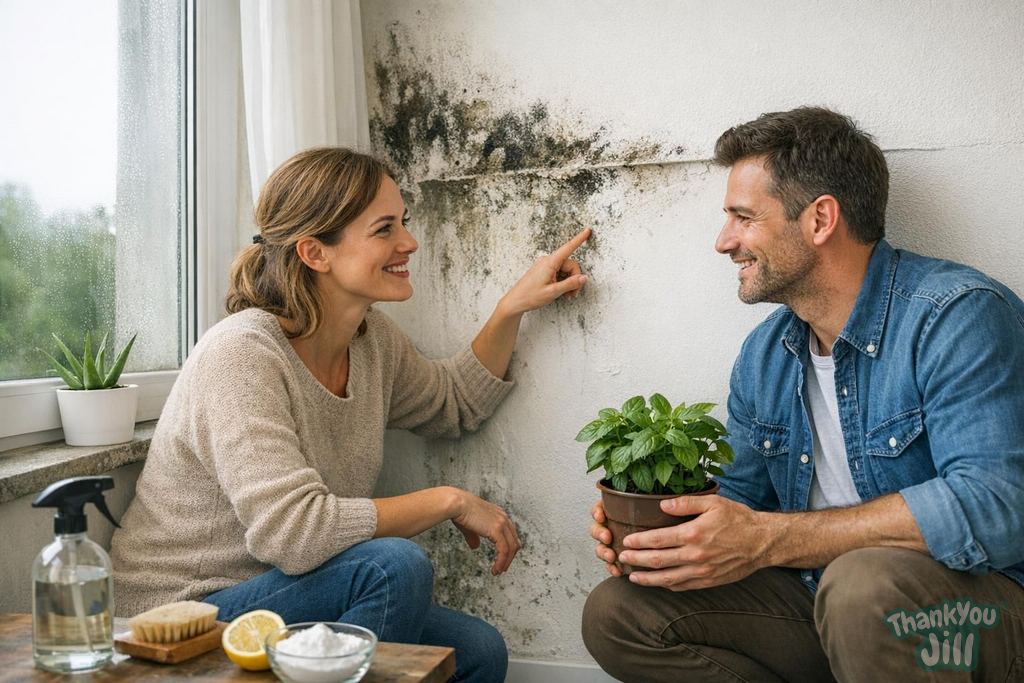
Mold is a fungus that develops on damp, porous surfaces and produces spores that disperse into the air. Inhaled mold spores can cause: respiratory allergies (rhinitis, conjunctivitis, asthma), skin reactions (eczema, hives), opportunistic infections in immunocompromised individuals (aspergillosis, caused by Aspergillus fumigatus), and irritation of mucous membranes and upper airways even in healthy people. A WHO study (2009) estimates that 10-50% of buildings in Europe and North America have humidity and mold problems, with a 30-50% increased risk of asthma in residents. In Italy, the problem is particularly widespread in historic city centers (historic buildings without insulation and vapor barriers), in suburbs with construction from the 1960s-1980s (poor insulation, thermal bridges), and in coastal areas (high ambient humidity).
The causes of household humidity: understanding to solve
Humidity in your home has different causes that require different solutions. Surface condensation: humid air cools when it contacts cold surfaces (exterior walls, corners, windowsills) and deposits moisture. Main cause: insufficient thermal insulation creating cold surfaces, inadequate ventilation (humid air produced by daily living isn't expelled), excessive vapor production (showers, cooking, breathing, plants). Capillary rise: water from the ground rises through capillary action in foundation walls. Characteristic of historic homes without waterproofing barriers. Recognized by humidity starting from the bottom (floor and base of walls) with plaster detachment and salt efflorescence. Rain infiltration: through the roof, windows, terraces, and frames. Recognized by humidity appearing during or after rain in specific spots. Broken pipes: leaks in internal plumbing. The most urgent and easiest cause to identify.
Preventing humidity: effective strategies
Adequate ventilation: the most important and least expensive measure against condensation. Air out rooms for 10-15 minutes daily (fully open windows, don't leave them half-open for hours—this cools the room without efficiently expelling humidity), ventilate after showers and during cooking (run the range hood during cooking: reduces kitchen vapor by 70-80%), don't air-dry wet laundry indoors without supplemental ventilation (drying laundry produces large amounts of vapor). Controlling relative humidity: maintain relative humidity between 40% and 60% (below 40%: too dry, irritates mucous membranes; above 60%: promotes mold). A digital hygrometer (€5-10) measures humidity in every room—actual readings often differ from perception. An electric dehumidifier in rooms with persistently high humidity (basement, bathroom without windows, bedroom in coastal homes) is the most effective solution for controlling humidity. Thermal insulation: improving wall insulation reduces cold surfaces where vapor condenses. External thermal wrapping and roof insulation drastically reduce surface condensation in homes where it's the main cause.
Natural remedies against mold: what actually works
For existing mold stains: 80% white vinegar solution (higher concentration is more effective than standard 5%): spray on mold, let sit 1-2 hours, scrub with a stiff brush and rinse. Effective against most surface molds. Tea tree oil: 2 teaspoons in 500 ml of spray water. Spray on the moldy surface, don't rinse. The antifungal effect of tea tree (terpinen-4-ol) kills spores. Don't use before vinegar (the acidic alcohol of vinegar inactivates essential oils). Baking soda: paste with water, apply to mold, let sit 15-20 minutes, scrub and rinse. Slightly abrasive and alkaline: inhibits fungal growth. What not to do: don't paint over mold (paint doesn't kill mold—spores continue developing underneath). When natural remedies aren't enough: extensive mold (over 1 m² of surface), black mold with a viscous appearance (possible Stachybotrys chartarum, the "toxic black mold"), recurring mold despite treatments. In these cases: call professionals for remediation and then address the structural cause of the humidity.

Mold isn't an aesthetic problem—it's a health problem. If you see it in your bedroom or children's room, don't wait. Air out daily, monitor relative humidity, fix the thermal bridge or leak feeding it. And if it returns despite everything, call an expert: the cause is structural and requires a structural solution, not a fresh coat of paint.
How to measure and monitor household humidity
A digital hygrometer (available for €5-15) is the most useful tool for preventing mold problems. Place one in every problem room: bedroom, bathroom, basement, boiler room. Readings to worry about: relative humidity constantly above 65-70%: elevated mold risk in the medium term. Humidity above 75%: already in the active mold development zone. How to interpret the data: if humidity rises rapidly after a shower and drops slowly, ventilation is inadequate. If humidity is high only in certain corners or rooms, there's likely a thermal bridge or localized leak. A thermometer paired with the hygrometer lets you calculate the dew point: the temperature at which vapor condenses. If the wall temperature is below the dew point, condensation is inevitable on that surface.
Mold and children's wellbeing: special attention
Children are more vulnerable than adults to indoor mold for several reasons: they breathe more air per unit of body weight (greater spore exposure per kg of weight), their immune system is still developing, they spend more hours indoors (especially in bedrooms where mold tends to concentrate). The correlation between household mold and pediatric asthma is among the most robust in indoor environmental hygiene literature (meta-analysis by Mendell et al., 2011). If a child has persistent cough, wheezing, frequent conjunctivitis, seasonal allergies that worsen indoors: the home environment (mold, humidity, pets, secondhand smoke) should be evaluated as a possible cause or contributing factor. A professional home inspection by an environmental hygienist or indoor air quality specialist can identify contamination sources not visible to the naked eye.
Structural solutions for capillary rise humidity
Capillary rise humidity in historic homes (stone or brick walls without waterproofing barriers) requires structural solutions, not cosmetic ones. Main intervention techniques: injection of waterproofing resins: specialists drill horizontal holes in the masonry every 10-15 cm and inject epoxy or siloxane resins that create a horizontal waterproof barrier. Effectiveness varies based on wall porosity. Electrosmosis: a system that generates an electric field reversing the polarity of rising water, pushing it downward instead of upward. Requires professional installation and electrical power. Macroporous remedial plaster: specialized plaster ("remedial plaster" WTA type) that allows salt and moisture to migrate outward, evaporating from the plaster instead of damaging the structure. Requires professional application. Intervention costs: ranging from €2,000 for light treatments to €15,000-30,000 for severe cases requiring structural reinforcement. Consult with a qualified technician (surveyor, architect, or engineer experienced in existing buildings) before trusting companies selling miracle solutions at very low prices.
Frequently Asked Questions
How can I tell if household humidity is caused by surface condensation or capillary rise?
Surface condensation forms on cold walls and corners, often due to insufficient insulation and poor ventilation. Capillary rise starts from the bottom, with humidity near the floor and detaching plaster, typical of historic homes without waterproofing barriers.
What are the most effective natural remedies for eliminating existing mold in the home?
Effective natural remedies include concentrated white vinegar at 80%, tea tree oil diluted in water, and baking soda paste. These products kill spores and inhibit fungal growth, but shouldn't be used before chemical treatments that would reduce their effectiveness.
When is it worth using an electric dehumidifier to prevent mold?
A dehumidifier is recommended in spaces with persistent humidity above 60%, such as basements, bathrooms without windows, or bedrooms in coastal areas. It helps maintain ideal relative humidity between 40% and 60%, reducing mold formation risk.
What structural solutions exist for resolving capillary rise humidity in historic homes?
Solutions include injection of waterproofing resins, electrosmosis to reverse water rise, and application of macroporous remedial plaster. These interventions require professionals and can cost anywhere from €2,000 to over €15,000.


Latest News




Comments
No comments yet. Be the first!
Leave a comment